


Execution Courts Cannot Reopen Mental Capacity Issues Post-Finality: Kerala HC
 Copy Link
 Share
 Save
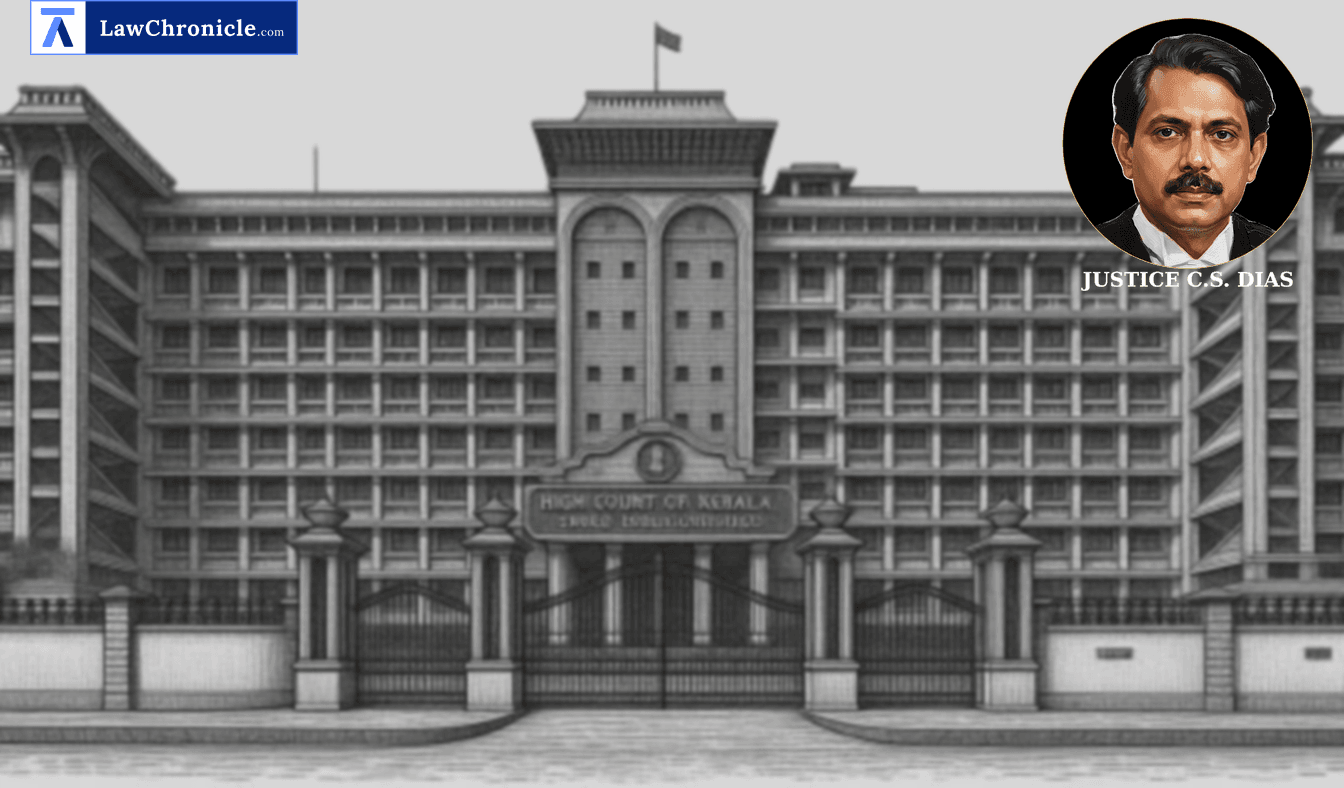
The Kerala High Court has slammed the brakes on judgment debtors attempting to stall execution by resurrecting procedural objections regarding the mental capacity of litigants that were already rejected during the trial and appellate stages. In a significant clarification of the boundaries of Section 47 of the Code of Civil Procedure, 1908, the Court ruled that an execution court is strictly prohibited from entertaining challenges that have already attained finality through four tiers of litigation.
Justice C.S. Dias delivered this authoritative pronouncement while dismissing a revision petition filed by judgment debtors who sought to declare a decree a nullity on the grounds that no formal enquiry into the unsoundness of mind of the original plaintiff was conducted under Order XXXII Rule 15 of the Code of Civil Procedure, 1908.
Key Takeaways
Finality of Adjudication Prevails
Execution courts cannot act as a fifth tier of litigation to reopen questions of maintainability or procedural irregularities that have been unsuccessfully challenged up to the Supreme Court.
Scope of Section 47 Restricted
Section 47(3) of the Code of Civil Procedure, 1908 is specifically designed to resolve disputes regarding who constitutes a 'representative' of a party and cannot be used to challenge the underlying validity of a decree based on facts already considered.
Next Friend Protections
Procedural requirements for appointing a next friend for persons under legal disability are intended to safeguard the disabled person's interests, not to provide a tactical loophole for judgment debtors to avoid their liabilities.
Res Judicata in Execution
Once a specific contention such as the requirement of a mental capacity enquiry has been rejected by trial and appellate courts, the principle of res judicata bars the execution court from entertaining the same objection.
Court Rationale on Execution Limits and Procedural Irregularities
The Court observed that the petitioners were attempting to reopen a concluded question after their appeals had been dismissed by the Appellate Court, the High Court, and the Supreme Court. Referring to Gangabai Gopaldas Mohata v. Fulchand and Others ( "(1997) 10 SCC 387": 1996 CaseBase(SC) 115), the Court noted that while Section 47 is broad, it does not encompass irregularities in conducting enquiries under Order XXXII Rule 15 when those issues do not relate to the status of a representative.
The Court, in its reasoning, observed: "The suit was instituted in 2017. After four tiers of litigation, the petitioners continue to resist execution of the decree on grounds that cannot be reopened at this stage. ... an Execution Court shall not entertain, under Section 47 of the Code, objections intended to obstruct execution once the decree has attained finality."
Furthermore, the Bench highlighted that since the suit was decreed in favor of the deceased respondent, the appointment of a next friend had clearly served its purpose of protecting the individual's interests. The Court noted that such appointments are a matter between the court and the person under disability, not a tool for the judgment debtor.
The Court has the following directions:
"The Civil Revision Petition is devoid of merit and is accordingly dismissed. The Registry shall forward a copy of this order to the Execution Court."
Ratio
An Execution Court exercising jurisdiction under Section 47 or Order 21 of the Code of Civil Procedure, 1908 must refrain from entertaining any application or objection that has already been considered during the adjudication of the suit or which could have been raised with due diligence during the trial, especially once the decree has attained finality across multiple levels of appeal.
Background
The dispute originated from O.S. No. 232/2017, filed by the respondents for declaration of title and mandatory injunction. The petitioners (judgment debtors) had contended from the outset that the first respondent was of unsound mind and that the suit was non-maintainable due to the lack of an enquiry under Order XXXII Rule 15 of the Code of Civil Procedure, 1908. Despite these contentions, the Trial Court decreed the suit. The petitioners unsuccessfully challenged this decree in A.S. No. 53/2022, R.S.A. No. 167/2026, and finally before the Supreme Court in S.L.P. No. 23926/2026.
Following the dismissal of the Special Leave Petition, the petitioners filed E.A. No. 2/2026 in the execution proceedings, again raising the plea of nullity. The Munsiff Court of Pathanamthitta rejected the application, leading to the current revision. The High Court, relying on Roy Thomas v. Lekha Roy ( "2019 (2) KHC 130": 2019 CaseBase(KER) 1377) and Periyammal (Dead) Through Lrs and others v. V. Rajamani and Another, affirmed that the Execution Court correctly refused to re-adjudicate the issue, as the decree had attained finality and the petitioners' actions amounted to an obstruction of justice.
Case Details:
Case No.: CRP NO. 394 OF 2026
Neutral Citation: 2026:KER:78313
Case Title: James V. Kurian & Others V. V.K Sam & Another
Appearances:
For the Petitioner(s): Shri.Shyam Krishnan, Shri.N.B.Sunilnath, Sri.Gens George Elavinamannil, Shri.S.K.Harish
Source: 2026 CaseBase(KER) 29485
Similar Articles



 Breaking News


