


Functional Equality Is Not Enough for Equal Pay: Supreme Court
 Copy Link
 Share
 Save
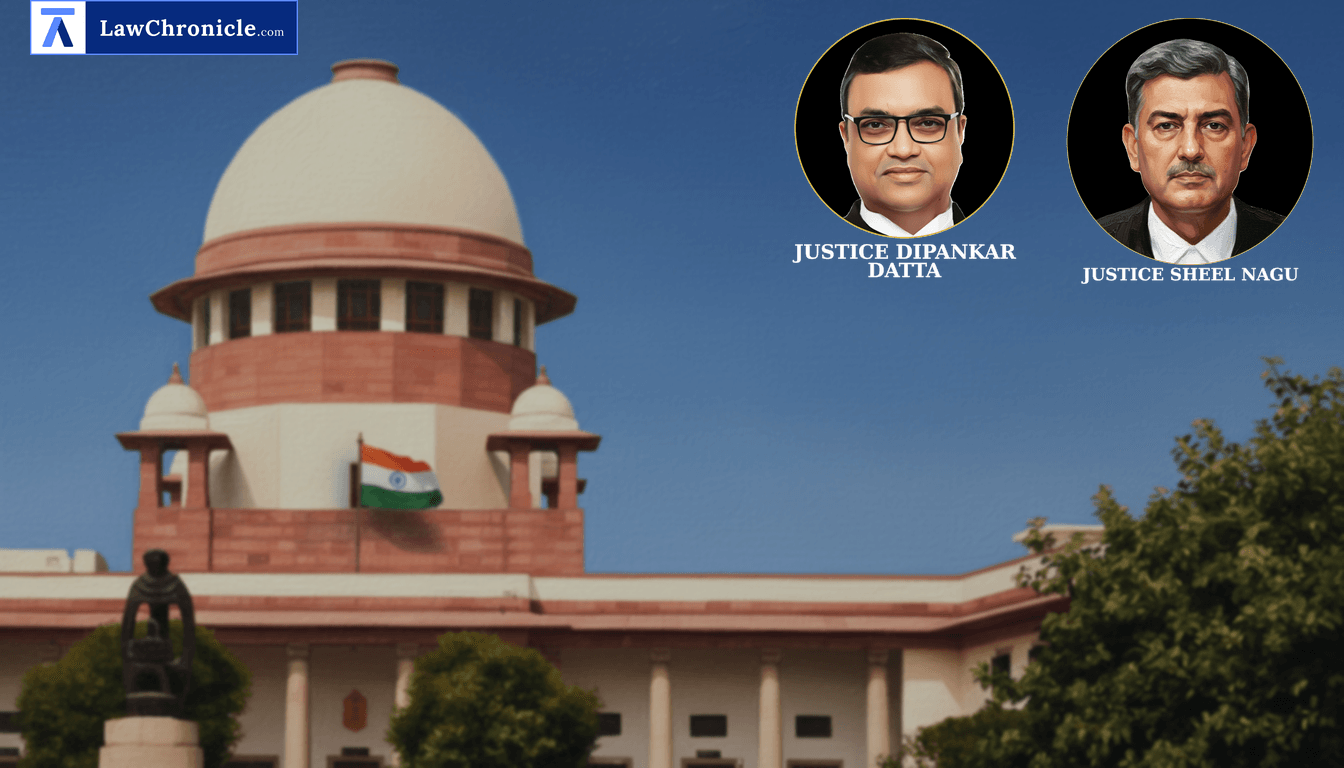
Setting a firm boundary on service jurisprudence, the Supreme Court ruled that mere functional similarity in job duties cannot form the sole basis for claiming equal pay scale when candidates differ in recruitment source and prior experience. Reaffirming modern pay-parity doctrine, the apex court upheld differential pay scales between direct recruits and promoted teachers doing identical classroom work.
A Bench of Justice Dipankar Datta and Justice Sheel Nagu heard the appeals challenging a Division Bench judgment of the High Court of Kerala. The core issue before the apex court was whether directly recruited Higher Secondary School Teachers (Junior) could claim parity in pay scale with teachers appointed by transfer or promotion, when both categories perform identical periods of work.
Key Takeaways
- Shift from Functional Equality: Mere identical work or functional sameness is insufficient to claim pay parity under Constitution of India, 1950.
- Valid Classification Criteria: Experience, source of recruitment, educational qualifications, and service history constitute intelligible differentia for pay differentiation.
- Protection of Prior Status: Pay protection for promoted employees with long past service in lower cadre is legally justified and non-discriminatory.
- Precedential Clarification: High Court rulings granting mechanical pay equality without considering binding Supreme Court precedents are per incuriam.
Supreme Court on Equal Pay for Equal Work
The Supreme Court dismissed the appeals and affirmed the decision of the Division Bench of the High Court. Addressing the scope of pay equality, the Court noted that while 20th-century jurisprudence following Randhir Singh v. Union of India ( "(1982) 1 SCC 618": 1982 CaseBase(SC) 10) applied the principle expansively based on designation, 21st-century decisions starting from State Bank of India vs. M.R. Ganesh Babu ( "(2002) 4 SCC 556": 2002 CaseBase(SC) 972) up to State of Bihar vs. Bihar Secondary Teachers Struggle Committee ( "(2019) 18 SCC 301": 2019 CaseBase(SC) 1929) have recast the doctrine into a strict test based on complete service-rule parity.
The Apex Court cited State Bank of India vs. M.R. Ganesh Babu ( "(2002) 4 SCC 556": 2002 CaseBase(SC) 972) to highlight that value judgments regarding degrees of responsibility and reliability made bona fide by executive authorities fall outside judicial interference. Referring to Government of West Bengal v. Tarun Kumar Roy ( "(2004) 1 SCC 347": 2003 CaseBase(SC) 1738), the Bench underscored that employees performing similar jobs but possessing different qualifications or recruitment sources can be treated differently. Reaffirming the principles in State of Haryana v. Charanjit Singh, which endorsed State of Haryana vs. Tilak Raj ( "(2003) 6 SCC 123": 2003 CaseBase(SC) 305) and State of Haryana vs. Jasmer Singh ( "(1996) 11 SCC 77": 1996 CaseBase(SC) 1651), the Supreme Court reiterated that merit, past service, and experience are proper criteria for pay classification under Constitution of India, 1950. The Bench also referred to Orissa University of Agriculture and Technology vs. Manoj K. Mohanty ( "(2003) 5 SCC 188": 2003 CaseBase(SC) 1305), Kamlakar v. Union of India ( "AIR 1999 SC 2300": 1999 CaseBase(SC) 422), CASE_17, CASE_18, CASE_19, and CASE_20 while tracing the evolution of pay parity jurisprudence.
Addressing the Calcutta High Court Division Bench decision in State of West Bengal v. Anirban Ghosh, the Apex Court held that since it failed to consider binding precedents of the Supreme Court, it is per incuriam to the extent of its inconsistency.
The Supreme Court expressed that “In the last century, following the decision in Randhir Singh v. Union of India, this Court treated equal pay for equal work as an expansive anti-exploitation principle under Articles 14 and 39(d), where the mere sameness of designation – teacher with teacher, accountant with accountant, clerk with clerk, driver with driver, etc. was sufficient to claim parity. In this century, however, beginning with the decision in State Bank of India vs. M.R. Ganesh Babu and ending with State of Bihar vs. Bihar Secondary Teachers Struggle Committee, the doctrine has been recast as a strict test based on service rules. Decisions are legion that equal pay cannot be claimed by merely showing identical work; the claimant-employee must establish complete parity in the source of recruitment, educational qualifications and experience, mode of appointment through a constitutional process, and nature of responsibilities and accountability. Mere functional similarity of work has been held to be no longer enough.”
Ratio
Under Article 14 and Article 39(d) of the Constitution of India, 1950, the doctrine of equal pay for equal work requires complete and wholesale identity in recruitment source, educational qualifications, prior experience, and mode of appointment. Functional identity or equal volume of work alone does not confer a constitutional right to identical pay scales when a rational differentiation exists.
Background
The dispute arose when directly recruited Higher Secondary School Teachers (Junior) in Government aided schools in Kerala, appointed pursuant to a Government Order dated May 13, 1998, filed writ petitions seeking full-time pay scales. These full-time scales were extended only to HSST (Jr.) teachers appointed by transfer or promotion. A Single Judge of the High Court allowed the writ petitions relying on earlier decisions including Roshan Lal Tandon v. Union of India ( "AIR 1967 SC 1889": 1967 CaseBase(SC) 317), General Manager, South Central Railway, Secunderabad v. A.V.R. Siddhanti ( "AIR 1974 SC 1755": 1974 CaseBase(SC) 334), M.P. Singh, Dy. Supdt. of Police, C.B.I. v. Union of India, Telecommunication Research Centre Scientific Officers (Class I) Association v. Union of India ( "AIR 1987 SC 490": 1987 CaseBase(SC) 20), Bhagwan Dass and Ors. v. State of Haryana ( "AIR 1987 SC 2049": 1987 CaseBase(SC) 1), Jaipal v. State of Haryana ( "AIR 1988 SC 1504": 1988 CaseBase(SC) 570), and CASE_21.
However, a Division Bench of the High Court reversed the Single Judge's decision, holding that promoted teachers had served as permanent full-time teachers in lower schools for long periods and the higher pay scale was intended to protect their status and prevent erosion of benefits. Validating this reasoning, the Supreme Court confirmed that direct recruits and promotees differ in experience and background, justifying the pay differentiation and making the judgment of the Division Bench unimpeachable.
Case Details:
Case No.: CIVIL APPEAL NOS. 7565-7567 OF 2011
Neutral Citation: 2026 INSC 1004
Case Title: G.P. SANGEETHA AND ORS. ETC. ETC. v. STATE OF KERALA AND ORS.
Source: 2026 CaseBase(SC) 8081
Similar Articles

 Breaking News


