


Madhya Pradesh High Court Strikes Down Reduced Pay Slab Policy For Probationers
 Copy Link
 Share
 Save
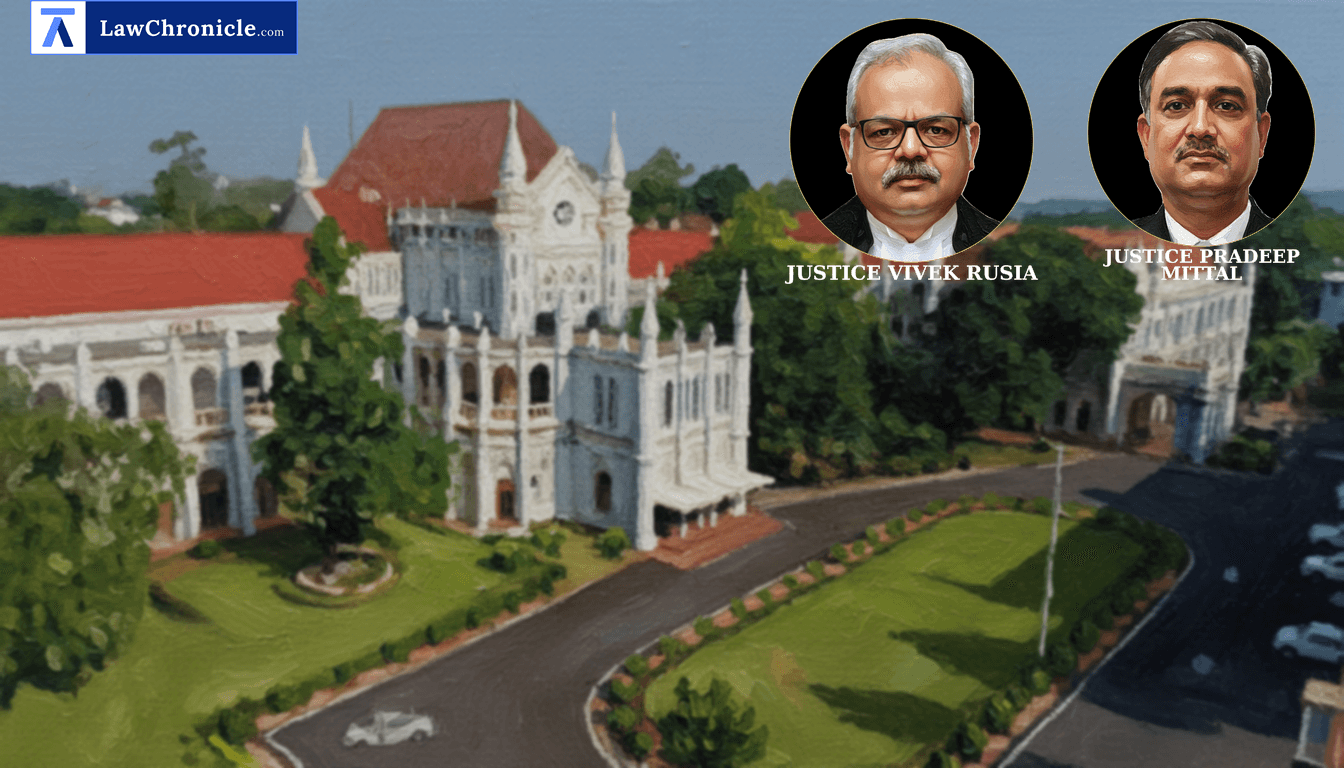
The Madhya Pradesh High Court has dismantled the state's discriminatory pay structure for new recruits, ruling that withholding full salary from duly selected employees performing regular duties is a fatal violation of constitutional equality. Striking down a series of amendments and circulars that mandated paying only 70% to 90% of the minimum pay scale during probation, the Court held that the state cannot extract 100% work while justifying fractional payment as a 'disciplining' measure.
A bench comprising Acting Chief Justice Vivek Rusia and Justice Pradeep Mittal adjudicated a cluster of writ petitions challenging the constitutional validity of a 2019 state policy. The petitioners, primarily Class-III and Class-IV employees, contested the state's decision to extend probation periods and implement a staggered stipend-based pay scale following their recruitment under the M.P. Civil Services (General Service Conditions) Rules, 1961.
Key Takeaways
End of 'Stipendiary' Probation
Government employees appointed against vacant posts after due selection are entitled to 100% of the prescribed pay scale from day one, regardless of their probation status.
Prohibition of Grade Discrimination
Rules that impose reduced pay slabs only on Class-III and Class-IV employees while exempting Class-I and Class-II officers are unconstitutional and discriminatory.
Work-Pay Parity Restored
If the state extracts full regular work from a probationer, it lacks the legal logic or authority to withhold a portion of the minimum pay scale as a 'stipend'.
Court Observations on Natural Justice and Article 14
The Court found no logical basis for the state's argument that reduced pay encourages discipline or better learning during the initial years of service. The bench highlighted the inherent contradiction in the state's policy of taking full service while denying full remuneration. The Court, in its reasoning, observed: "The aforesaid decision does not justify the grant of reduced pay scale during the probation period to the duly selected candidate against the vacant post. The aforesaid decision is contrary to the principles of natural justice that when 100% work is being taken from an employee, then why should 100% salary not be paid. The candidate is appointed under recruitment Rules after following due process and fulfilling all eligibility criteria; then he is entitled to 100% salary as per the pay scale prescribed for the post."
The bench further noted that such harsh conditions were selectively applied to lower-tier employees, creating an arbitrary classification. It observed that Class-III and Class-IV employees were being discriminated against compared to Class-I and Class-II officers, despite both categories undergoing rigorous selection processes. The Court clarified that while a probation period is justified for evaluating work suitability, it cannot be used as a justification for wage suppression.
The Court has following directions:
"All, the above rules and circulars which prescribe payment @ 70%, 80% and 90% of minimum pay scale for 1st, 2nd and 3rd years respectively during the probation period be struck down. Let all government employees of the concerned Department, who have been appointed after the memo dated 25th November, 2019 be paid full salary for the work done during the period of probation. Accordingly, these writ petitions are allowed."
Ratio
Payment of salary lower than the minimum pay scale prescribed in the recruitment rules, framed under Constitution of India, 1950, cannot be imposed as a general condition of service during probation if the employee is performing the full duties of the post. Such a reduction, in the absence of proven misconduct or specific punishment, constitutes an arbitrary and discriminatory practice violative of Articles 12 and 14 of the Constitution of India, 1950.
Background
The controversy began with a memorandum dated November 25, 2019, followed by a General Administration Department circular dated December 12, 2019. These executive actions sought to amend the Fundamental Rules and various departmental rules, such as the Madhya Pradesh School Education Service (Teaching Cadre), Service Conditions and Recruitment Rules, 2018 and the The Madhya Pradesh Tribes and Scheduled Castes Teaching Cadre (Service and Recruitment) Rules, 2018. The state contended that paying 70%, 80%, and 90% of the minimum pay scale during the first, second, and third years of probation respectively would make employees more disciplined and serious about their duties.
The petitioners argued that this was a violation of the 'Equal Pay for Equal Work' principle and pointed out that similar slabs were not applied to higher-ranking officers. The Court relied on its earlier decisions in The State of Madhya Pradesh and Others Vs. Dilliraj Bhilala ( "W.A. No.1498/2024 dated 28.04.2025": 2024 CaseBase(MP) 9242) and Indore Municipal Corporation Vs. Vinita Tiwari and Others, where it had previously quashed recoveries and ordered full salary payments in similar contexts. Finding the state's rationale unsustainable, the High Court struck down the impugned Gazette notifications and circulars, ordering the state to compensate all affected employees with their full salaries retrospectively from their date of appointment.
Case Details:
Case No.: WRIT PETITION No. 14411 of 2020
Neutral Citation: 2026:MPHC-JBP:66385
Case Title: RAHUL SINGH KACHHWAH AND OTHERS AND OTHERS Versus THE STATE OF MADHYA PRADESH AND OTHERS
Appearances:
For the Petitioner(s): Shri Vijay Kumar Shukla - Advocate, Shri Kailash Chandra Ghildiyal - Senior Advocate, Ms. Warija Ghildiyal - Advocate, Shri Rahul Diwaker - Advocate, Shri Aman Pandey - Advocate, Shri Shubham Rai - Advocate, Shri Ishan Soni - Advocate, Shri Sitendra Kumar Vishwakarma - Advocate, Shri Amit Shukla - Advocate, Shri Anshul Tiwari - Advocate, Shri Abhishek Pandey - Advocate.
For the Respondent(s): Shri Bramhadatt Singh - Additional Advocate General.
Source: 2026 CaseBase(MP) 20617
Similar Articles

 Breaking News


