


Glaring Contradictions Sink Narcotics Prosecution as Himachal Pradesh HC Upholds Acquittal
 Copy Link
 Share
 Save
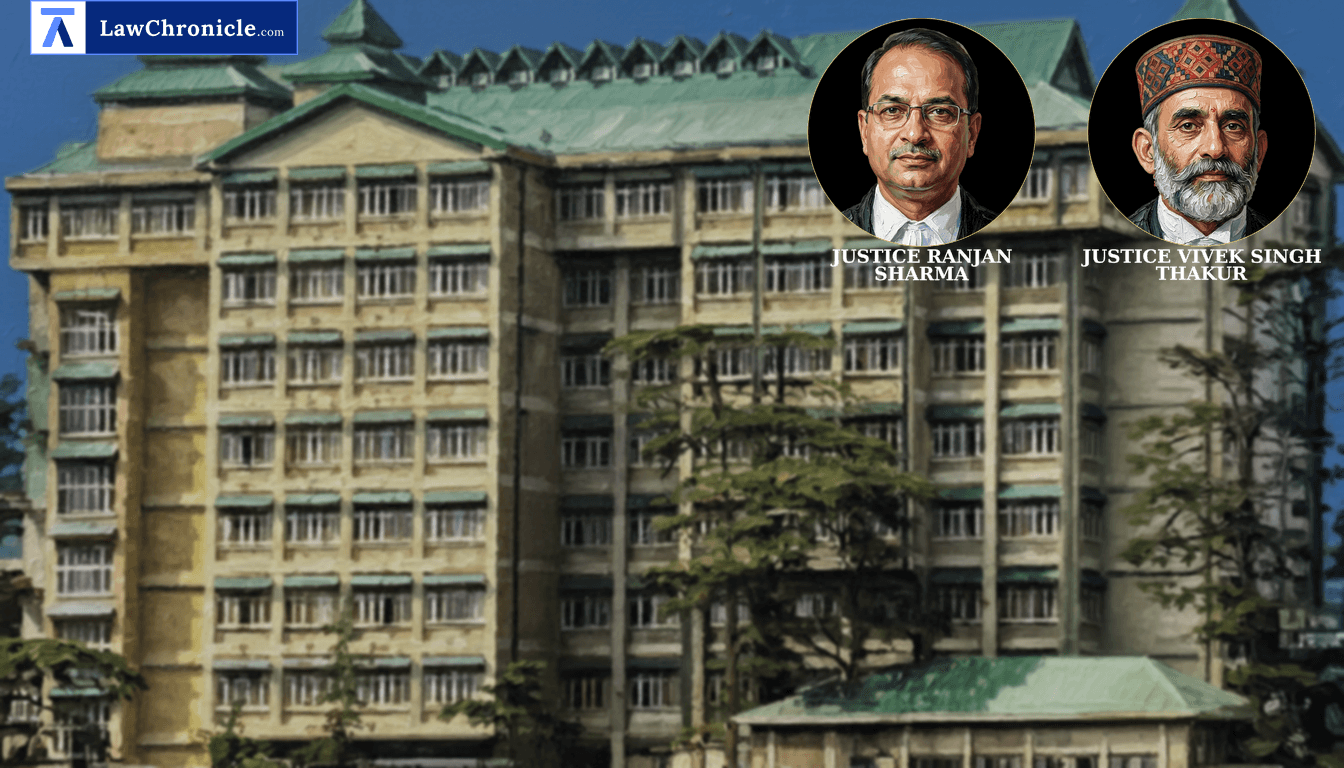
In a stern rebuke to botched investigative procedures, the Himachal Pradesh High Court has affirmed the acquittal of three men in a drug trafficking case, ruling that 'white lies' in police documentation and irreconcilable contradictions in witness testimonies destroy the foundation of a criminal trial.
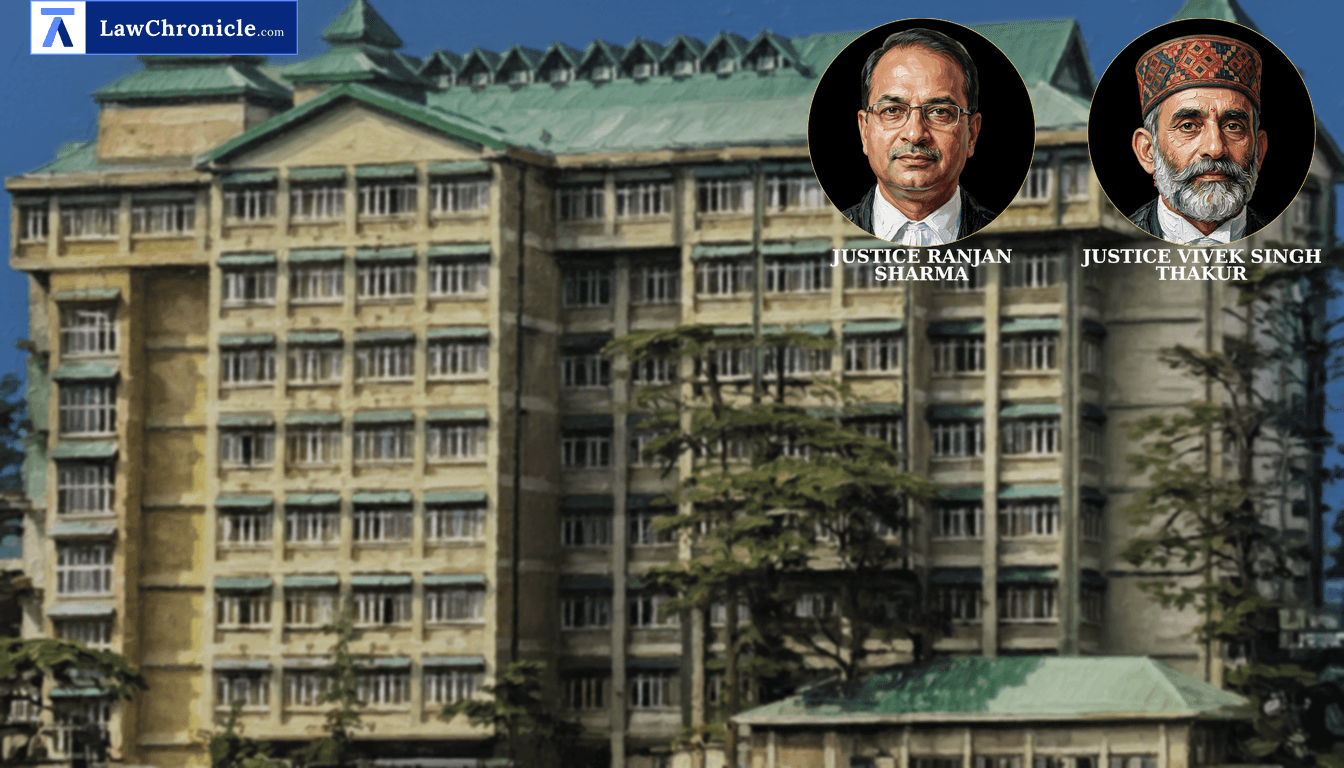
The High Court of Himachal Pradesh, Shimla, presided over by a bench of Justice Vivek Singh Thakur and Justice Ranjan Sharma, delivered this verdict while dismissing the State's appeal against a 2013 acquittal order. The court scrutinized the systemic failures in the prosecution's narrative, ranging from suspicious document preparation to the failure of independent witnesses to support the state's version of events.
Key Takeaways
- Sanctity of Search Procedures
Strict adherence to procedural safeguards is non-negotiable; documentation that appears pre-fabricated or manipulated can invalidate the entire recovery process. - Veracity of Official Witnesses
The Court will not hesitate to dismiss the prosecution's case if the testimonies of Gazetted Officers or Magistrates contradict the police narrative regarding the time and place of disclosure statements. - Burden of Proof in NDPS Cases
Since the Narcotic Drugs and Psychotropic Substances Act, 1985 carries heavy penalties, the prosecution must provide 'cogent, reliable, and convincing' evidence, as the benefit of even the slightest doubt must be extended to the accused. - Electronic Evidence Standards
Call detail records (CDR) are inadmissible if not supported by the mandatory certificate under the Indian Evidence Act, 1872 and if the prosecution fails to link the specific mobile numbers to the accused.
Fatal Discrepancies in Search and Seizure
The prosecution alleged that on February 13, 2011, a police party apprehended two individuals near the Banjar bus stand. Upon personal search conducted in the presence of a Magistrate, 500 grams of Charas was allegedly recovered from each. However, the Court found that the consent memos prepared under Section 50 of the Narcotic Drugs and Psychotropic Substances Act, 1985 were suspicious. Specifically, the memos mentioned Section 20 of the Narcotic Drugs and Psychotropic Substances Act, 1985 before any contraband had actually been discovered.
The Court, in its reasoning, observed: "For mentioning ‘Section 20 of the NDPS Act’ in the beginning before the search and recovery, it appears that this document has been prepared later on, or something is there which is being hidden from the Court... such explanation or defence shall also be a white lie, as in such eventuality, case FIR number and other details would have been written in one go simultaneously with one pen, but in this case, FIR number was kept blank, which was filled in later on with different ink."
Discrepancies in Official Testimony and Seal Integrity
A significant blow to the prosecution was the testimony of PW-4 Bishan Dass, the Naib Tehsildar (Magistrate). While the police claimed the accused made disclosure statements in the Magistrate's office on February 15, 2011, the Magistrate himself categorically stated in court that the accused were never produced before him after the initial search on February 13.
Furthermore, a strange discrepancy regarding the seals used on the contraband parcels emerged. While the official records and FSL report mentioned a seal with the letter 'T', the SHO (PW-1) testified that the parcels produced before him were sealed with the letter 'H'. The Court noted that no attempt was made by the prosecution to rectify or clarify this contradiction, which cast doubt on whether the same contraband was sent for forensic examination.
The Court's Final Directions
The Court has the following directions:
"In view of the aforesaid discussion, we are of the considered opinion that there is no merit in the appeal and accordingly, appeal is dismissed. Pending miscellaneous application(s), if any, are also disposed in the same terms. Bail bonds stand discharged and record of Trial Court be sent back forthwith."
Ratio
In criminal trials, particularly those involving the Narcotic Drugs and Psychotropic Substances Act, 1985, the prosecution is bound to prove its case beyond reasonable doubt. When search memos contain statutory sections before actual recovery, or when there are irreconcilable differences between the testimony of the Investigating Officer and the accompanying Magistrate regarding the place and time of proceedings, the benefit of doubt must be given to the accused. Furthermore, electronic evidence like Call Detail Records cannot be relied upon without proper certification and clear identification of the user.
Background
The case originated from FIR No. 17 of 2011 at Police Station Banjar, District Kullu. The State alleged that Surender Kumar and Amit Rathi were caught with 1 kg of Charas (500g each) and subsequently named Jai Singh as their supplier. The Trial Court (Special Judge, Kullu) acquitted all three respondents on August 14, 2013, citing lack of evidence and procedural lapses. The State challenged this acquittal in the High Court. The High Court reviewed the testimonies of 13 witnesses, including the police party and independent witnesses who turned hostile. Finding the prosecution's narrative riddled with "glaring contradictions," the bench upheld the lower court's decision, emphasizing that the presumption of innocence is further fortified by an acquittal.
Case Details:
Case No.: Cr. Appeal No. 4 of 2014
Neutral Citation: 2026:HHC:42493
Case Title: State of Himachal Pradesh Versus Surender Kumar and Others
Appearances:
For the Appellant: Mr. Raj Negi, Deputy Advocate General.
For the Respondent(s): Mr. M.A. Safee, Advocate, for respondent No. 1; Mr. Anubhav Chopra, Advocate, for respondent No. 2; Mr. Jia Lal, Advocate, for respondent No. 3.
Source: 2026 CaseBase(HP) 9423
Similar Articles
 Breaking News


