


Himachal Pradesh HC Upholds Acquittal In NDPS Case Citing Fatal Timeline Contradictions
 Copy Link
 Share
 Save
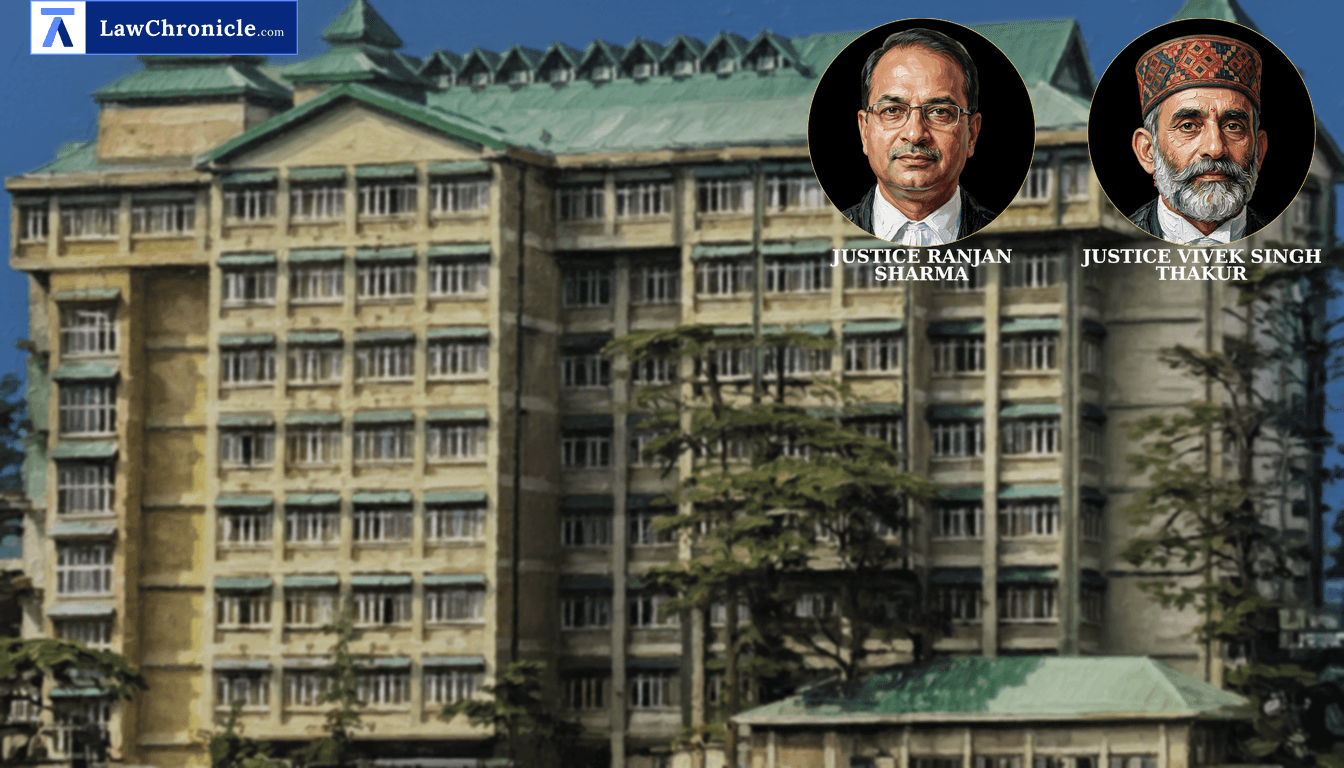
The Himachal Pradesh High Court has reinforced the sanctity of the 'benefit of doubt' principle in narcotics prosecutions, dismissing a state appeal against acquittal due to irreconcilable discrepancies in the police's version of events. In a scathing analysis of procedural lapses, the court held that impossible timelines regarding the presence of witnesses during personal searches completely shattered the prosecution's claim of a valid seizure.
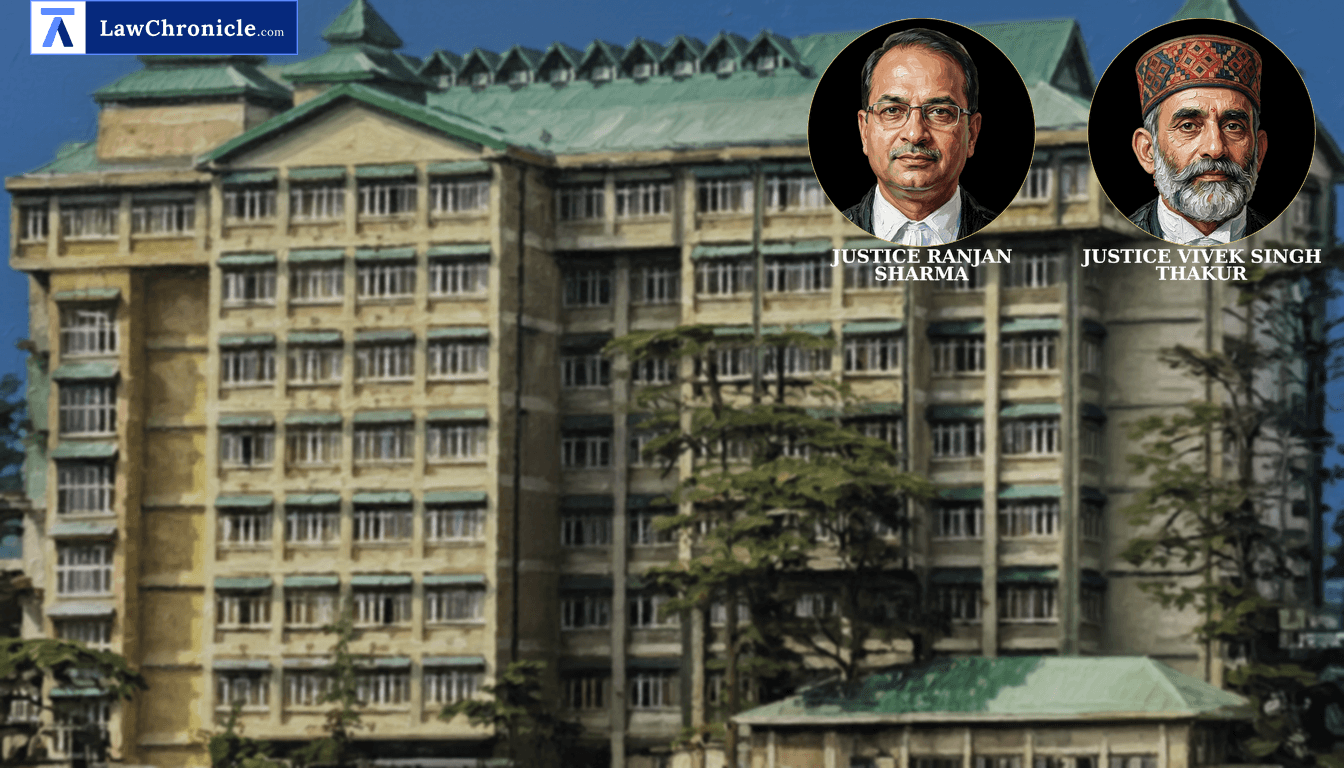
A Division Bench comprising Justice Vivek Singh Thakur and Justice Ranjan Sharma heard the appeal preferred by the State of Himachal Pradesh against the judgment of the Special Judge, Kullu. The State challenged the acquittal of two individuals who were charged under Section 20 and Section 29 of the Narcotic Drugs and Psychotropic Substances Act, 1985 following the alleged recovery of 2.200 kg of Charas during a motorcycle chase in 2011.
Key Takeaways
Integrity of Search Timelines
Procedural evidence that places a witness in two locations simultaneously (the spot and the police station) is fatal to the prosecution's case and creates reasonable doubt.
Corroboration of Official Witnesses
Substantial contradictions between official witnesses regarding the stopping of vehicles and identification of accused persons undermine the veracity of the entire recovery process.
Presumption of Innocence
An order of acquittal by a Trial Court fortifies the presumption of innocence, requiring the State to provide 'cogent, reliable, and convincing' evidence to overturn it.
Fatal Contradictions in Prosecution Evidence
During the trial, the Court noted significant inconsistencies in the testimonies of the official witnesses. While the police claimed a lady pillion rider fled into a steep hillock during a high-speed chase, the Court found it 'unbelievable' that the official vehicle, covering distance in seconds, could not apprehend her. Furthermore, the claim that a bag of contraband remained stationary on a motorcycle seat while the rider fled at high speed without a pillion was deemed physically improbable.
The Court, in its reasoning, observed: "From the aforesaid timeline, as per prosecution evidence, PW-7 Constable Vishwa Nath had left the spot at 9:45 P.M. and he never returned back to the spot. It completely shattered the story of the police regarding timing of apprehending Jeet Ram, his arrest, and conduct of his personal search, as PW-7 Constable Vishwa Nath could not have been present at the time of personal search of Jeet Ram."
Discrepancies in Forensic Reporting
Another critical observation involved the description of the seized property. The Court noted that while witnesses described the Charas as being housed in specific orange and blue bags, the State Forensic Science Laboratory (FSL) report was entirely silent on the existence of such containers, further diluting the link between the seized article and the produced evidence.
The Court's Final Directions
Following the detailed analysis of the evidence, the Court found no merit in the State's appeal. The Court has following directions:
"Bail bonds stand discharged and record of Trial Court be sent back forthwith."
Ratio
In criminal trials under the Narcotic Drugs and Psychotropic Substances Act, 1985, the prosecution must establish a flawless chain of custody and procedural timeline; the slightest doubt regarding the physical presence of recovery witnesses at the time of arrest or search necessitates the extension of the benefit of doubt to the accused.
Background
On January 10, 2011, a police party in Kullu allegedly signaled a motorcycle to stop. The riders purportedly fled, leading to a chase where a lady escaped and the male rider was eventually caught with 2.200 kg of Charas. The accused were charged under the Narcotic Drugs and Psychotropic Substances Act, 1985 and tried before the Special Judge, Kullu. The Trial Court acquitted the respondents on November 1, 2013, citing a lack of sufficient material and evidence. The State appealed this decision, arguing that the official witnesses had sufficiently corroborated the recovery. However, the High Court found that the procedural timeline was physically impossible, as the witness who signed the search memo had already left for the police station to register the FIR, as per Code Of Criminal Procedure, 1973 procedures, at the time the search supposedly occurred.
Case Details:
Case No.: Cr. Appeal No. 76 of 2014
Neutral Citation: 2026:HHC:39392
Case Title: State of Himachal Pradesh Versus Jeet Ram and another
Appearances:
For the Petitioner(s): Mr. Raj Negi, Deputy Advocate General.
For the Respondent(s): Ms. Tejasvi Thakur, Advocate, vice Mr. Pawnish Shukla, Advocate.
Source: 2026 CaseBase(HP) 8020
Similar Articles
 Breaking News


