


Doubtful Recovery and Seal Mismanagement Vitiate Narcotics Conviction: Himachal Pradesh HC
 Copy Link
 Share
 Save

The High Court of Himachal Pradesh has reinforced the sanctity of the presumption of innocence in narcotics cases, ruling that material contradictions regarding the recovery of contraband and discrepancies in sealing procedures are fatal to the prosecution's case. In a decision that highlights the rigorous standards of proof required under the Narcotic Drugs and Psychotropic Substances Act, 1985, the Court affirmed an acquittal where independent witnesses turned hostile and the physical evidence in court failed to match investigation records.
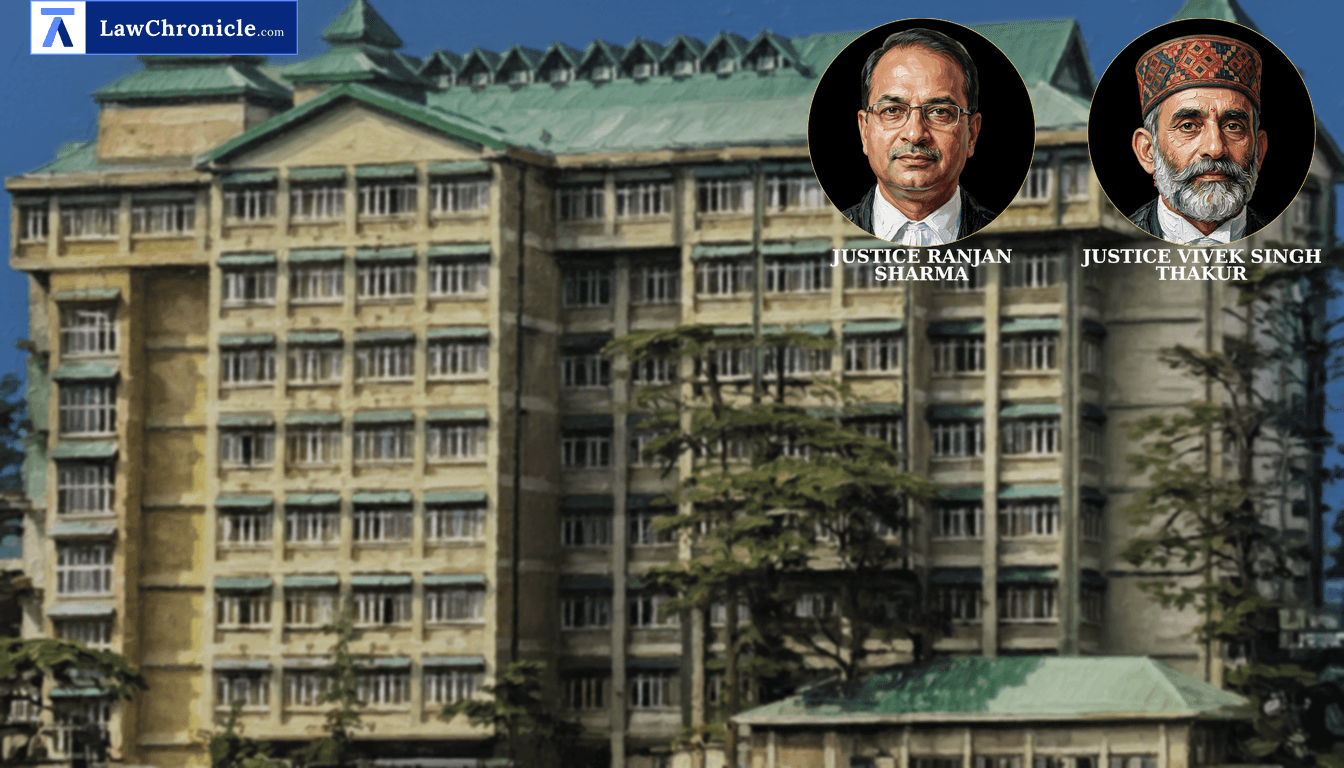
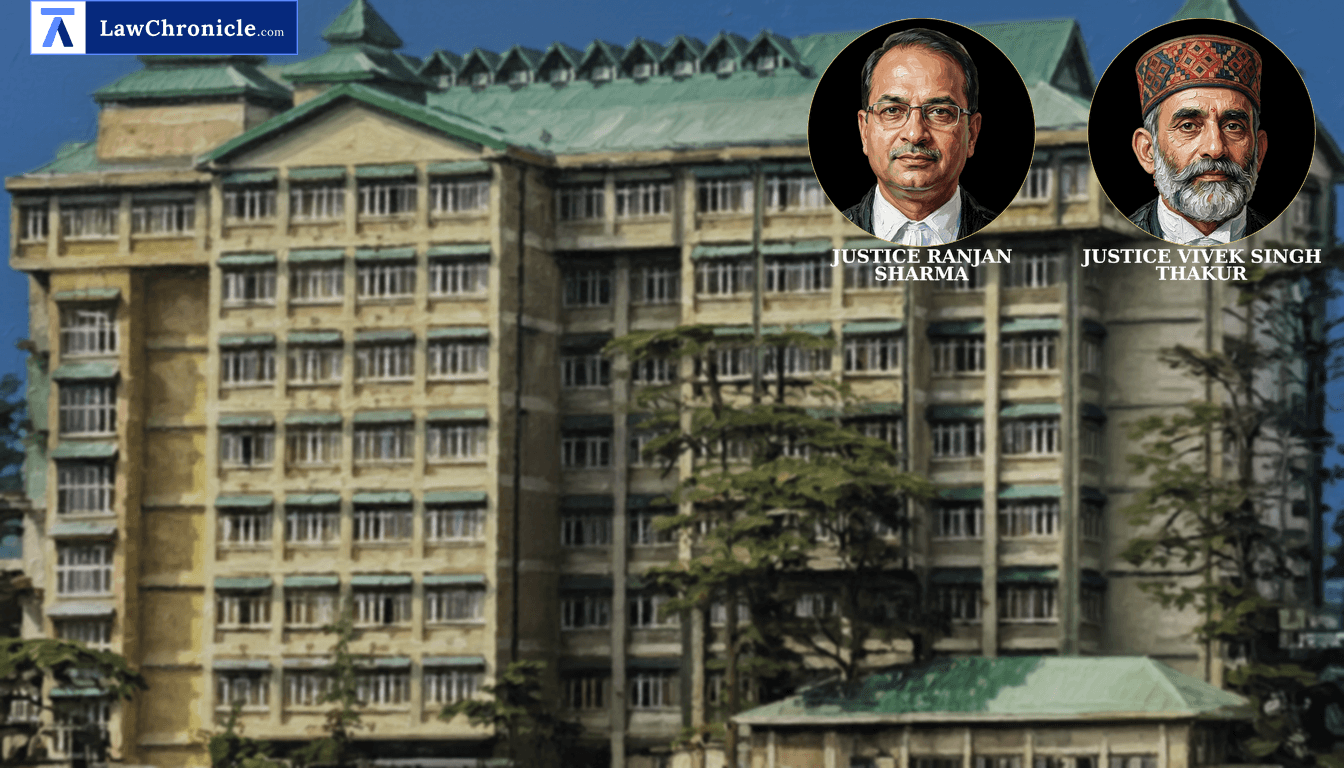
A division bench of Hon’ble Mr. Justice Vivek Singh Thakur and Hon’ble Mr. Justice Bhupesh Sharma adjudicated upon an appeal filed by the State against the acquittal of three individuals accused of possessing over 2 kilograms of 'Charas'. The Court scrutinized whether the trial court's decision was a "possible view" based on the evidence, ultimately finding that the prosecution failed to establish a foolproof chain of custody.
Key Takeaways
Double Presumption of Innocence
An order of acquittal strengthens the initial presumption of innocence, requiring an appellate court to find "substantial and compelling reasons" before reversing such a finding.
Hostile Independent Witnesses
While signatures on seizure memos may place witnesses at the scene, their denial of witnessing the actual recovery of contraband creates a significant 'reasonable doubt' that benefits the accused.
Sanctity of the Seal
Retrieving a seal from an independent witness before the case property reaches the court compromises the integrity of the evidence and suggests potential tampering.
Physical Discrepancy in Case Property
A variation in the colour of wrapping tape between the time of seizure and the time of production in court raises questions about the identity and safe custody of the contraband.
Appellate Interference in Acquittals Restricted
The Court, while hearing the appeal under Section 378 of the Code of Criminal Procedure, 1973, extensively relied on precedents to define its scope. It observed that if the trial court's view is a possible one based on material on record, the appellate court should be slow in disturbing such findings. The Court noted that even if a different view is possible, the trial court’s reasonable view must prevail unless it is palpably wrong.
The Court has the following directions:
"In view of the provisions of Section 437-A of the Code of Criminal Procedure, 1973 (Section 481 of Bhartiya Nagarik Suraksha Sanhita, 2023), the respondents/accused persons are directed to furnish bail bonds in the sum of ₹25,000/- each with one surety in the like amount each to the satisfaction of learned Registrar (Judicial) within four weeks, which shall be effective for six months with stipulation that in the event of Special Leave Petition being filed against this judgment, or on grant of the leave, the respondents/accused persons on receipt of notice(s) thereof, shall appear before the Hon’ble Supreme Court."
Material Contradictions and Procedural Failures
The Court, in its reasoning, observed: "There are material contradictions in the statements of official witnesses regarding the place where prior information was received, recording reasons of belief under Section 42(2) of Narcotic Drugs and Psychotropic Substances Act, 1985 and the place where the bag was searched... The identify and safe custody of the case property is not proved on record, in view of the statement of independent witness Rajesh Thakur (PW-1) since the seal ‘A’ used during the course of seizure of the case property never remained in his possession and was taken back by the Police after the alleged formalities."
Ratio
In narcotics cases, the stricter degree of proof required demands that the prosecution establish the recovery and safe custody of contraband beyond all reasonable doubt. If the case property produced in court differs in description from the seizure records, or if the seal used to secure the property was not properly entrusted to an independent party, the benefit of doubt must accrue to the accused, and an appellate court cannot interfere with an acquittal merely because a different view is possible.
Background
The State's case originated from a 2016 police operation near Solan, where a Special Investigation Unit allegedly intercepted a Mahindra XYLO vehicle. The prosecution claimed that 2.002 Kgs of 'Charas' was recovered from a backpack held by one of the three respondents. While official witnesses supported this narrative, the independent witnesses, though admitting their signatures on documents, denied that the recovery or sealing happened in their presence. Furthermore, during the trial, the contraband was found wrapped in brown tape, whereas the seizure memo recorded the use of yellow tape.
Citing Muralidhar alias Gidda & another vs. State of Karnatka and Rajesh Prasad vs. State of Bihar & another, the High Court emphasized that the burden of proof in a criminal trial never shifts. It found that the trial court had rightly identified material infirmities and omissions. Consequently, the High Court dismissed the State's appeal, upholding the judgment of acquittal passed by the Special Judge-III, Solan.
Case Details:
Case No.: Cr. Appeal No. : 208 of 2019
Neutral Citation: 2026:HHC:47488-DB
Case Title: State of Himachal Pradesh Versus Kapil @ Dhillo & Others
Appearances:
For the Appellant: Mr. Raj Negi, Deputy Advocate General.
For the Respondent(s): Mr. Anirudh Sharma, Advocate, for respondent Nos.1 & 2; Mr. Tarun Mehta, Advocate, for respondent No.3.
Source: 2026 CaseBase(HP) 11146
Similar Articles


 Breaking News


