


Gujarat High Court Orders Release Of Vehicle Seized Under Prohibition Act
 Copy Link
 Share
 Save
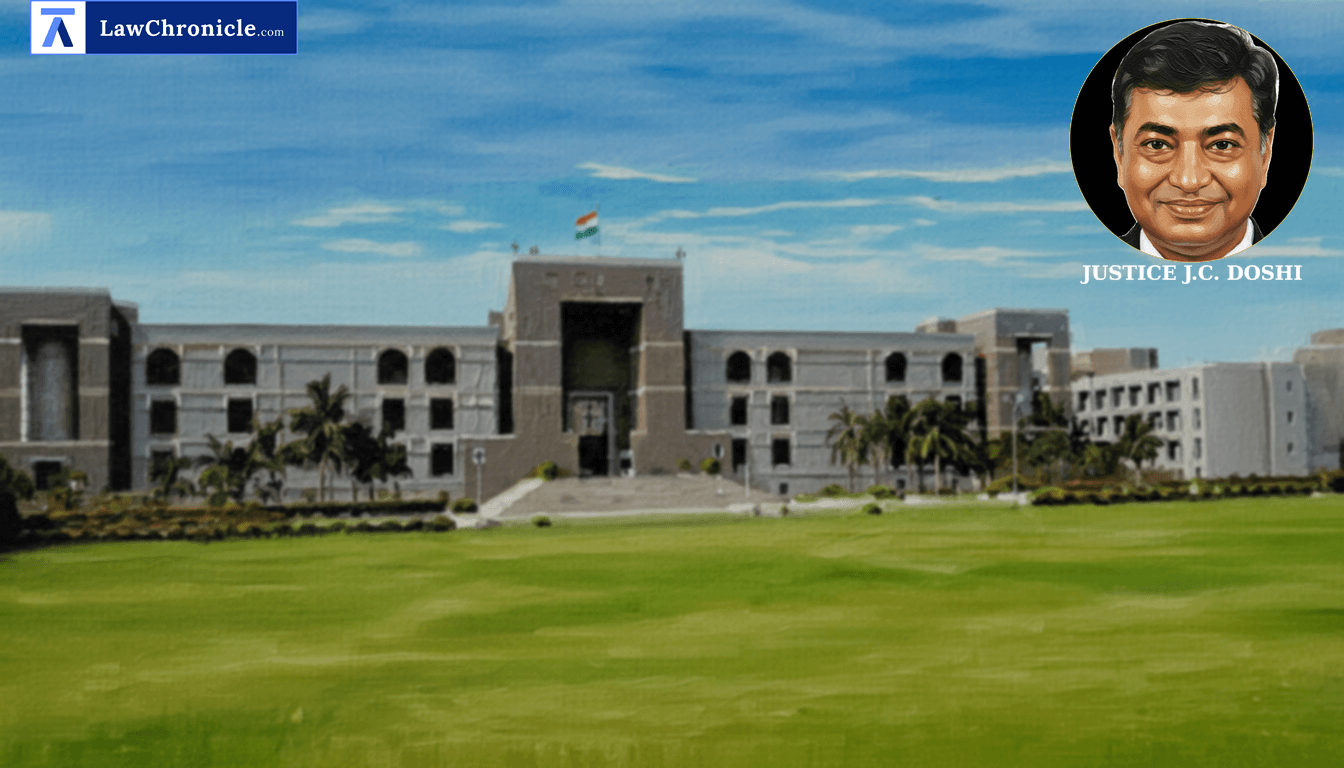
Empowering the judiciary against prolonged administrative seizure, the Gujarat High Court has ruled that statutory provisions do not impose an absolute bar on the interim custody of vehicles seized during liquor raids. In a decisive intervention, the Court emphasized that keeping seized vehicles unattended in police stations leads to their eventual decay, mandating their release to owners under appropriate judicial safeguards.
Justice J. C. Doshi presided over the matter, exercising the High Court's extraordinary and supervisory jurisdiction under the Bharatiya Nagarik Suraksha Sanhita, 2023 and the Constitution of India. The Court was tasked with determining whether a vehicle allegedly used for transporting liquor could be released pending trial despite the stringent confiscation clauses within the local prohibition laws.
Key Takeaways
Curbing Property Wastage
Judicial authorities are encouraged to prevent vehicles from becoming 'junk' in police custody by directing timely releases to rightful owners or claimants.
No Absolute Embargo
Specific provisions regarding confiscation in local laws do not override the general powers of the Court to grant interim custody during the pendency of a trial.
Constitutional Primacy
High Courts can invoke Article 226 of the Constitution of India to ensure justice and prevent the arbitrary retention of movable property by state authorities.
Court Observations and Directions
The Court noted that the coordinate bench in Musa Khan Jat Vs. State of Gujarat had previously exercised similar powers to release vehicles in identical circumstances. It further relied on the landmark precedent set in SUNDERBHAI AMBALAL DESAI VS. STATE OF GUJARAT ( "AIR 2003 SC 638": 2002 CaseBase(SC) 113), where the Apex Court lamented the practice of allowing seized vehicles to rot in police premises.
Regarding the interaction between the Gujarat Prohibition Act, 1949 and the Code of Criminal Procedure, 1973, the Court highlighted the recent findings in M/s ABC Express Vs. State of Gujarat ( "2026 LiveLaw (SC) 885": 2026 CaseBase(SC) 900). The Court, in its reasoning, observed: "section 98(2) of the Gujarat Prohibition Act, 1949 does not operate as an absolute embargo against the release of a seized vehicle on interim custody pending trial. It is further observed by the Hon’ble Apex Court that the Court is competent to exercise powers u/s 451 of the Code to pass appropriate order for its proper custody."
The Court has the following directions:
"(i) shall furnish a solvent surety of the amount equivalent to the price of the vehicle in question stated in the FIR.
(ii) shall file undertaking before the learned Trial Court that he shall not transfer the vehicle till final disposal of the trial.
(iii) shall produce the vehicle as and when directed by the learned Trial Court.
(iv) in the event of any subsequent offence, the vehicle shall stand confiscated.
Before release of the vehicle, concerned police authority shall take photographs of the vehicle from all sides at the cost of the petitioner and shall draw necessary panchanama to that effect. Said panchanama and photographs shall be part of charge sheet papers for the purpose of trial."
Ratio
Section 98(2) of the Gujarat Prohibition Act, 1949 does not constitute an absolute bar to the exercise of judicial discretion under Section 497 of the Bharatiya Nagarik Suraksha Sanhita, 2023 (or Section 451 of the Code of Criminal Procedure, 1973) for the interim release of a seized vehicle, provided the owner furnishes sufficient security and undertakings to prevent the loss of the property during trial.
Background
The case originated when police intercepted a Car Innova following secret information regarding the illegal transport of liquor. Upon search, the driver was found carrying liquor without a permit, leading to the registration of an FIR under the Gujarat Prohibition Act, 1949 at the Pardi Police Station. The petitioner approached the High Court seeking the release of the vehicle (Muddamal) under Section 497 of the Bharatiya Nagarik Suraksha Sanhita, 2023.
While the State Public Prosecutor raised objections based on the confiscation provisions of the Gujarat Prohibition Act, 1949, they did not dispute the High Court's jurisdiction under Article 226 of the Constitution of India to order a release. Following the principles laid down in Sunderbhai Ambalal Desai Vs. State Of Gujarat ( "AIR 2003 SC 638": 2002 CaseBase(SC) 113) and M/s ABC Express Vs. State of Gujarat ( "2026 LiveLaw (SC) 885": 2026 CaseBase(SC) 900), the Court allowed the petition and directed the Trial Court to release the vehicle subject to the petitioner furnishing a solvent surety and complying with specific conditions.
Case Details:
Case No.: R/Special Criminal Application No. 12726 of 2026
Neutral Citation: 2026:GUJHC:71729
Case Title: Usmankhan Idrishkhan Versus State Of Gujarat & Anr.
Appearances:
For the Petitioner(s): Prince B. Rathod(21149)
For the Respondent(s): Public Prosecutor
Source: 2026 CaseBase(GUJ) 43990
Similar Articles
 Breaking News


