


Gujarat High Court Permits Interim Release of Seized Auto-Rickshaw in Prohibition Case
 Copy Link
 Share
 Save
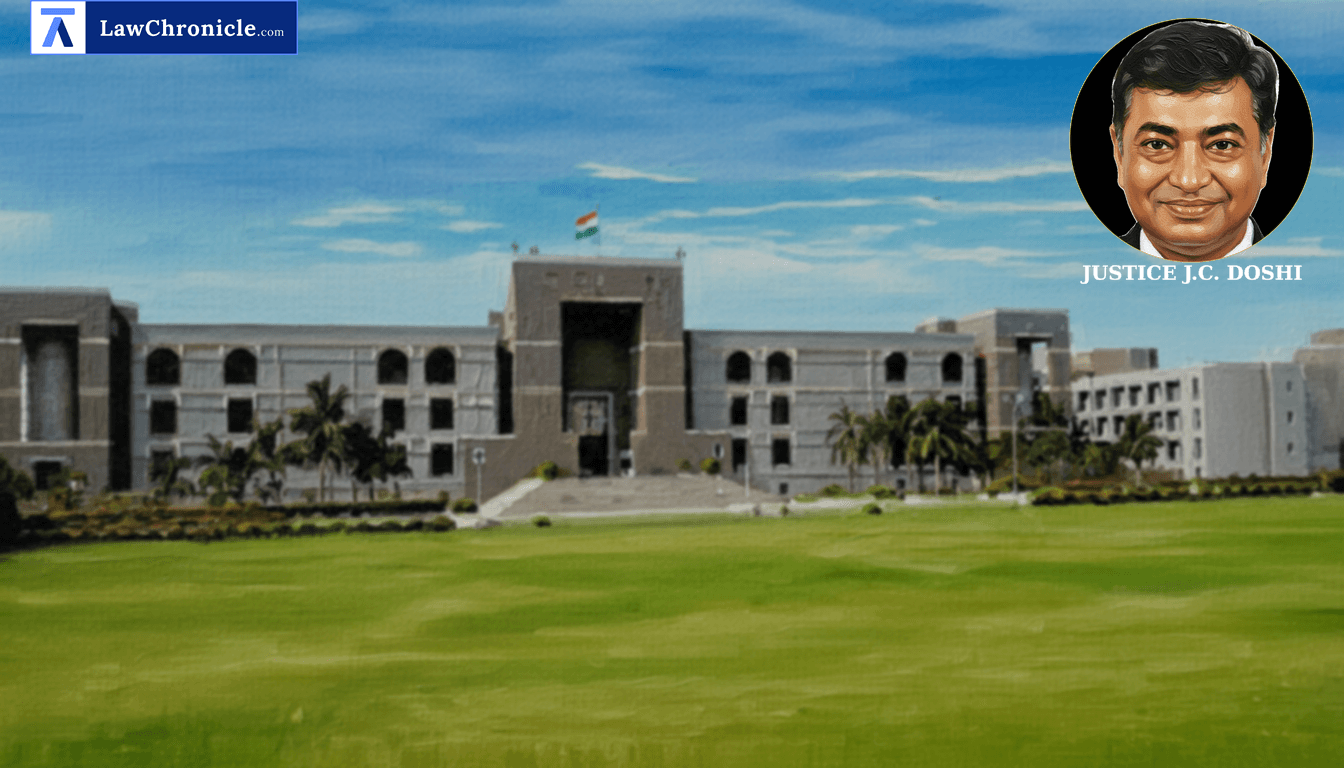
Seized vehicles rotting in police stations represent a national waste of assets, as the Gujarat High Court reaffirms the judicial power to release property pending trial despite statutory confiscation clauses. By invoking its extraordinary jurisdiction, the court has ensured that vehicles involved in prohibition offences do not turn into junk before the conclusion of criminal proceedings.
Justice J. C. Doshi presided over the petition seeking the release of an auto-rickshaw seized by the Mundra Police for allegedly carrying contraband without a permit. The applicant moved the court under Articles 226 and 227 of the Constitution of India and Section 497 of the Bharatiya Nagarik Suraksha Sanhita, 2023, challenging the continued detention of the vehicle which was seized in connection with an FIR under the Prohibition Act.
Key Takeaways
Judicial Discretion Over Statutory Embargo
Even where statutes provide for vehicle confiscation, courts retain the power to grant interim custody to prevent the property from losing its utility and value.
Prevention of Asset Deterioration
Law enforcement and magistrates are discouraged from keeping seized vehicles unattended in police premises, as they inevitably turn into junk.
Interplay of Procedural and Special Laws
Provisions of the Bharatiya Nagarik Suraksha Sanhita, 2023 (formerly CrPC) regarding custody of property are not entirely superseded by the Prohibition Act, allowing for balanced interim relief.
Court Observations and Directions
The court emphasized that keeping seized vehicles at police stations for long periods serves no purpose. It relied heavily on the precedent set in Sunderbhai Ambalal Desai Vs. State Of Gujarat ( "AIR 2003 SC 638": 2002 CaseBase(SC) 113), where the Apex Court highlighted the deteriorating state of vehicles in police custody. The High Court further noted the recent ruling in M/s ABC Express Vs. State Of Gujarat ( "2026 LiveLaw (SC) 885": 2026 CaseBase(SC) 900), which clarified that Section 98(2) of the Prohibition Act does not operate as an absolute embargo against the release of a seized vehicle on interim custody pending trial.
The Court has the following directions:
"The learned Trial Court / authority concerned is directed to release the vehicle of the petitioner being auto-rickshaw bearing RTO registration No. GJ-12-Z-3669 on the terms and conditions that the petitioner: (i) shall furnish a solvent surety of the amount equivalent to the price of the vehicle in question stated in the FIR.
(ii) shall file undertaking before the learned Trial Court that he shall not transfer the vehicle till final disposal of the trial.
(iii) shall produce the vehicle as and when directed by the learned Trial Court.
(iv) in the event of any subsequent offence, the vehicle shall stand confiscated.
Before release of the vehicle, the concerned police authority shall take photographs of the vehicle from all sides at the cost of the petitioner and shall draw necessary panchanama to that effect. Said panchanama and photographs shall be part of charge sheet papers for the purpose of trial."
The Court, in its reasoning, observed: "In our view, whatever be the situation, it is of no use to keep such seized vehicles at the police stations for a long period. It is for the Magistrate to pass appropriate orders immediately by taking appropriate bond and guarantee as well as security for return of the said vehicles, if required at any point of time."
Ratio
Section 98(2) of the Prohibition Act does not act as an absolute bar to the release of a vehicle on interim custody. Under Article 226 and 227 of the Constitution of India and Section 497 of Bharatiya Nagarik Suraksha Sanhita, 2023, the Court is competent to pass orders for the proper custody of muddamal to prevent its destruction during the pendency of the trial.
Background
The dispute arose when the petitioner's auto-rickshaw was intercepted during a police patrol in Mundra, Kachchh. Secret information led to the discovery of contraband inside the vehicle, leading to its seizure and registration of an FIR under the Prohibition Act. The petitioner argued that the vehicle would become useless if left at the police station, citing the principles in Sunderbhai Ambalal Desai Vs. State Of Gujarat ( "AIR 2003 SC 638": 2002 CaseBase(SC) 113). The State, while noting the confiscation provisions of the Prohibition Act, conceded that the High Court holds the power to order the release of vehicles under Article 226. The Court followed the coordinate bench's approach in Musa Khan Jat Vs. State Of Gujarat, where a vehicle in an identical case was released. The petition was ultimately allowed, and the vehicle was ordered to be released subject to specific conditions to ensure its availability for trial.
Case Details:
Case No.: R/SPECIAL CRIMINAL APPLICATION NO. 14857 of 2026
Neutral Citation: 2026:GUJHC:69698
Case Title: Karan Ramaram Chaudhary Versus State Of Gujarat & Anr.
Appearances:
For the Petitioner(s): Mr Paresh N Fufal, Mr Salim M Saiyed
For the Respondent(s): Manan Maheta, Public Prosecutor
Source: 2026 CaseBase(GUJ) 31973
Similar Articles
 Breaking News


