


Gujarat High Court Refuses To Conduct Mini-Trial In Disproportionate Assets Case Against Retired Deputy Collector
 Copy Link
 Share
 Save
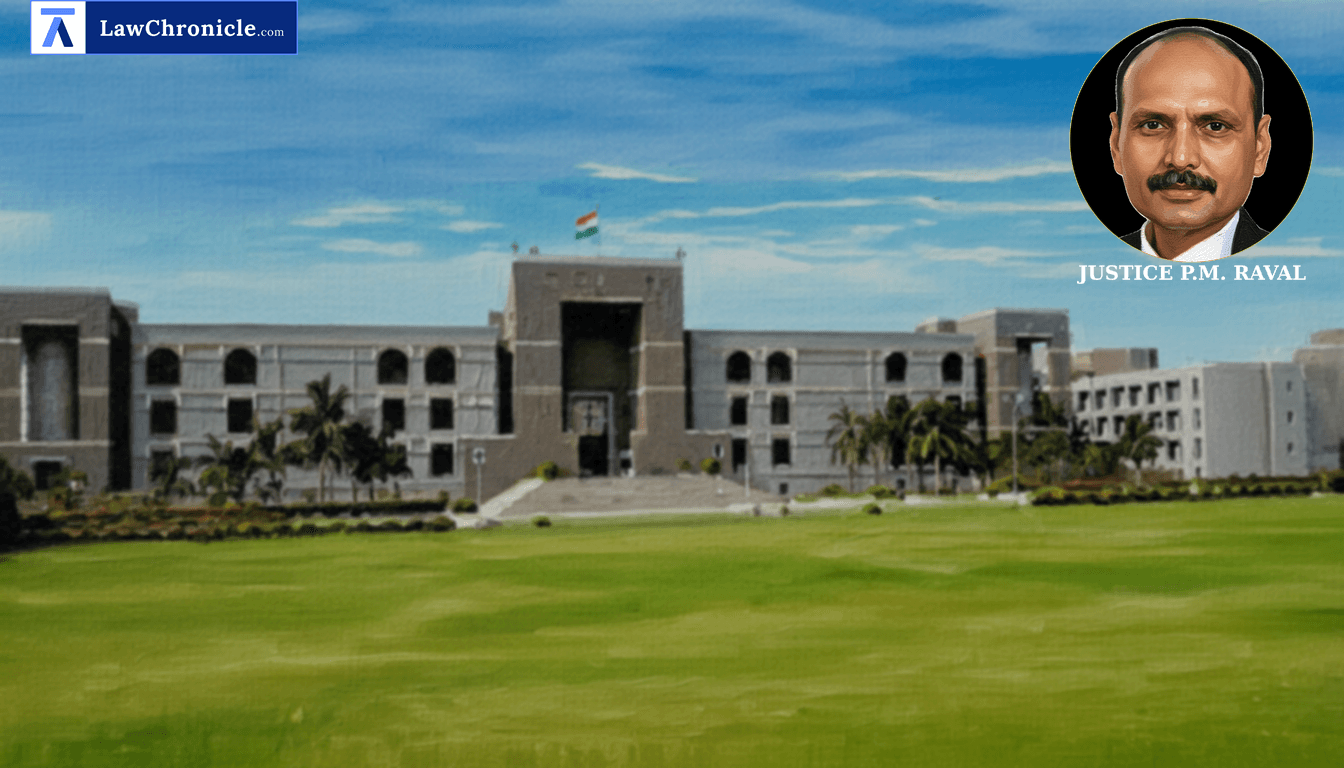
The Gujarat High Court has dealt a significant blow to the use of Section 482 of the Code of Criminal Procedure, 1973 for stalling corruption trials, ruling that complex accounting disputes and financial reconciliations in disproportionate assets cases are matters of trial evidence rather than judicial quashing at the threshold.
Justice P. M. Raval dismissed an application filed by a retired Deputy Collector (Class-I) seeking to quash an FIR and a subsequent charge-sheet alleging the accumulation of assets disproportionate to his known sources of income by over 455%.
Limits of High Court's Inherent Powers Under Section 482
A single-judge bench of Justice P. M. Raval heard the challenge against the proceedings initiated by the Anti-Corruption Bureau (ACB) under the Prevention of Corruption Act, 1988. The Court emphasized that while exercising inherent powers, the High Court cannot step into the shoes of an auditor or an accounting expert to resolve disputes over fund rotations or redemption credits.
Key Takeaways
Accounting Not Within Section 482 Purview
High Courts cannot perform detailed financial auditing or reconcile mutual fund ledgers to determine if investments were fresh or rotated capital during quashing proceedings.
Malice Irrelevant to Cognizable Offence
Personal animus or matrimonial discord between an informant and the accused does not vitiate a prosecution if the material gathered independently discloses a cognizable offence.
Burden of Proof for Prior Savings
If a public servant claims assets were derived from income earned prior to the specified 'check period', the burden of proof lies on the accused under Section 106 of the Indian Evidence Act, 1872.
Affidavits Are Not Conclusive Evidence
Third-party gift affidavits collected during investigation do not possess statutory sanctity unless the makers withstand cross-examination during the trial.
Court's Rationale on Financial Discrepancies
The petitioner argued that the Investigating Officer arbitrarily doubled the alleged disproportionate amount between the FIR (Rs. 1.04 Crore) and the Charge-sheet (Rs. 2.32 Crore) and failed to credit redemption inflows. However, the Court observed that an upward revision reflects a deeper identification of assets rather than legal illegality.
The Court, in its reasoning, observed: "...determining whether a specific financial transaction represents 'fresh investment' or 'rotated capital' is a matter of complex accounting evidence... the High Court under Section 482 Code of Criminal Procedure, 1973 cannot perform accounting reconciliation, adjust financial ledgers, or act as an auditor."
Regarding the inclusion of the estranged wife's and sisters' assets, the Court relied on P. Nallammal v. State to note that assets held by any person on behalf of the public servant can be included, and their independent status must be tested at trial.
Ratio
The High Court cannot embark upon a 'mini-trial' or an enquiry into the genuineness of accounting allegations at the charge-sheet stage; financial reconciliations, validity of gift affidavits, and the legitimacy of 'rotated' funds are matters of defence to be adjudicated by the Special Court through oral and documentary evidence.
Background
The petitioner, Mr. Kamleshbhai Harilal Goradia, joined service as a Mamlatdar in 1986 and retired as a Deputy Collector in 2015. In 2015, an FIR was registered for the check period 2000-2008, alleging assets disproportionate to his income. The petitioner contended that the FIR was an outcome of matrimonial malice by his estranged wife, who had filed serial litigations against him. He further alleged 'double counting' of mutual fund investments and the arbitrary exclusion of 14 years of prior service income.
The State, relying on State of CBI v. Thommandru Hannah Vijayalakshmi & Anr. and State of Chhattisgarh v. Aman Kumar Singh & Anr., argued that a prima facie case existed and that the High Court should not interfere when the charge-sheet disclosed the ingredients of the offence. The Court agreed, discharging the rule and directing the Special Judge (ACB), Ahmedabad, to proceed with the trial.
The Court has the following directions:
"The present Criminal Miscellaneous Application under Section 482 Code of Criminal Procedure, 1973 is hereby dismissed. The learned Special Judge (ACB), Ahmedabad is directed to proceed with Special ACB Case No. 17/2021 in accordance with law. Rule is discharged. Interim relief, if any, stands vacated."
Case Details:
Case No.: R/CRIMINAL MISC. APPLICATION NO. 33697 of 2016
Neutral Citation: 2026:GUJHC:66365
Case Title: Kamlesh Harilal Goradia Versus State Of Gujarat & Anr.
Appearances:
For the Petitioner(s): Mr BM Mangukiya, Ms Bela A Prajapati
For the Respondent(s): Mr Rohan Shah, APP
Source: 2026 CaseBase(GUJ) 31080
Similar Articles

 Breaking News


