


High Court directs bank to recalculate gratuity under group scheme and pay any excess with 9% interest
 Copy Link
 Share
 Save
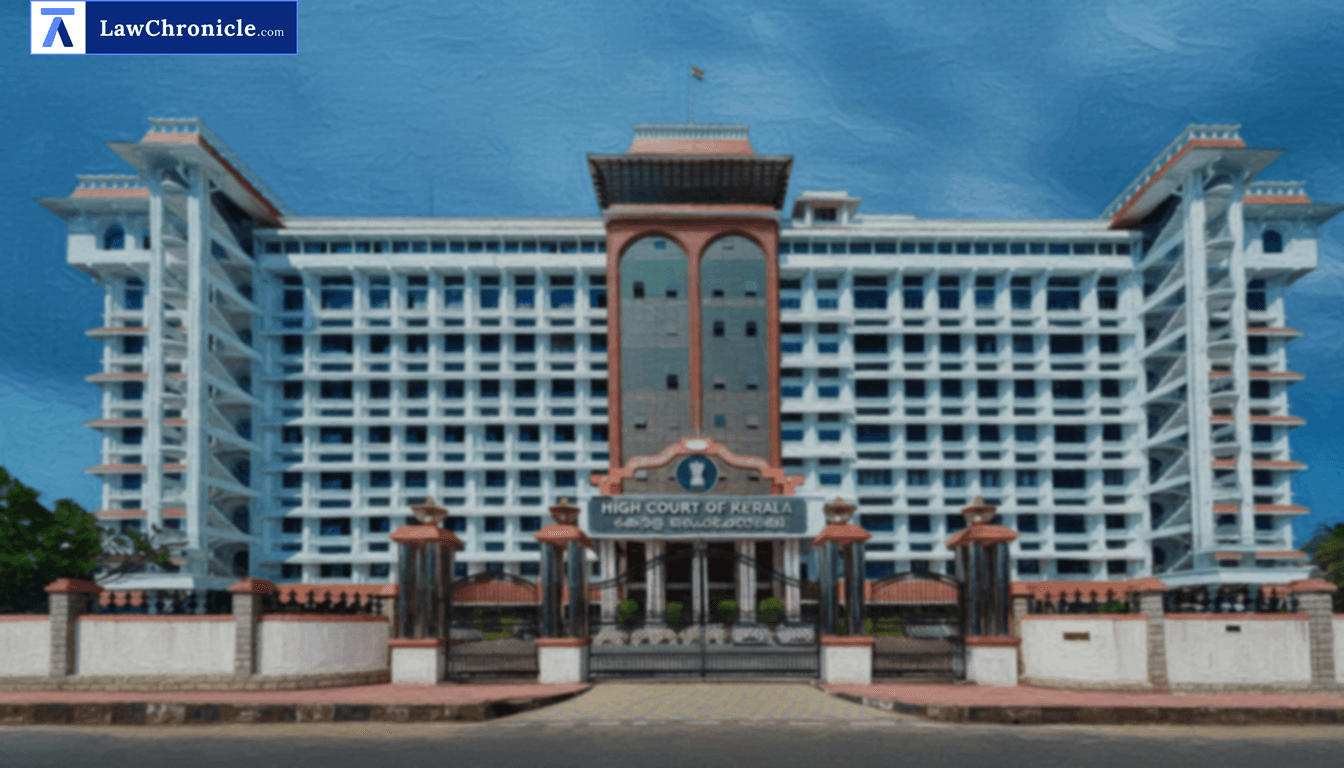
A bench of Justice Sushrut Arvind Dharmadhikari and Justice P. V. Balakrishnan heard intra‑court appeals arising from a Single Judge's judgment of 19.11.2021 in W.P.(C) No.11845/2020 concerning non‑payment of gratuity and the scope of a group gratuity insurance scheme under the Payment of Gratuity Act. The appeals (W.A. Nos. 1745 of 2021 & 58 of 2022) raised the question whether the employer's contract of insurance under a group gratuity scheme could confer better terms under Section 4(5) of the Act and whether the bank was obliged to release amounts received from LIC to the retired employee (now represented by legal heirs).
The Court allowed the appeals in part, set aside the Single Judge's order and directed the first respondent bank to compute gratuity in terms of Clause 8 of the Ext.R1(b) Group Gratuity Scheme within one month, taking into account pay revision benefits; if the computed amount exceeded the sum already disbursed, the bank was to submit a claim to LIC for the excess within ten days, the LIC was to pay the bank within two weeks, and the bank was to disburse the excess to the legal heirs with 9% interest per annum from the date of retirement until payment. The Court clarified that if the clause‑8 computation produced an amount less than the sum already paid, the bank could not recover the excess from the appellants. The Court relied on earlier Full Bench and Supreme Court decisions holding that an employer's insurance contract that provided better terms would fall within Section 4(5) of the Act. The Court, in its reasoning, observed: "The liability to pay gratuity to an employee is always on the employer under S.4(2) of the Central Act and is at the rate of fifteen days' wages for every completed year of service or part thereof in excess of six months. This does not however affect the right of the employee to receive better terms of gratuity under any award or agreement or contract with the employer under S.4(5) of the Central Act. ... Any amount in excess of the gratuity due would also go to the employee since the contract of insurance would fall within the ambit of S.4(5) of the Central Act. ... The provisions of the Central Act or any rule made thereunder shall have effect notwithstanding anything inconsistent therewith contained in any other enactment or instrument or contract."
Background The writ petitioner joined service on 05.05.1980 and retired on 30.04.2017 after 37 years’ service. On retirement the bank immediately paid Rs.22,84,593/- towards gratuity under the Master Policy No.3839; subsequently, arrears attributable to a DA revision effective 01.01.2017 led the bank to claim an additional Rs.2,40,806/- from LIC, which LIC credited to the bank but the bank remitted the sum back to LIC treating it as excess. The petitioner alleged entitlement to the additional amount and interest and sought quashing of the bank’s Ext.P4 order and directions either to LIC to re‑credit the amount to the bank for onward disbursement or to the bank to pay the petitioner.
The Single Judge ordered the bank to request LIC to remit the amounts and directed disbursement but did not award interest or accept additional pay‑revision claims. The bank contended that gratuity liability was governed by Section 4(3) of the Act and that the Master Policy was "subject to the Gratuity Act", invoking a ceiling (20 months' salary under the policy) and relying on an indemnity bond executed by the employee. LIC maintained it only paid amounts as claimed by the bank.
The High Court examined the policy terms and the binding Full Bench precedent in Chandrasekharan Nair G. (confirmed by the Supreme Court), holding that where a group insurance contract provided better gratuity terms, it fell within Section 4(5) and benefited the employee. The Court found no satisfactory explanation for the earlier payment exceeding statutory entitlement and directed a fresh computation under Clause 8 of Ext.R1(b). The Court ordered that, if excess was established, LIC must pay the bank and the bank must disburse the excess with 9% p.a. interest from the date of retirement; if the clause‑8 computation yielded a lesser amount, the bank could not recover any excess already paid. The appellants were given liberty to approach the competent authority under Section 7 of the Gratuity Act if they disputed the bank’s computation. The Single Judge's judgment dated 19.11.2021 was set aside and W.P.(C) No.11845/2020 was allowed in part as directed.
Case Details: Case No.: W.A. Nos. 1745 of 2021 & 58 of 2022 Case Title: W.A. Nos. 1745 of 2021 & 58 of 2022 — The Kerala State Co‑operative Bank Ltd. v. P. Sidharthakumar & Ors. Appearances: For the Petitioner(s): Dr. Abraham P. Meachinkara; Smt. M. M. Meena John For the Respondent(s): Adv. Gilbert George Correya (Senior Counsel) for the Kerala State Co‑operative Bank; Sri Viju Thomas; Dr. Abraham P. Meachinkara (for LIC of India)
Similar Articles
 Breaking News


