


High Court Dismisses Review Challenging Public Notice on Property-Tax Assessment
 Copy Link
 Share
 Save
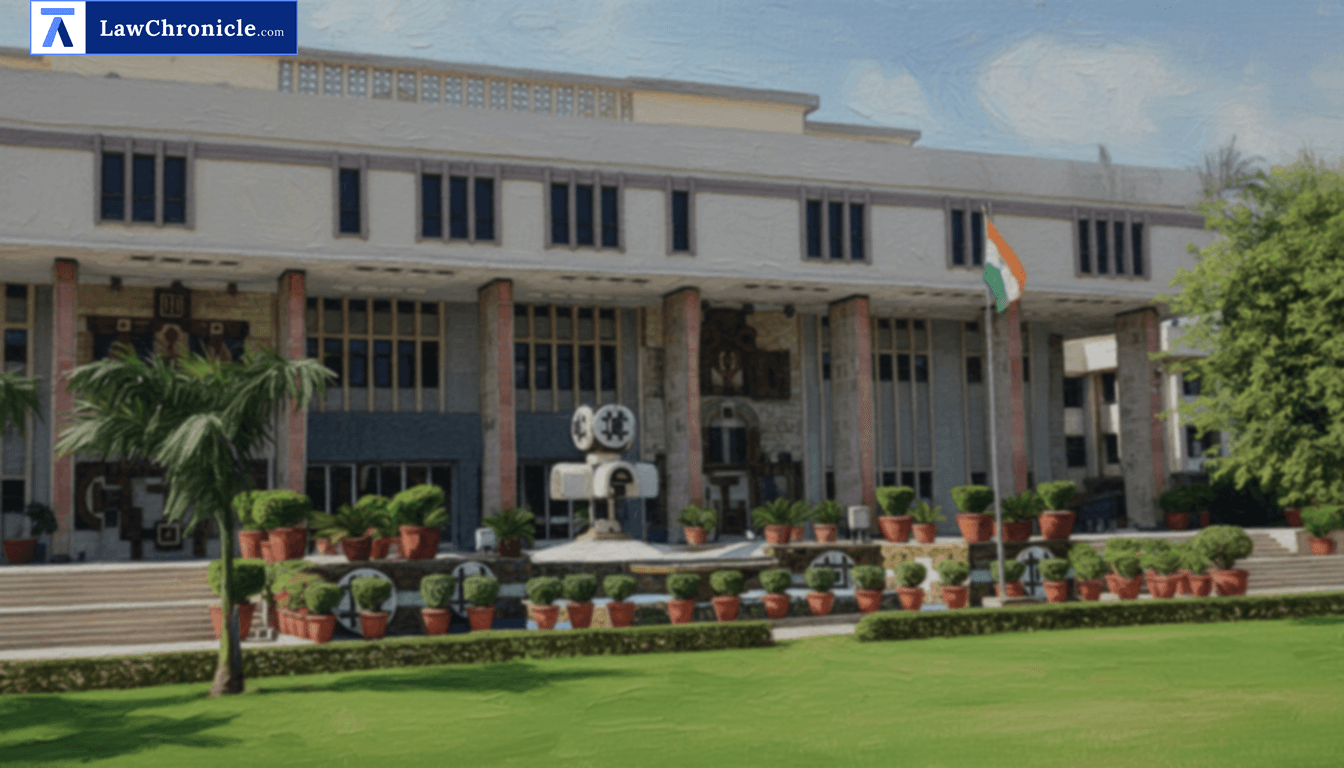
A bench of Justice Anil Khetarpal and Justice Harish Vaidyanathan Shankar heard review petitions arising from a batch of writ petitions that challenged a public notice issued by the New Delhi Municipal Council (NDMC) inviting objections to the Assessment List for 2025–2026. The petitions principally contested “Note‑2” appended to the objection form, which referred to the Supreme Court’s decision in NDMC v. Association of Concerned Citizens of New Delhi and indicated that assessments already accepted under the NDMC (Determination of Annual Rent) Bye‑Laws, 2009 would not be reopened.
The Court dismissed the review petitions and held that no case for recall of the earlier order was made out. The bench recorded that counsel for NDMC had, on instructions, stated that “Note‑2 stood withdrawn,” and consequently found that “no cause for interference survived.” The Court declined to grant any pre‑emptory writs ordering fresh statutory procedure at the stage of a notice inviting objections and relegated the petitioners to the statutory remedies available under the NDMC Act, including appellate and revisional remedies. The Court, in its reasoning, observed: “It is trite law that the power of review is not an appellate power. A review cannot be used as a forum to re‑argue the case, nor can it be invoked merely because another view is possible. No error apparent on the face of the record, no discovery of new and important material, and no other ground permissible in law has been made out to warrant recall or review of the Impugned Order.” The bench further noted that where individual assessment orders existed, aggrieved parties had remedies under Section 115 of the NDMC Act.
Background The dispute arose after NDMC issued a public notice inviting objections to the Assessment List for 2025–2026 and enclosed an objection form bearing Note‑2. The petitioners contended that Note‑2 effectively adopted the Unit Area Method (UAM) for assessment, which they argued was impermissible in light of the Supreme Court’s 2019 decision cited in the note. The writ petitions sought, inter alia, quashing of the public notice, a direction to issue fresh notices under Section 77 of the NDMC Act and to proceed under Section 72 strictly in accordance with law, and other reliefs aimed at preventing reassessment on an impermissible basis.
During hearings of the writ petitions the NDMC, through its counsel, expressly withdrew Note‑2. The High Court therefore confined itself to the procedural posture and held that interference under Article 226 was not warranted at the stage of a notice inviting objections. The bench observed that issuing directions to statutory authorities to “follow the law” would be premature absent a concrete violation and that Section 72 (dealing with amendment of the assessment list and issuance of notice inviting objections) should be applied by NDMC in the statutory process. The Court distinguished the role of the writ jurisdiction from appellate review, emphasised that review jurisdiction was limited and not a substitute for statutory remedy, and indicated that any infringement of Section 72 could be raised before the Chairperson of the constituted Committee or other competent statutory forum. The review petitions were accordingly dismissed, and the petitioners were relegated to making representations or availing the appellate and revisional remedies provided under the NDMC Act.
Case Details: Case No.: W.P.(C) 5995/2025 & connected matters Case Title: Lalit Mohan Kapur & Ors. v. New Delhi Municipal Council & Anr. Appearances: For the Petitioner(s): Mr. M.A. Niyazi, Ms. Anamika Ghai Niyazi, Ms. Nehmat Sethi, Ms. Kirti Bhardwaj and Mr. Adnan Naqash, Advocates For the Respondent(s): Mr. Yogendra Handoo, ASC; Mr. Sanjay Sharma, ASC; Mr. Ravi Krishan Chandna, ASC; Mr. Ashwin Kataria, ASC with Mr. Suraj Gupta, Mr. Udbhav K. Garg, Mr. Siddhant Choudhary, Advocates for R‑1/NDMC; Mr. Akhileshwar Jha, SPC with Ms. Shreya Jha, Ms. Supriya, Mr. Varun Verma, Advocates for R‑2/UOI.
Similar Articles
 Breaking News


