


Karnataka HC: High Courts Must Not Circumvent SARFAESI Remedies Under Article 226
 Copy Link
 Share
 Save
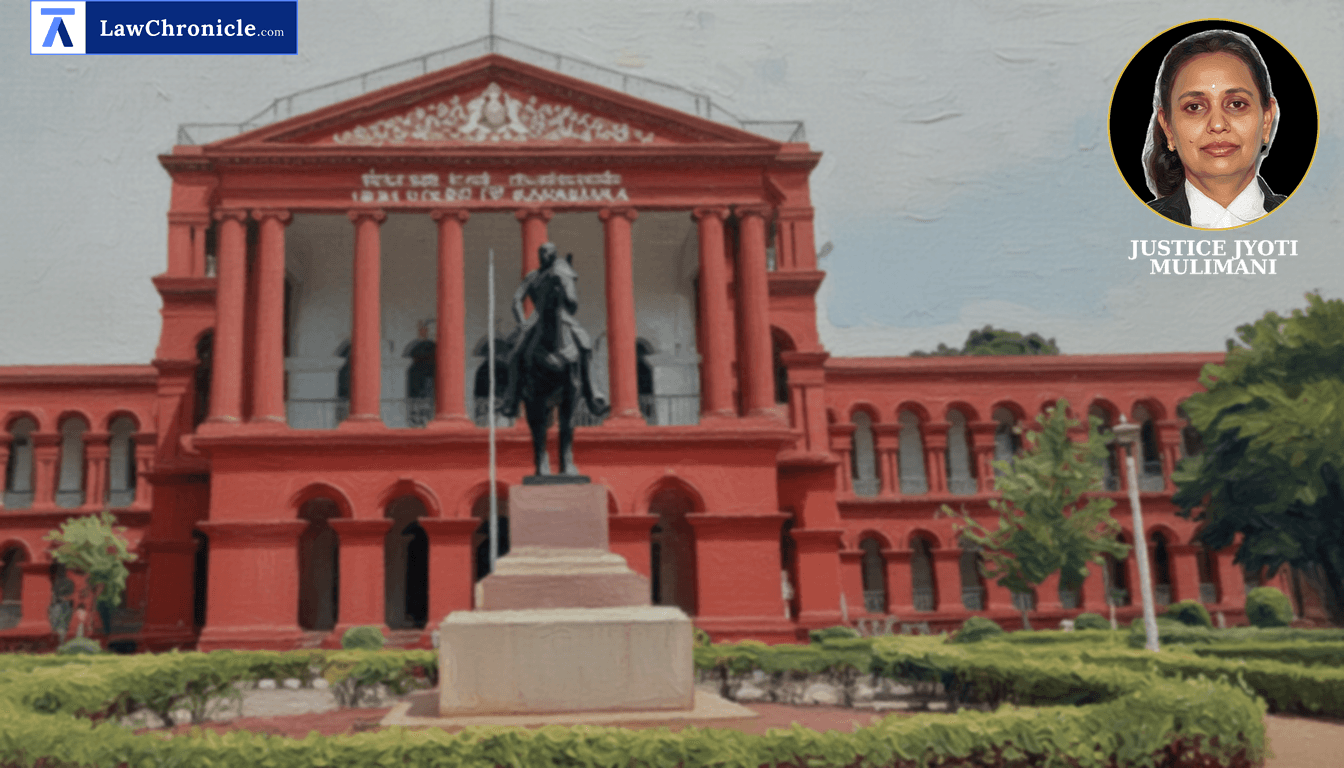
The Karnataka High Court has reaffirmed the principle that the SARFAESI Act serves as a complete code, and writ jurisdiction should not be exercised to bypass the statutory remedy of appealing to the Debt Recovery Tribunal.
A single-judge bench of Justice Jyoti M dismissed a writ petition filed by a construction company challenging an e-auction sale notice issued by Canara Bank. The court emphasized that when a specific, effective alternative remedy is provided by law, the High Court’s discretionary powers under the Constitution of India, 1950 are circumscribed and must be exercised with extreme caution.
The Mandatory Nature of Statutory Remedies
The court observed that the SARFAESI Act provides a structured mechanism for addressing grievances related to bank measures through Section 17. The bench noted that High Courts should refrain from entertaining writ petitions where an efficacious alternate remedy exists, citing settled law that judicial discretion should not disrupt the recovery processes of financial institutions.
The Court, in its reasoning, observed: "It is significant to note that Article 226 is not intended to circumvent statutory procedures. When a right or liability is created by a statute which itself prescribes the remedy or procedure for enforcing the right or liability, resort must be had to that particular statutory remedy before seeking the discretionary remedy under Article 226. The law is also well settled that a petition under Article 226 should not be entertained unless the statutory remedies are ill-suited to meet the demands of an extraordinary situation."
Reliance on Supreme Court Precedents
Justice Jyoti M relied heavily on established jurisprudence, including the rulings in Authorized Officer, State Bank of Travancore and Others v. Mathew K.C. ( "(2018) 3 SCC 85": 2018 CaseBase(SC) 723) and Phoenix ARC Private Limited v. Vishwa Bharati Vidya Mandir ( "(2022) 5 SCC 345": 2022 CaseBase(SC) 661), to highlight that the SARFAESI Act is a complete code. The court also took note of the warnings issued in United Bank Of India v. Satyawati Tondon And Others, where the Apex Court expressed concern over High Courts ignoring statutory remedies under the DRT and SARFAESI Act, thereby adversely impacting the rights of banks to recover dues.
The Court has the following directions:
"Resultantly, the writ petition is dismissed. Because of dismissal the Writ Petition, interim order granted if any stands discharged and pending interlocutory applications if any are disposed of."
Background:
The dispute arose when Canara Bank issued an e-auction sale notice on May 25, 2026, for the sale of immovable properties belonging to M/S. Sreedevi Infra Construction Pvt. Ltd. The petitioners argued that the bank had previously accepted a substitution of security through an internal office note (Annexure-C) and had taken possession of title deeds for a different property in Binnamanagala Village. They contended the bank was estopped from asserting rights over the original assets.
The respondent bank countered that the writ petition was not maintainable due to the availability of an alternative remedy under Section 17(1) of the SARFAESI Act. They further argued that the office note relied upon by the petitioners was merely an unsigned, internal document not approved by the competent authority. Finding merit in the bank's preliminary objection regarding maintainability, the High Court declined to grant interim relief and dismissed the petition, directing the petitioners to approach the appropriate statutory forum.
Case Details:
Case No.: WRIT PETITION NO. 18189 OF 2026 (GM-DRT)
NeutralCitation: 2026:KHC:32678
Case Title: M/S. SREEDEVI INFRA CONSTRUCTION PVT. LTD. AND OTHERS v. CANARA BANK AND ANOTHER
Appearances:
For the Petitioner(s): SRI. D.R.RAVISHANKAR, SENIOR ADVOCATE FOR SRI. H.S.PRASHANTH, ADVOCATE
For the Respondent(s): SRI. VIGNESH SHETTY, ADVOCATE
Source: 2026 CaseBase(KAR) 219
Similar Articles
 Breaking News


