


High Court Holds Labour Court Exceeded Jurisdiction By Reappreciating Inquiry Evidence
 Copy Link
 Share
 Save
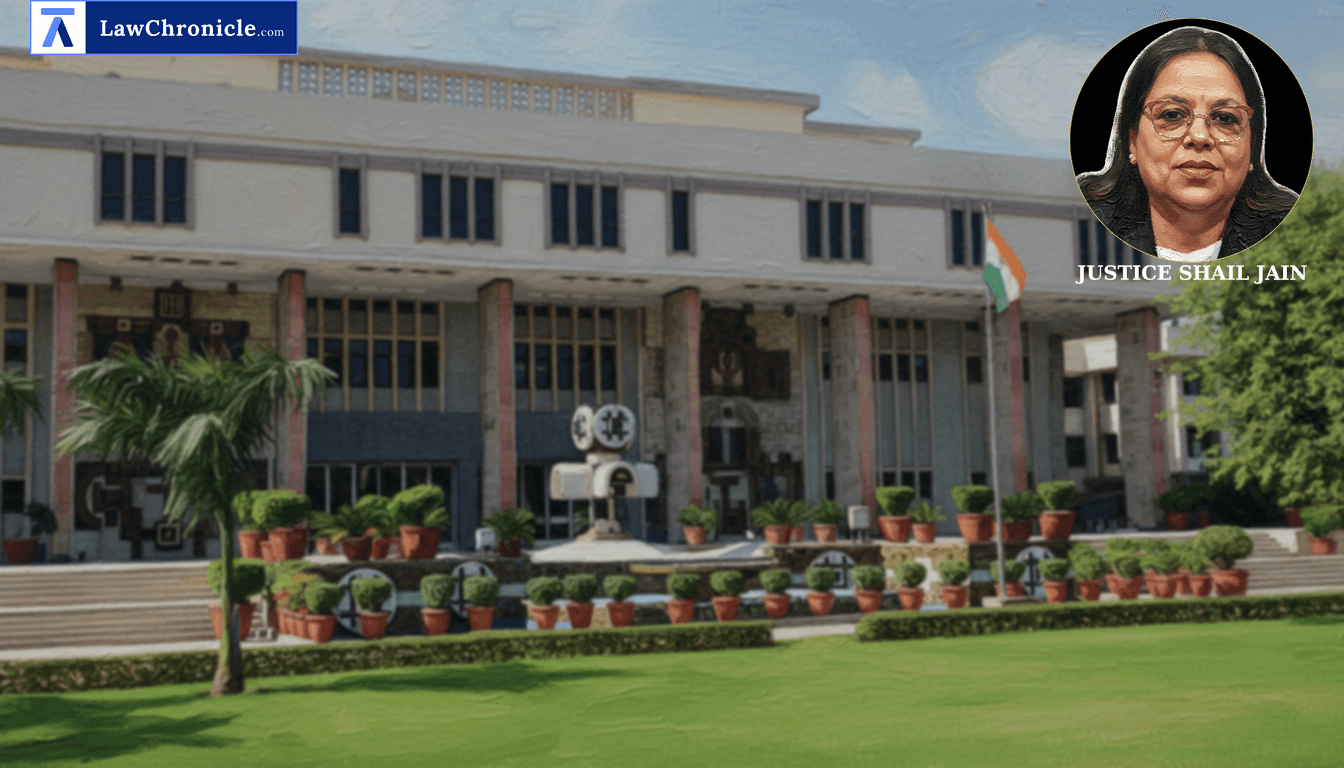
A single-judge bench of Hon'ble Ms. Justice Shail Jain heard a writ petition under Article 226 challenging an Award of the Central Government Industrial Tribunal‑cum‑Labour Court II which had set aside a termination order and directed reinstatement without back wages; the petition arose from the termination of a daily‑rated driver employed by a central public sector undertaking.
The Court allowed the writ petition, set aside the Labour Court's Award dated 26.09.2005 and restored the order of termination dated 01.08.1988. The bench held that once a domestic inquiry was held to be fair and conducted in accordance with principles of natural justice, the Labour Court could not re‑appreciate evidence and substitute its own conclusions unless the findings were perverse or based on no evidence. The Court reproduced settled principles of judicial review and observed that the tribunal "does not act as an appellate authority to reappreciate the evidence." The Court, in its reasoning, observed: "Judicial review is not an appeal from a decision but a review of the manner in which the decision is made. Power of judicial review is meant to ensure that the individual receives fair treatment and not to ensure that the conclusion which the authority reaches is necessarily correct in the eye of the court. ... The Court/Tribunal in its power of judicial review does not act as appellate authority to reappreciate the evidence and to arrive at its own independent findings on the evidence. The Court/Tribunal may interfere where the authority held the proceedings against the delinquent officer in a manner inconsistent with the rules of natural justice or in violation of statutory rules prescribing the mode of inquiry or where the conclusion or finding reached by the disciplinary authority is based on no evidence." The judgment further noted the Labour Court's characterisation of the Inquiry Officer's approach as proceeding "on assumption, conjecture and surmises," but found that that appellate re‑weighing of evidence did not meet the high threshold for interference.
Background
The dispute arose after the workman, engaged as a driver since 28.09.1982 and treated as a daily‑rated employee, was accused of unauthorised removal and misuse of a standard vehicle on 09–10 January 1988. The management issued a show‑cause notice, held a domestic inquiry in which the Inquiry Officer found the charge proved, and terminated the workman on 01.08.1988; an internal departmental appeal was dismissed. The workman raised an industrial dispute and, following a reference, the Labour Court held that while the domestic inquiry was fair and principles of natural justice were complied with, the Inquiry Officer's findings were "not based on reliable evidence" and therefore set aside the termination, directing reinstatement with continuity of service but without back wages.
Before the High Court the management contended that the Labour Court had exceeded its jurisdiction under Section 11A of the Industrial Disputes Act, 1947 by reappraising evidence after affirming procedural fairness. Reliance was placed upon Supreme Court precedents including B.C. Chaturvedi, Standard Chartered Bank v. R.C. Srivastava and General Manager (P), Canara Bank v. Ganganarasimhaiah to submit that interference was permissible only if findings were perverse or based on no evidence. The workman relied on absence of material evidence, non‑production of the log book and non‑examination of the complainant Shri A.K. Trikha to justify the Labour Court's intervention.
The High Court analysed the records and applied the settled test: whether the inquiry was by a competent authority, whether natural justice was observed, and whether the disciplinary conclusions were perverse or based on no evidence. Finding the inquiry competent and fair, and that the Inquiry Officer had relied on material on record (including gate registers and sightings), the Court concluded that the Labour Court had impermissibly re‑evaluated evidence and substituted its own view. The High Court set aside the Award, restored the termination order, clarified that amounts paid under interim orders pursuant to Section 17B were not recoverable from the workman, and allowed the writ petition; no order as to costs was made.
Case No.: W.P.(C) 1630/2006 & CM APPL. 1417/2006 Case Title: MAHANAGAR TELEPHONE NIGAM LTD. v. SHRI RAM RATAN Appearances: For the Petitioner(s): Mr. Chandan Sharma and Mr. Vikram Sharma, Advs. For the Respondent(s): Mr. Chirayu Jain, Mr. Raksha Awasya and Ms. Tanishqua Dhar, Advs.
Similar Articles

 Breaking News


