


Overlapping Administrative Roles Not Automatic Proof of Bias in Domestic Enquiries: Delhi HC
 Copy Link
 Share
 Save
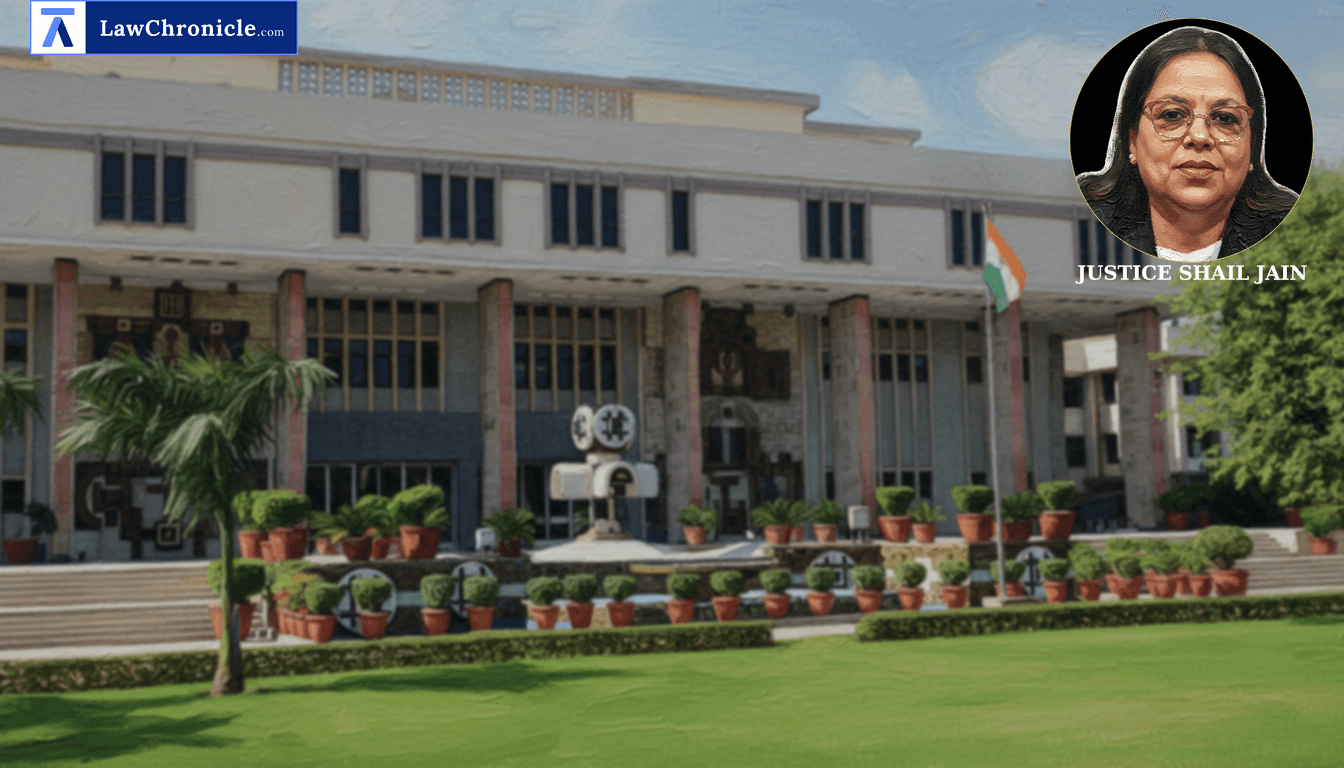
The Delhi High Court has reinforced the principle that the mere participation of a management official in multiple stages of a disciplinary process does not inherently vitiate a domestic enquiry unless actual prejudice or independent adjudicatory failure is demonstrated. This ruling sets a high threshold for workmen challenging terminations on grounds of institutional bias, particularly in private establishments where managerial functions are often concentrated within a limited pool of individuals.
In a detailed judgment, Justice Shail Jain dismissed a writ petition filed under Constitution of India, affirming the Labour Court's decision to uphold the dismissal of a security guard who had been found guilty of unauthorized absence and submitting false medical certificates.
Domestic Enquiry Upheld Despite Overlapping Roles
The Petitioner contended that the enquiry stood vitiated as a partner of the management acted as the complainant, appointing authority, witness, and disciplinary authority, thereby violating the doctrine of nemo judex in causa sua. However, the Court observed that the adjudicatory function was performed by an independent Enquiry Officer.
The Court, in its reasoning, observed: "The question is not whether Shri Vikram Mehra participated in the proceedings, but whether such participation rendered the adjudicatory process unfair. No such circumstance has been demonstrated in the present case. Merely because the same authority is involved at different stages of a disciplinary process does not, by itself, establish legal bias. Particularly in private establishments and small industrial concerns, managerial functions are often discharged by a limited number of individuals."
The Court further emphasized the principles laid down in State Bank of Patiala v. S.K. Sharma ( "(1996) 3 SCC 364": 1996 CaseBase(SC) 2155), noting that procedural irregularities must be tested on the touchstone of prejudice. Since the workman participated fully, cross-examined witnesses, and submitted replies, no failure of justice was found.
Limited Scope of Judicial Review Under Article 226
Justice Jain reiterated that High Courts do not sit in appeal over disciplinary findings. Referring to B.C. Chaturvedi v. Union of India ( "(1995) 6 SCC 749": 1995 CaseBase(SC) 611), the Court noted that judicial review is directed against the decision-making process and not the decision itself. The Court further relied on State Bank of Bikaner and Jaipur v. Nemi Chand Nalwaya ( "(2011) 4 SCC 584": 2011 CaseBase(SC) 635) and Union of India v. P. Gunasekaran ( "(2015) 2 SCC 610": 2014 CaseBase(SC) 744) to emphasize that once some evidence exists to support a finding of misconduct, the Writ Court cannot re-appreciate evidentiary value or substitute its own conclusions.
On the issue of the standard of proof, the Court cited Union of India v. Sardar Bahadur ( "(1972) 4 SCC 618": 1971 CaseBase(SC) 506), affirming that disciplinary proceedings are governed by the "preponderance of probabilities" rather than the strict "beyond reasonable doubt" standard applicable to criminal trials.
Dismissal Not Disproportionate to Misconduct
Regarding the challenge to the quantum of punishment, the Court held that the dismissal was not "shockingly disproportionate." The Court noted that the Labour Court had already exercised its statutory discretion under Section 11-A of the Industrial Disputes Act, 1947 and found no reason to interfere. Citing Mahindra and Mahindra Ltd. v. N.B. Narawade, the High Court held that interference with punishment is justified only in exceptional cases where the penalty appears wholly irrational.
The Court has the following directions:
"Accordingly, the present writ petition along with pending applications, if any, is dismissed. There shall be no order as to costs."
Background:
The dispute arose when the Petitioner, a Chowkidar employed since 1988 with M/s Tin Box Co., was charge-sheeted in June 1997 for unauthorized absence and submitting false medical documents after a trip to his native place. Following a domestic enquiry, he was dismissed from service in May 1998. The Labour Court-V, Karkardooma, upheld the enquiry as fair and the punishment as justified in its 2006 Award. The Petitioner moved the High Court arguing that the disciplinary process was a sham due to the multifaceted role played by a partner of the management and that his absence was due to genuine illness.
Key Takeaways:
Strict Burden to Prove Bias
Workmen must demonstrate that a manager's multiple roles actually influenced the independent Enquiry Officer's findings; mere overlap is insufficient to prove bias.
Procedural Fairness Over Technicalities
Courts will prioritize whether a delinquent employee had a "reasonable and adequate opportunity" to defend themselves over minor technical violations of procedure.
Preponderance of Probabilities Governs
In industrial disputes, the management is not required to prove misconduct with the same rigor as a criminal prosecutor; credible evidence that makes the charge probable is sufficient.
High Bar for Punishment Modification
High Courts will not interfere with the quantum of punishment unless it is so irrational that it "shocks the conscience" of the Court, especially if the Labour Court has already vetted the proportionality.
Ratio Decidendi:
In domestic enquiries within private or small establishments, the doctrine of nemo judex in causa sua is not violated solely because a single administrative authority initiates the charge, appoints the officer, and imposes the penalty, provided an independent enquiry officer conducts the actual adjudication and the delinquent employee is not prejudiced in their defense. Judicial review under Article 226 is confined to the decision-making process and cannot be used to re-appreciate evidence or substitute the Court's discretion for that of the disciplinary authority unless the findings are perverse or based on no evidence.
Case Details:
Case No.: W.P.(C) 3269/2007
Case Title: UDAY NARAYAN SHUKLA v. GOVT. OF NCT OF DELHI & ORS.
Appearances:
For the Petitioner(s): Mr. R.K. Saini, Adv.
For the Respondent(s): None.
Source: 2026 CaseBase(DEL) 476
Similar Articles
 Breaking News


