


Gujarat High Court Quashes Disciplinary Orders for Failure to Record Reasons and Declares Officer Exonerated
 Copy Link
 Share
 Save
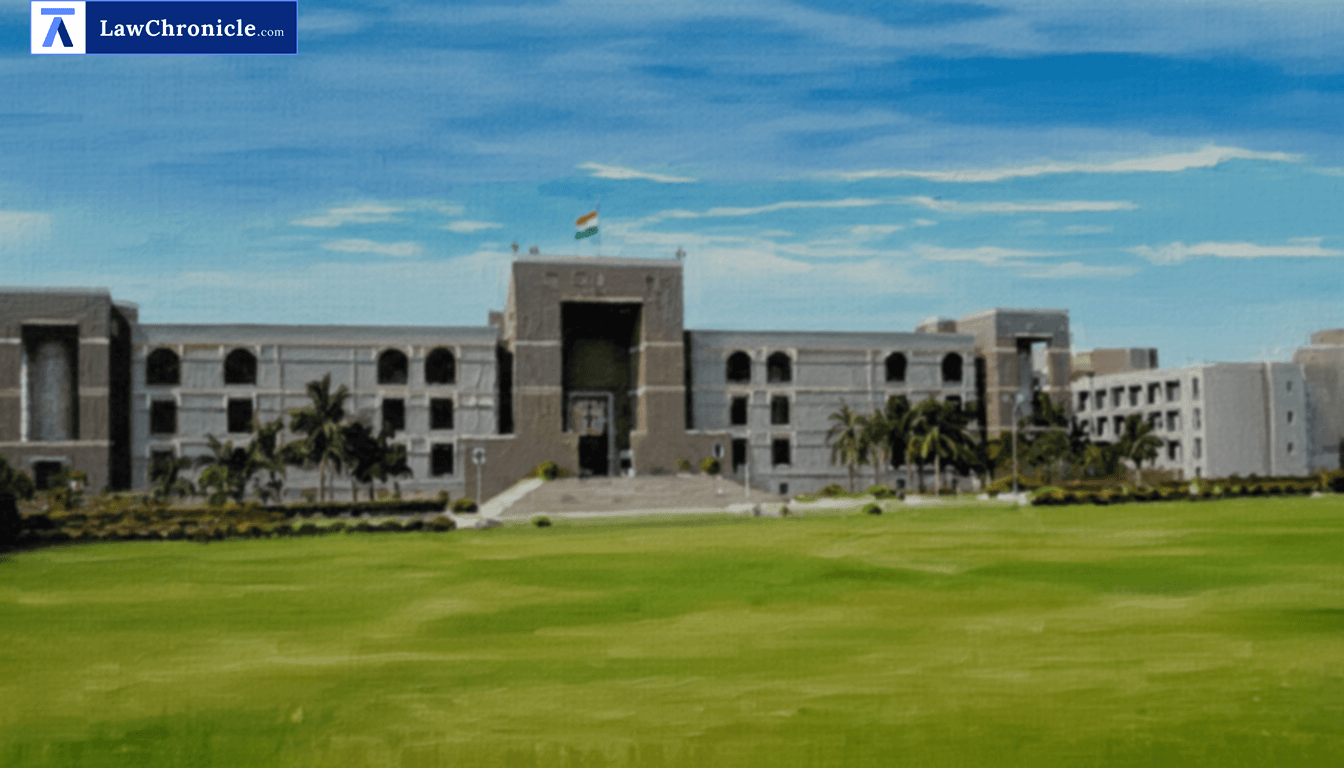
A single-judge bench of Justice Maulik J. Shelat heard a petition under Article 226 challenging a show-cause notice dated 31/12/1998, the penalty order dated 16/06/1999 and a review order dated 09/07/2010, all arising from departmental disciplinary proceedings against a Class-I officer of the Directorate of Employment and Training, Gujarat. The petition contested the imposition and confirmation of a penalty of stoppage of one increment and sought to prevent the impugned orders from affecting the petitioner’s promotion prospects.
The Court allowed the petition, set aside the disciplinary and review orders and held the petitioner to be exonerated of all charges. The Court found that the disciplinary authority failed to record cogent reasons while disagreeing with the Inquiry Officer and did not issue a final show-cause notice before imposing a major penalty, rendering the procedure illegal and the orders vitiated. The Court described the action of the respondent as "arbitrary, discriminatory and also violative of Article 14 of the Constitution of India" and declared that "the impugned order of penalty dated 16/6/1999, as well as the order dated 9/7/2010 passed by the respondent, are unsustainable in law." The Court, in its reasoning, observed: “48. From the conspectus of the aforementioned observations of the Supreme Court and this Court, the following aspects are required to be maintained when the Disciplinary Authority disagrees with the findings of the Inquiry Officer.
(a) There has to be tentative/proposed findings of the Disciplinary Authority disagreeing with the Inquiry Officer’s report recorded in the show-cause notice.
The show-cause notice of disagreement should be issued to the delinquent calling upon him as to “why the findings which are in his favour is/are not required to be reversed.”
(c) While issuing the show-cause notice, the expression “charges are proved” should be avoided, since the same will reflect a predetermined application of mind by the Disciplinary Authority.
(d) Such show-cause notice shall not stipulate the imposition of a particular penalty, minor or major. The expression “why any of the penalty/punishment shall not be imposed” should be avoided.
(e) After considering the reply of the delinquent to the show-cause notice of disagreement, the Disciplinary Authority has to pass an order recording a definite finding of guilt reversing the findings of the Inquiry Officer, by holding the charges as proved or not proved.
(f) After recording such findings, it is essential that the delinquent is issued a final show-cause notice calling upon his explanation for the imposition of punishment [Vide Lav Nigam (Supra)].
(g) After receipt of the reply to the show-cause notice, the Disciplinary Authority has to pass a reasoned and speaking order imposing appropriate punishment prescribed under the Rules governing disciplinary proceedings.”
Background
The petitioner had joined service in 1982 as Principal (Class-II) and later served as Assistant Director (Training) (Class-I). He was placed at serial No.1 in a 1985 direct recruitment select list but faced an inquiry which initially delayed appointment. A charge-sheet dated 03/08/1990 was withdrawn on 12/09/1994 and a fresh charge-sheet containing 16 charges issued the same day. The Inquiry Officer submitted a report dated 30/10/1998 exonerating the petitioner of all charges. The disciplinary authority issued a show-cause notice of disagreement on 31/12/1998 and, after receiving the petitioner’s reply, imposed a penalty on 16/06/1999 without issuing a final show-cause notice or recording reasons reversing the Inquiry Officer’s findings. The petitioner sought review; file notings indicated that the Minister and Chief Minister in 2001 had recorded acceptance of the Inquiry Officer’s report, but no formal order was communicated. The department file showed evidence of whitener over signatures, and CID examined potential tampering though no decisive conclusion was reached.
Counsel for the petitioner argued victimization, absence of reasons for disagreement, failure to give a final show-cause notice, non-speaking orders and discrimination because other Purchase Committee members were exonerated. The State argued that reasons were annexed, the petitioner’s service record was not pristine, and that the file notings which were not communicated could not confer rights. The Court held the procedure defective: the show-cause notice did not record tentative findings of disagreement, no final show-cause was issued prior to imposing a major penalty, and the punishment order was non-speaking and travelled beyond the charge-sheet. The Court found no prejudice-based defence sufficient and rejected delay as a ground for quashing, but found arbitrariness and violation of Article 14 in treating the petitioner differently. Consequently, the Court quashed the show-cause notice dated 31/12/1998, the penalty order dated 16/06/1999 and the review order dated 09/07/2010, and held the petitioner to be exonerated. The petition was allowed with no order as to costs.
Case Details:
Case No.: C/SCA/8490/2010
Case Title: F H SHAIKH Versus STATE OF GUJARAT & ORS.
Appearances:
For the Petitioner(s): Ms Prachi Upadhyay (for Mr Vaibhav A. Vyas)
For the Respondent(s): Mr Siddharth Rami, AGP (for Respondents No.1 & 2); Rule served for Respondent No.3
Source: 2026 CaseBase(GUJ) 28
Similar Articles

 Breaking News


