


Patna High Court Upholds Removal of PGCIL Employee for Fraudulent TA Bills
 Copy Link
 Share
 Save
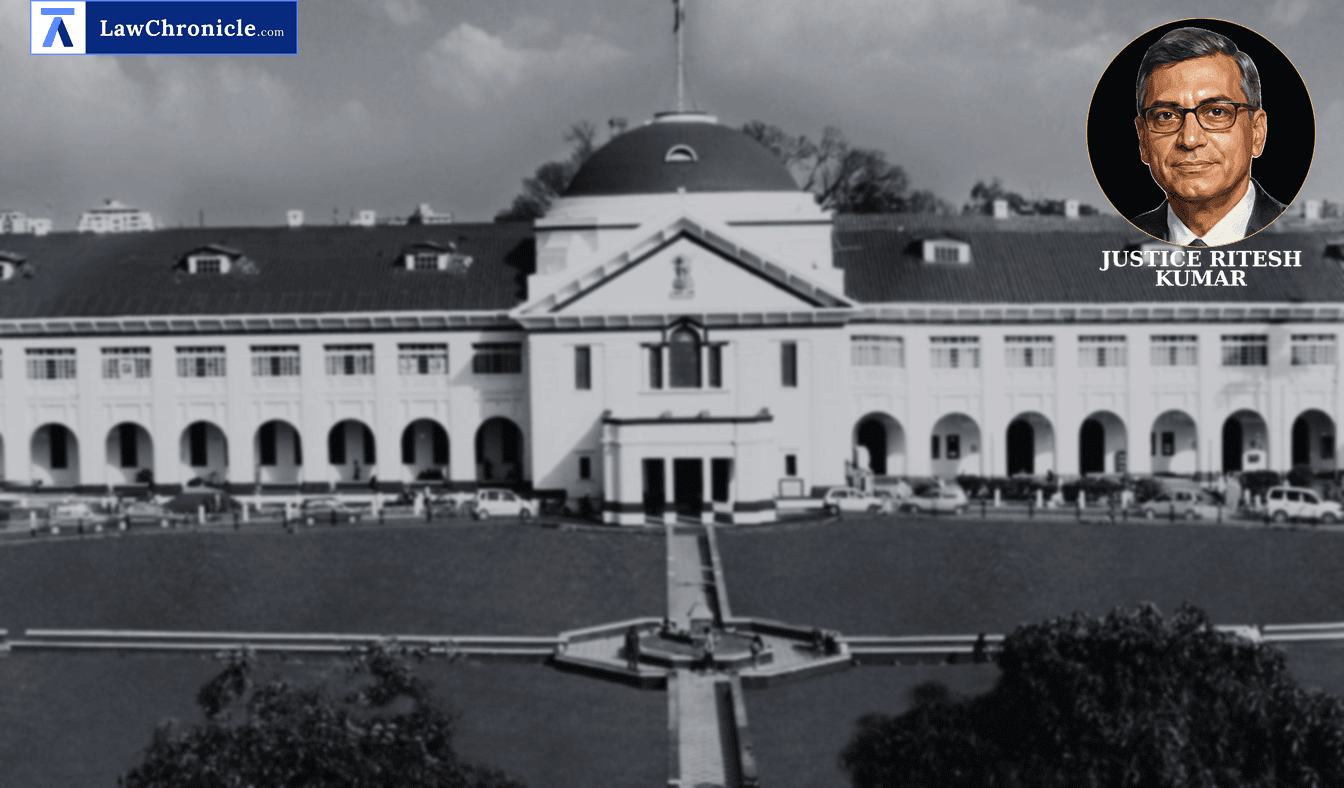
The High Court has fortified the disciplinary autonomy of public corporations, ruling that procedural irregularities do not automatically vitiate service removals unless the employee proves substantial prejudice. The judgment underscores that even in the absence of a retired official as a defense assistant, the core requirements of natural justice are satisfied if a fair opportunity to contest the charges is provided.
In a decision delivered by Justice Ritesh Kumar, the Court dismissed a writ petition filed by a former Junior Supervisor of the Power Grid Corporation of India Limited (PGCIL) challenging his removal from service. The bench examined the sanctity of domestic enquiries and the limitations of judicial review under Article 226 of the Constitution of India, 1950.
Key Takeaways
Prejudice Test for Procedural Lapses
Procedural irregularities in departmental proceedings do not justify judicial interference unless the delinquent employee demonstrates actual prejudice caused by such lapses.
Restricted Right to Defense Assistants
Employees do not possess an absolute right to choose an external or retired official as a defense assistant if the service rules specifically restrict such representation to serving employees.
Judicial Review Limits
Constitutional courts cannot act as appellate bodies over disciplinary findings; their role is limited to evaluating the legality of the decision-making process rather than the merits of the decision.
Court Observations on Natural Justice and Disciplinary Standards
The Court observed that the petitioner was afforded multiple opportunities to participate in the enquiry despite his claims of non-supply of documents. It was noted that since the alleged anonymous complaint was not relied upon by the Enquiry Officer, its non-supply did not compromise the fairness of the proceedings.
The Court, in its reasoning, observed: "...the legal position with regard to interference in the enquiry or orders passed by the disciplinary authority in exercise of powers of judicial review is very much settled. The only requirement of law is that the allegation against the delinquent officer must be established by such evidence, acting upon which a reasonable person acting reasonably and with objectivity, may arrive at a finding upholding the gravity of the charge..."
Regarding the appellate order's brevity, the Court cited established precedents to hold that if an appellate authority affirms the findings of the disciplinary authority, it is not always required to produce an exhaustive or separate detailed reasoning if the original report is accepted.
The Court has following directions:
"Accordingly, from the consideration made above and the settled principles governing judicial review in the departmental proceedings, this Court does not find any merit in the challenge raised by the petitioner... The writ petition is accordingly dismissed."
Ratio
A departmental enquiry is not vitiated by the non-supply of documents not relied upon by the prosecution. Furthermore, the right to a defense assistant is not an absolute right but a regulated one, and a delinquent officer must prove that a procedural violation resulted in a manifest miscarriage of justice to seek judicial interference under Article 226.
Background
The dispute originated when the petitioner, then the General Secretary of the Employees Union, was transferred and subsequently charge-sheeted for submitting allegedly fraudulent Travel Allowance (TA) bills between 2004 and 2009. The management alleged misappropriation of funds based on verified hotel bills from Jamshedpur and Ranchi.
The petitioner contended that the proceedings were vindictive and initiated because of his union activities. He argued that the non-supply of the original anonymous complaint and the refusal to allow a retired government servant as his defense assistant violated Section 9A and 33 of the Industrial Disputes Act, 1947. He further relied on S.N. Mukherjee Vs. Union of India ( "1990 (4) SCC 594": 1990 CaseBase(SC) 367) to argue that the removal order was cryptic.
Conversely, the PGCIL, represented by Senior Counsel J.P. Singh, relied on Rajasthan Marudhara Gramin Bank (RMGB) & Anr. Vs. Ramesh Chandra Meena & Anr ( "2022 (3) SCC 44": 2022 CaseBase(SC) 707) and State Bank of Patiala & Ors. Vs. S.K. Sharma ( "1996 (3) SCC 364": 1996 CaseBase(SC) 2155) to argue that service rules permitted only serving employees as defense assistants and that the charges of corruption were proven through objective evidence. The High Court, after analyzing Divisional Forest Officer, Kothagudem and Ors. V/S Madhusudhan Rao, State Bank of India & Ors. Vs. Bidyut Kr. Mitra & Ors., Boloram Bordoloi Vs. Lakhimi Gaolia Bank & Ors. ( "AIR 2021 SC 872": 2021 CaseBase(SC) 986), and S.B.I. Vs. Ajai Kumar Srivastava, concluded that the disciplinary process was legally sound and dismissed the petition.
Case Details:
Case No.: Civil Writ Jurisdiction Case No.17515 of 2013
Case Title: Chitranjan Singh vs. The Union Of India and Ors
Appearances:
For the Petitioner(s): Mr. P.N. Shahi, Sr. Advocate; Mr. Shiv Partap, Advocate; Ms. Priya Kumari, Advocate; Mr. Pushkar Parshant, Advocate
For the Respondent(s): Mr. J.P. Singh, Sr. Advocate; Mr. Arbind Kumar Singh, Advocate
Source: 2026 CaseBase(PAT) 3954
Similar Articles
 Breaking News


