


Wife Entitled to Same Standard of Living as Husband: Uttarakhand HC Reiterates
 Copy Link
 Share
 Save
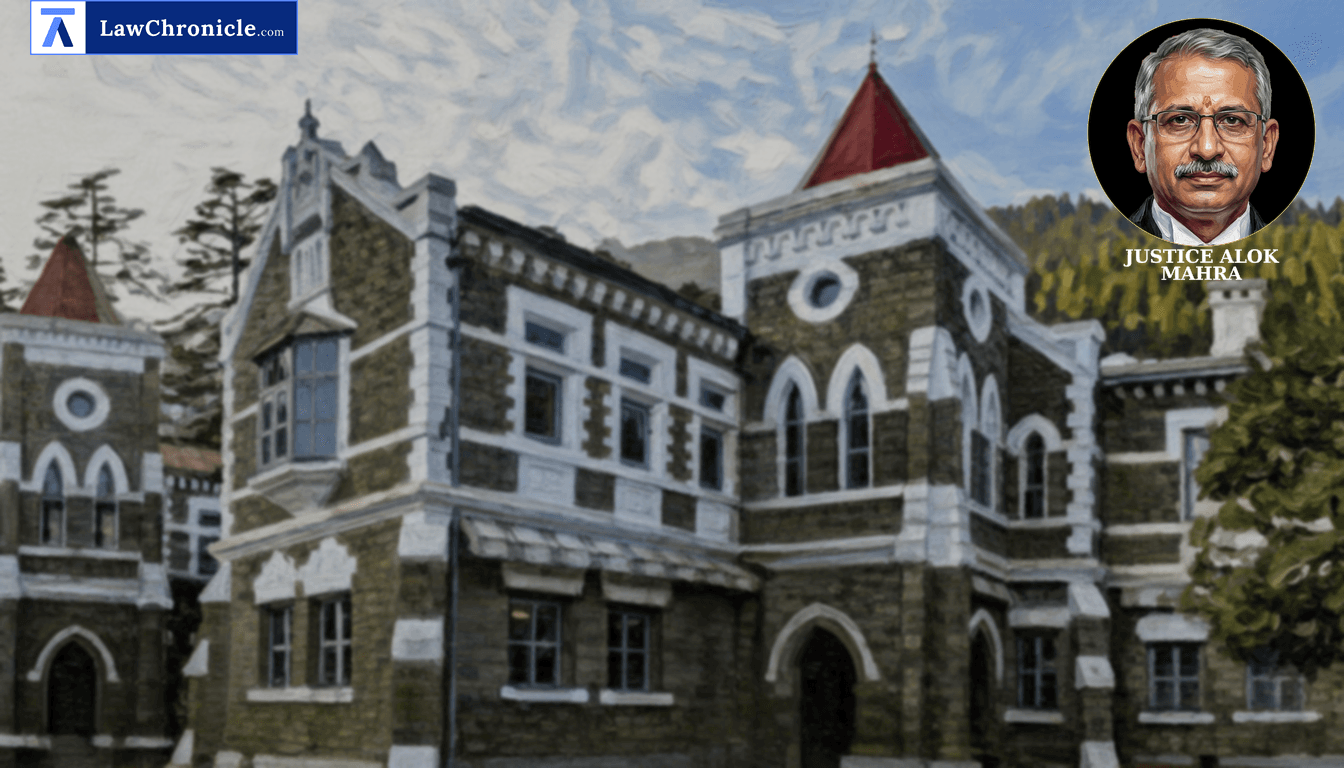
The Uttarakhand High Court has reaffirmed the principle that maintenance for a wife must reflect the husband's actual financial capacity and standard of living, setting aside an 'unjustified' reduction in alimony by a lower appellate court. The Bench ruled that judicial assessments of maintenance must rigorously account for the husband's government employment and property holdings to prevent the financial deprivation of the spouse.
A single-judge bench of Justice Alok Mahra heard the criminal revision challenging a sessions court's order that had significantly slashed a wife's maintenance amount despite the husband's stable employment as a government official. The Court scrutinised the disparity between the husband's earning capacity and the reduced maintenance awarded, emphasizing the protective nature of the Protection of Women from Domestic Violence Act, 2005.
Key Takeaways
Dignity-Centric Maintenance
Maintenance is not merely a subsistence allowance but a tool to ensure a wife lives with the same dignity and standard as her husband.
Mandatory Income Assessment
Courts must strictly evaluate all sources of income, including government salaries and agricultural land, before modifying maintenance amounts.
Bar on Arbitrary Reductions
Appellate courts cannot reduce maintenance awarded by trial courts without providing adequate justification or showing a change in the financial capacity of the parties.
Financial Capacity and Maintenance Quantum
The Uttarakhand High Court observed that the primary objective of the Protection of Women from Domestic Violence Act, 2005 is to protect aggrieved persons from financial deprivation. It noted that the husband, being a government employee earning approximately ₹65,000 per month and owning agricultural land, had the financial capacity to provide the original maintenance amount set by the Trial Court. The Uttarakhand High Court found that the Appellate Court's decision to reduce the amount from ₹10,000 to ₹3,500 was legally unsustainable as it failed to appreciate the reasonable needs of the wife in the context of the husband's status.
Wife Entitled to Same Standard of Living as Husband
The Uttarakhand High Court observed that "It is a settled principle of law that a wife is entitled to live with dignity and in accordance with the status and standard of living of her husband. The object of granting maintenance under the Protection of Women from Domestic Violence Act, 2005 is to ensure that the aggrieved person is able to maintain herself with dignity and is not subjected to financial deprivation. While determining the quantum of maintenance, the Court is required to consider the income and financial capacity of the respondent, the reasonable needs of the aggrieved person, the standard of living enjoyed by the parties during the subsistence of the matrimonial relationship, and other relevant circumstances established from the record."
Maintenance Order
The Court issued the following order for maintenance to wife "Respondent no.2 is directed to pay maintenance of ₹10,000/- per month to the revisionist and a sum of ₹1,500/- per month towards rental accommodation, in accordance with the order passed by the learned Trial Court. The aforesaid amount shall be payable from the date of this order, i.e., 22.09.2026, and shall be deposited by respondent no.2 on or before the 7th day of each English calendar month in the bank account of the revisionist or in such manner as may be directed by the learned Court concerned. So far as the arrears of maintenance are concerned... respondent no.2 is directed to deposit 20% of the total arrears of maintenance, as calculated in accordance with the applicable orders and after giving due adjustment of the amount, if any, already paid or deposited, within a period of three months from today before the learned Court concerned, for payment to the revisionist."
Ratio
A wife is legally entitled to maintenance that aligns with the dignity, status, and standard of living enjoyed by her husband. Judicial determination of the maintenance quantum must be based on a comprehensive assessment of the respondent's financial capacity, including salary and property assets, ensuring the aggrieved spouse is protected from financial deprivation and can maintain the matrimonial standard of living.
Background
The marriage between the parties was solemnized in 1998, but the revisionist alleged she was subjected to cruelty and ousted from her matrimonial home in 2011. She subsequently filed an application under Section 12 of the Protection of Women from Domestic Violence Act, 2005. The Judicial Magistrate, Kashipur, originally directed the husband (a government employee) to pay ₹10,000 as maintenance, ₹1,500 for rent, and ₹2,000 as compensation under Section 22 of the Act. However, in an appeal filed by the husband, the 3rd Additional Sessions Judge, Rudrapur, reduced the monthly maintenance to ₹3,500.
The revisionist challenged this reduction, arguing that the husband, who was a Gram Vikas Adhikari (formerly a Tube Well Operator), earned a substantial salary and had agricultural income. The Uttarakhand High Court agreed that the reduction was not adequately justified by the Appellate Court. Consequently, the Bench allowed the revision in part, restoring the original maintenance amount of ₹10,000 while providing a structured timeline for the payment of arrears.
Case Details:
Case No.: Criminal Revision No. 126 of 2020
Neutral Citation: 2026:UHC:8519
Case Title: Kulwant Kaur Versus State Of Uttarakhand and Another
Appearances:
For the Petitioner(s): Mr. D.C.S. Rawat and Mr. Kamal Pandey, learned counsel
For the Respondent(s): Mr. Rakesh Joshi, learned A.G.A. and Mr. Manoj Bhatt, learned Brief Holder for the State; Mr. Milind Raj, learned counsel for respondent no.2.
Source: 2026 CaseBase(UTT) 5815
Similar Articles

 Breaking News


