


Himachal Pradesh HC: Insurance Company Liable for Pedestrian Fatalities Caused by Brake Failure
 Copy Link
 Share
 Save
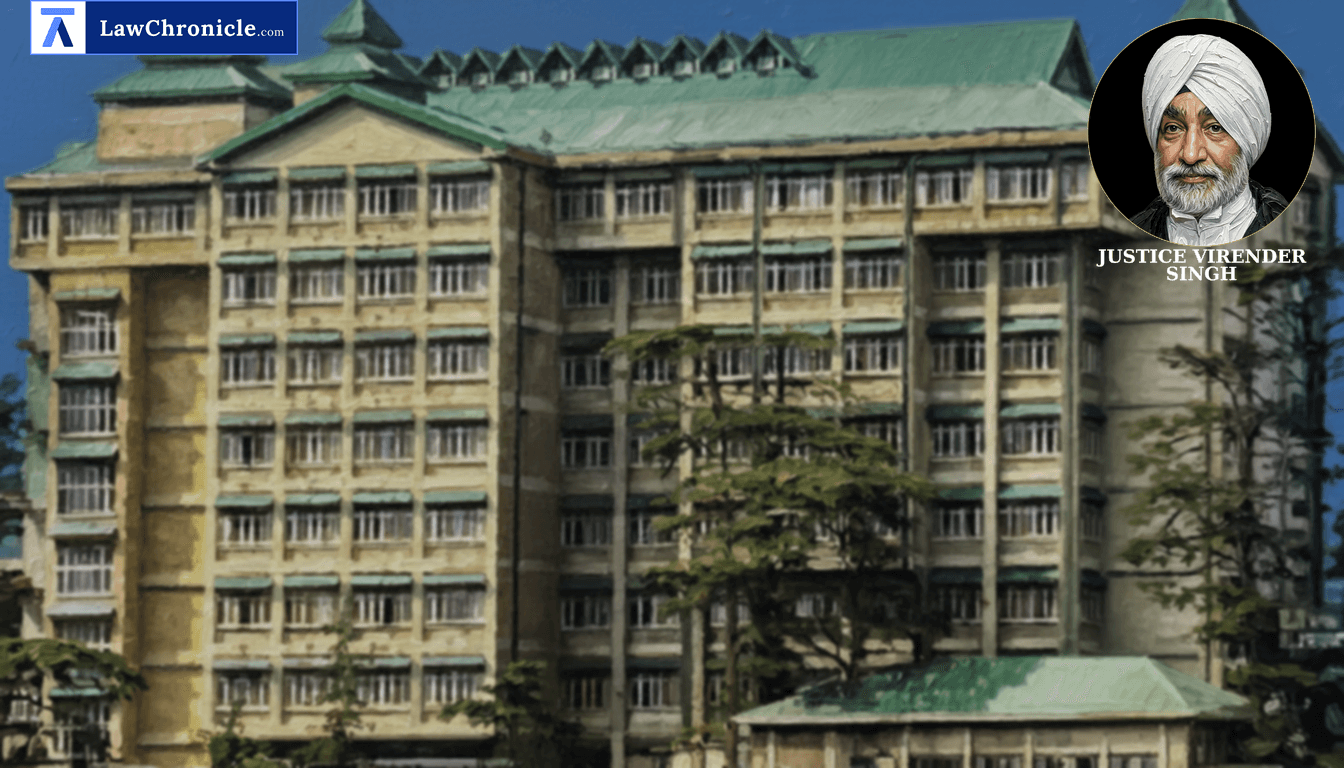
The Himachal Pradesh High Court has reinforced the principle that insurance companies cannot escape liability by alleging a breach of policy when evidence suggests victims were pedestrians rather than unauthorized passengers. This ruling clarifies that the 'direct evidence' rule under Indian law prevents hearsay claims from being used to deny insurance indemnity in motor accident cases.
In a verdict delivered by Justice Virender Singh, the Court addressed two appeals filed by an insurance provider challenging compensation awards for the deaths of two individuals in a 2012 truck accident. The insurer contended that the deceased were gratuitous passengers in a goods vehicle, which would constitute a fundamental breach of the insurance policy. However, the Court rejected this defense, relying on the testimony of the driver and the lack of direct evidence to support the insurer's claims.
Key Takeaways
Primacy of Direct Evidence
Testimony from witnesses who did not see the accident is inadmissible under Section 60 of the Indian Evidence Act, 1872, ensuring that insurance liability is decided on facts, not hearsay.
Standard of Proof in MVA Claims
Proceedings under the Motor Vehicles Act are summary and based on the preponderance of probabilities, favoring the victims of motor accidents over technical policy breaches.
Refinement of 'Just Compensation'
Future prospects must be strictly calculated at 40% for those in the unorganized sector under age 40, aligning with Supreme Court mandates to ensure mathematical precision in awards.
Court Observation on Evidence and Liability
The Court scrutinized the insurer's reliance on the FIR and the testimony of an investigating officer who was not present at the scene. It noted that the insurer failed to examine any of the injured survivors to prove the deceased were inside the truck.
The Court, in its reasoning, observed: "When, PW 1 has not seen the accident, then, whatsoever he has deposed about the manner, in which, the accident had taken place cannot be taken as gospel truth. Moreover, the proceedings under the M.V. Act, deciding the amount of compensation, cannot be equated with adversarial litigation and as such, strict rules of pleadings are not applicable."
The Court has following directions:
"Consequently, the appeal is dismissed and the amount of compensation in FAO No. 439 of 2017, is enhanced from Rs. 10,97,000/- to Rs. 11,37,200/-, along with interest at the rate of 7.5% per annum. The ultimate liablity to pay the amount of compensation is on the Insurance Company, being insurer of the offending vehicle... the appeal [FAO No. 422 of 2017] is partly allowed and the amount of compensation is reduced from Rs. 19,71,000/- to Rs. 15,19,600/-, along with interest at the rate of 7.5% per annum."
Ratio
Under Section 60 of the Indian Evidence Act, 1872, oral evidence must be direct. In motor accident claims, where the insurer alleges a fundamental breach of policy regarding the status of occupants, the burden of proof lies with the insurer. If the insurer fails to produce direct evidence (such as surviving witnesses) to rebut the driver's testimony that the victims were pedestrians, the insurer remains liable to indemnify the owner under the Motor Vehicles Act.
Background
The dispute arose from a 2012 accident involving a truck that rolled into a gorge due to brake failure near Dhab Pipli, Sirmour. Two young men, Kapil and Gulab Singh, sustained fatal injuries. The claimants initially alleged the deceased were working as labourers on the truck, while the insurer argued they were unauthorized gratuitous passengers. The truck owner and driver, however, maintained that the deceased were pedestrians walking on the road who were crushed when the vehicle rolled.
The Motor Accident Claims Tribunal (MACT) originally fastened liability on the insurance company. On appeal, the High Court analyzed the evidence in light of National Insurance Company Ltd. Versus Pranay Sethi & Others ( "(2017) 16 Supreme Court Cases 680": 2017 CaseBase(SC) 551) and Sarla Verma Vs Delhi Transport Corportation ( "2009 (6) SCC 121": 2009 CaseBase(SC) 380) for compensation and Magma General Insurance Company Limited versus Nanu Ram alias Chuhru Ram and others ( "(2018) 18 Supreme Court Cases 130": 2018 CaseBase(SC) 597) for filial consortium. The Court adjusted the compensation amounts to reflect the correct percentage of future prospects (40% instead of 50%) and standardizing the 'conventional heads' of funeral expenses and loss of estate as per the National Insurance Company Ltd. Versus Pranay Sethi & Others ( "(2017) 16 Supreme Court Cases 680": 2017 CaseBase(SC) 551) ruling.
Case Details:
Case No.: FAO (MVA) No. 439 of 2017 a/w FAO (MVA) No. 422 of 2017
Neutral Citation: 2026:HHC:45841
Case Title: Shriram General Insurance Company Ltd. Versus Sh. Kalyan Singh & Ors.
Appearances:
For the Petitioner(s): Mr. Jagdish Thakur, Advocate.
For the Respondent(s): Mr. Divya Raj Singh, Advocate; Mr. Sarthak Mehta, Advocate.
Source: 2026 CaseBase(HP) 9475
Similar Articles

 Breaking News


