


Himachal Pradesh HC: Security Cheques In Loan Default Attract Section 138 NI Act Prosecution
 Copy Link
 Share
 Save
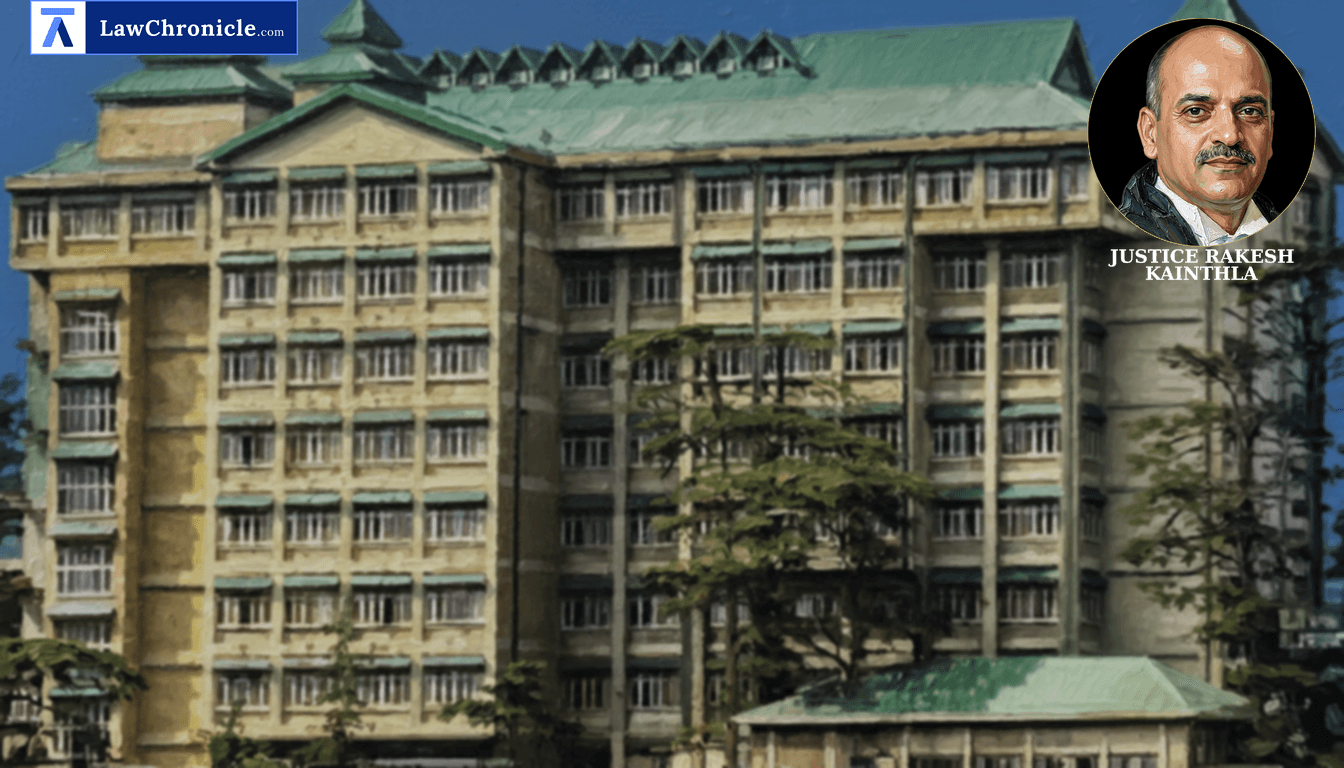
Dishonouring a cheque issued as security for a loan repayment is no escape from criminal liability, as the Himachal Pradesh High Court affirms that such instruments mature for presentation once the debt becomes legally recoverable. This ruling reinforces the reverse onus under negotiable instrument law, placing a heavy burden on the accused to lead substantive evidence to rebut the presumption of a legally enforceable debt.
Justice Rakesh Kainthla, presiding over the revisional jurisdiction, upheld the conviction of a petitioner who failed to repay a consumer loan, clarifying that a mere plea of a 'security cheque' does not strip the document of its statutory character under Section 138 of the Negotiable Instruments Act, 1881.
The Presumption of Legally Enforceable Debt
The High Court emphasized that once the signatures on a cheque and its issuance are admitted by the accused, the court must start with the presumption that it was issued for consideration. Relying on APS Forex Services (P) Ltd. v. Shakti International Fashion Linkers and N. Vijay Kumar v. Vishwanath Rao N. ( "2025 SCC OnLine SC 873": 2025 CaseBase(SC) 907), the Court noted that Section 118(a) and Section 139 of the Negotiable Instruments Act, 1881 create a mandatory presumption in favour of the complainant.
The Court, in its reasoning, observed: "once execution of a cheque is admitted, the presumption under Section 118 of the NI Act that the cheque in question was drawn for consideration and the presumption under Section 139 of the NI Act that the holder of the cheque received the said cheque in discharge of a legally enforceable debt or liability arises against the accused."
Legal Validity of Security Cheques
Addressing the common defense that cheques issued as security cannot attract criminal prosecution, the Court referred to Hamid Mohammad Versus Jaimal Dass and Sampelly Satyanarayana Rao vs. Indian Renewable Energy Development Agency Limited ( "2016(10) SCC 458": 2016 CaseBase(SC) 961). It held that 'security' is a pledge of payment meant to ensure the fulfillment of an obligation. If the loan is not repaid by the due date, the security cheque matures for presentation.
The Court has the following directions:
"The present revision petition fails and is dismissed. The present petition stands disposed of, and so are the pending applications, if any."
Narrow Scope of Revisional Jurisdiction
The Court further clarified the limits of its powers under Section 397 of the Code Of Criminal Procedure, 1973. Citing Malkeet Singh Gill v. State of Chhattisgarh and State of Gujarat v. Dilipsinh Kishorsinh Rao ( "(2023) 17 SCC 688": 2023 CaseBase(SC) 760), the Bench observed that a revisional court is not an appellate court and cannot re-appreciate evidence unless there is a patent defect or an error of jurisdiction. Since the petitioner admitted to the loan and the receipt of the legal notice, the concurrent findings of the lower courts were found to be legally sound.
Key Takeaways:
Security Cheques are Not Waste Paper
Failure to repay a loan according to agreed terms allows a lender to present security cheques, the dishonour of which triggers criminal proceedings.
Admission Triggers Reverse Onus
Admitting the signature on a cheque is sufficient to shift the entire burden of proof onto the accused to demonstrate that no debt existed.
Section 313 Statement is Not Evidence
Mere denials or explanations provided during the examination under Section 313 of the Code Of Criminal Procedure, 1973 do not constitute substantive evidence required to rebut statutory presumptions.
Deterrent Nature of Penal Provisions
Section 138 is intended to infuse credibility into financial transactions, and sentences involving imprisonment and double-value fines serve a compensatory and punitive purpose.
Ratio Decidendi:
A cheque issued as security in a financial transaction matures for presentation if the underlying debt is not discharged within the stipulated timeframe. Upon its dishonour, the statutory presumptions under Sections 118 and 139 of the Negotiable Instruments Act, 1881 arise against the drawer, and criminal liability cannot be avoided solely on the ground that the instrument was intended as 'security'.
Background:
The petitioner had availed a consumer loan of ₹3,00,000/- from the Kangra Central Cooperative Bank but defaulted on repayments. He issued a cheque for ₹1,47,000/- which was dishonoured due to "insufficient funds." Despite receiving a legal notice, the petitioner failed to pay. The Trial Court convicted him under Section 138 of the Negotiable Instruments Act, 1881, sentencing him to one year of imprisonment and a compensation of ₹1,67,000/-. This conviction was upheld by the Additional Sessions Judge. In the revision petition, the petitioner argued the cheque was a misused security document. However, the High Court found no evidence to support this claim, noting the bank's witness had specifically denied that the cheque was taken as security at the time of the loan advancement. The revision was dismissed, affirming the orders of the lower courts.
Case Details:
Case No.: Cr. Revision No. 185 of 2026
NeutralCitation: 2026:HHC:28270
Case Title: Sudhir Kumar v. Branch Manager Kangra Central Co.operative Bank
Appearances:
For the Petitioner(s): Mr Jeet Singh, Advocate.
For the Respondent(s): None.
Source: 2026 CaseBase(HP) 32
Similar Articles

 Breaking News


