


Deterrent Nature of Section 138 NI Act: HP High Court Upholds Conviction
 Copy Link
 Share
 Save
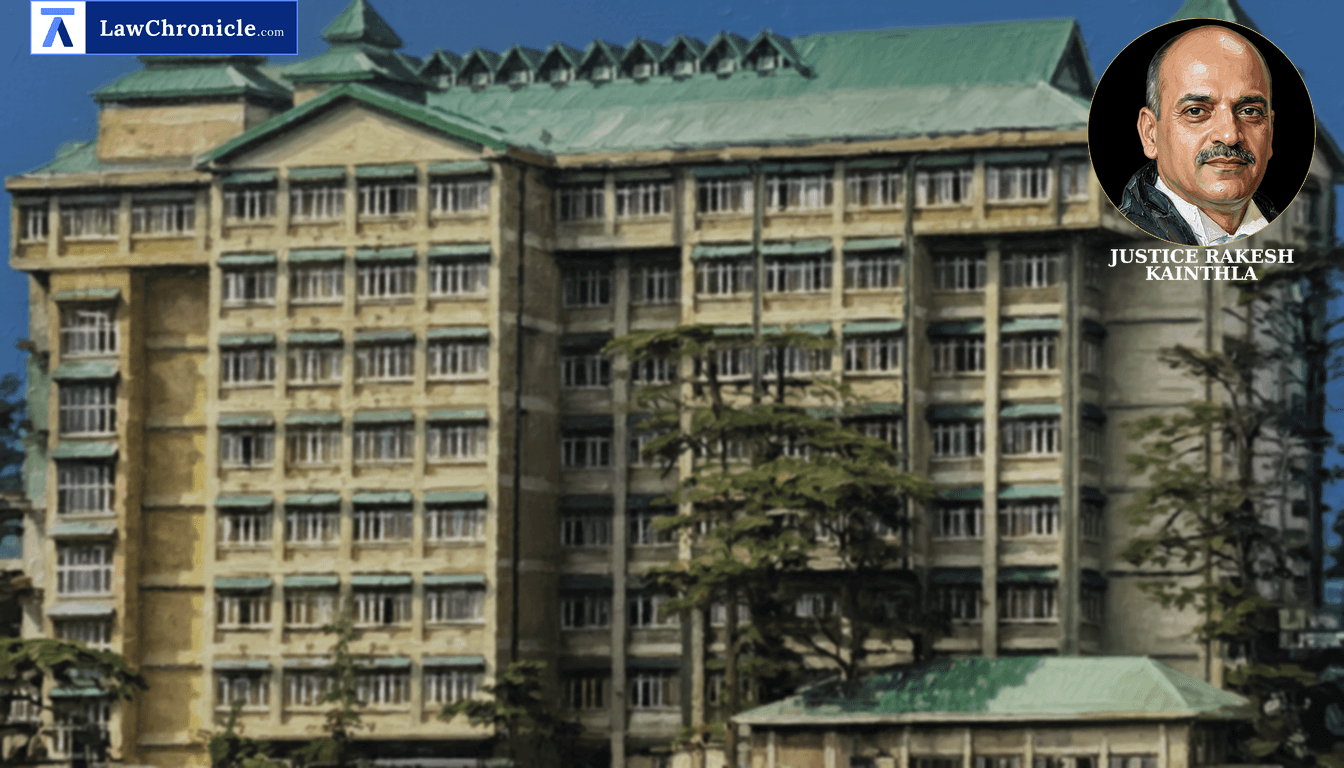
The Himachal Pradesh High Court has reinforced the statutory sanctity of negotiable instruments, ruling that mere denial in a statement under Section 313 of the Code of Criminal Procedure, 1973 is insufficient to rebut the legal presumption of a debt under the Negotiable Instruments Act, 1881. The judgment underscores that unscrupulously dodging legal notices or failing to inform banks of lost cheques will not shield drawers from criminal liability.
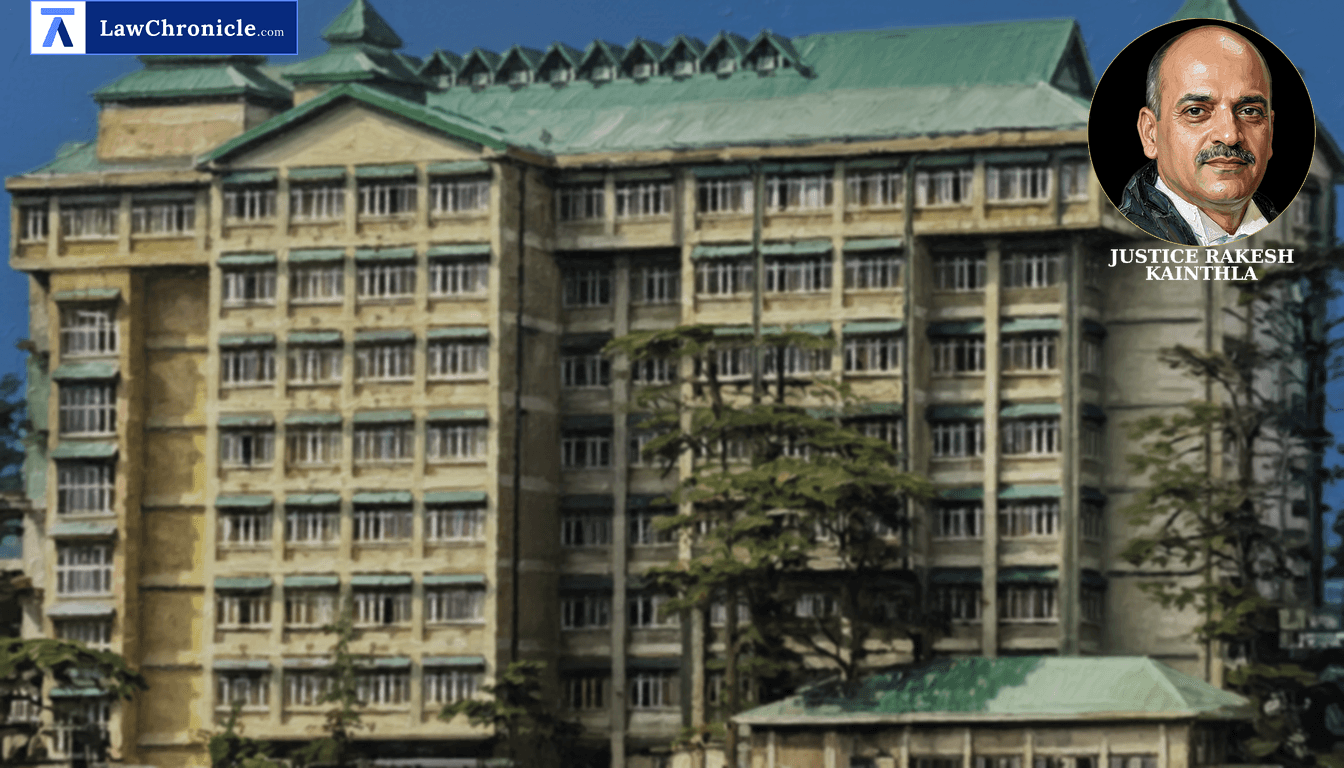
In a revision petition challenging concurrent findings of guilt, a single-judge bench of Justice Rakesh Kainthla meticulously examined the limits of revisional jurisdiction and the evidentiary burden in cheque bounce cases. The Court was hearing an appeal against the orders of the Additional Sessions Judge, Kullu, which had upheld the trial court's conviction of the petitioner for a dishonoured cheque of ₹2,00,000/-.
Key Takeaways
Limited Revisional Scope
High Courts cannot act as second appellate courts or re-appreciate evidence unless there is a patent perversity or jurisdictional error in the lower courts' findings.
Presumption Triggered by Signature
Admission of a signature on a cheque, even if the execution of the full content is disputed, is sufficient to trigger the legal presumption that the instrument was issued for a debt.
Section 313 CrPC Limitations
Statements made by an accused under Section 313 of the Code of Criminal Procedure, 1973 are not substantive evidence and cannot by themselves rebut statutory presumptions without corroborative defense evidence.
Deemed Service of Notice
A notice returned as 'unclaimed' or 'addressee not found' after repeated attempts constitutes valid deemed service under the General Clauses Act, 1897.
Legal Presumptions and Burden of Proof
The Court noted that as per the principles in Rajesh Jain vs. Ajay Singh ( "(2023) 10 SCC 148": 2023 CaseBase(SC) 1056) and Sanjabij Tari v. Kishore S. Borcar ( "2025 SCC OnLine SC 2069": 2025 CaseBase(SC) 746), once the signature on a cheque is admitted, the burden shifts to the accused to prove the non-existence of a debt. The petitioner’s defense that he had lost a bag containing signed cheques was rejected as he failed to produce any evidence, such as a police complaint or a 'stop payment' instruction to the bank.
The Court, in its reasoning, observed: "The statement of the accused recorded under Section 313 of the Code is not substantive evidence of defence, but only an opportunity for the accused to explain the incriminating circumstances appearing in the prosecution's case against the accused. Therefore, there is no evidence to rebut the presumption that the cheques were issued for consideration."
Referring to Uttam Ram v. Devinder Singh Hudan ( "(2019) 10 SCC 287: 2019 SCC OnLine SC 1361": 2019 CaseBase(SC) 2895) and Ashok Singh v. State of U.P., the Court clarified that the complainant is not required to prove their financial capacity at the threshold unless specifically challenged by the accused with cogent evidence. The Court found that the trial court's sentence of three months simple imprisonment was not excessive, citing Bir Singh v. Mukesh Kumar ( "(2019) 4 SCC 197": 2019 CaseBase(SC) 1292) to highlight that the Negotiable Instruments Act, 1881 is intended to be a deterrent against the callous issuance of cheques.
Court Directions
The Court has the following directions:
"In view of the above, the present revision fails, and it is dismissed. All the pending applications, if any, also stand disposed of. A copy of the judgment, along with records of the learned Courts below, be sent back forthwith."
Ratio
The statutory presumption under Sections 118 and 139 of the Negotiable Instruments Act, 1881 remains operative once the execution of the instrument is admitted or proved. The accused must lead substantive evidence to rebut this presumption; a bare denial or an uncorroborated statement under Section 313 of the Code of Criminal Procedure, 1973 does not shift the burden of proof back to the complainant. Furthermore, a notice returned 'unclaimed' is deemed served under Section 27 of the General Clauses Act, 1897.
Background
The dispute originated when the complainant alleged that the accused borrowed ₹2,00,000/- for domestic needs and issued a cheque that was subsequently dishonoured due to "insufficient funds." Despite a legal notice, the accused failed to repay. The accused contended in trial that he had misplaced a bag containing the cheque, and the complainant had misused it. However, both the Trial Court and the First Appellate Court found the complainant's version credible, noting the lack of evidence for the accused's defense. The High Court, following precedents like Kuntegowda v. Thurubaiah ( "2026 SCC OnLine SC 1485": 2026 CaseBase(SC) 721), Mandvi Cooperative Bank Ltd. v. Nimesh B. Thakore, and C.C. Allavi Haji vs. Pala Pelly Mohd., affirmed the conviction, dismissing the revision petition for lack of any glaring contradiction or perversity in the lower courts' orders.
Case Details:
Case No.: Cr. Revision No. 639 of 2026
Neutral Citation: 2026:HHC:46823
Case Title: Jagdish Sharma Versus Dharam Pal
Appearances:
For the Petitioner(s): Mr. Rakesh Chaudhary, Advocate.
For the Respondent(s): Nemo.
Source: 2026 CaseBase(HP) 11141
Similar Articles
 Breaking News


