


Security Cheque Dishonour Triggers Criminal Liability Under Section 138 NI Act: Himachal Pradesh HC
 Copy Link
 Share
 Save
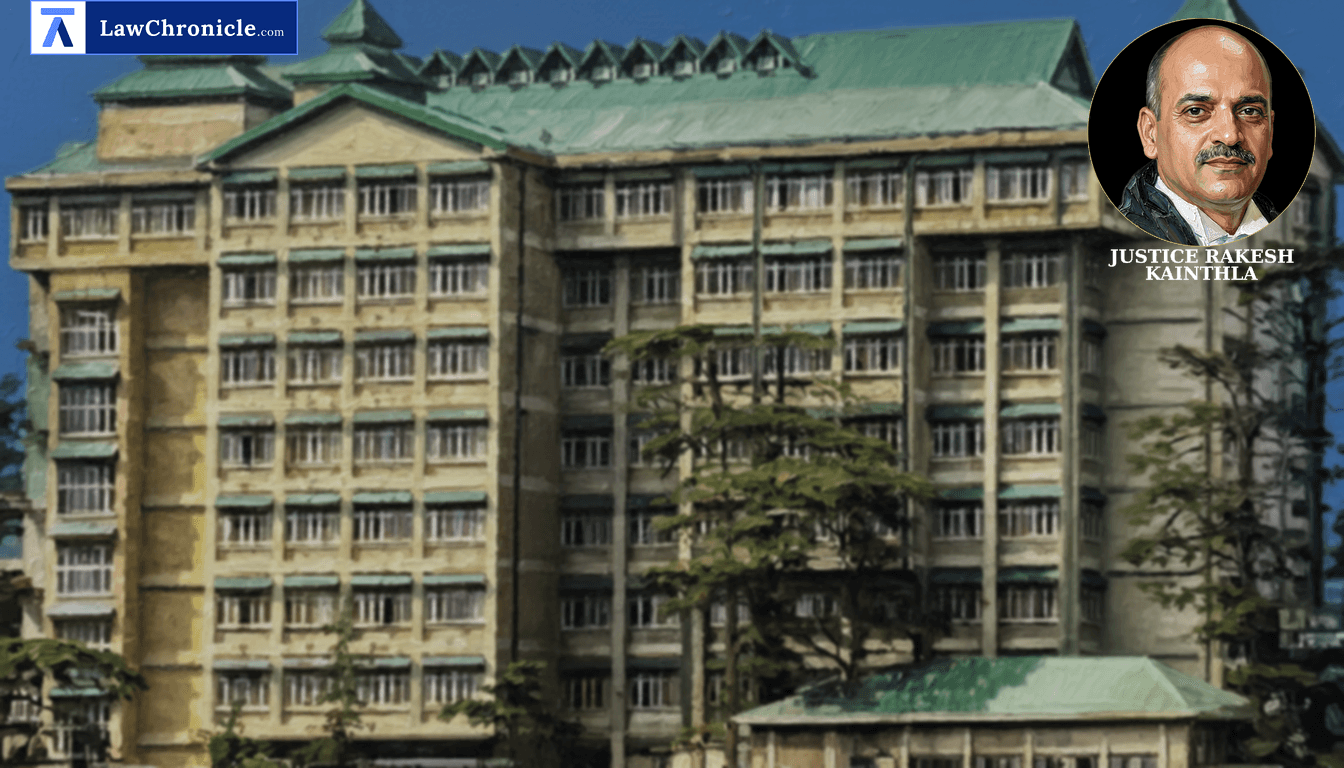
The High Court of Himachal Pradesh has reinforced the stringent liability framework for negotiable instruments, ruling that a cheque issued as security matures for criminal prosecution the moment a debt becomes legally recoverable. This judgment shuts the door on litigants attempting to evade Negotiable Instruments Act, 1881 proceedings by merely labeling dishonoured instruments as 'security' rather than 'discharge of debt.'
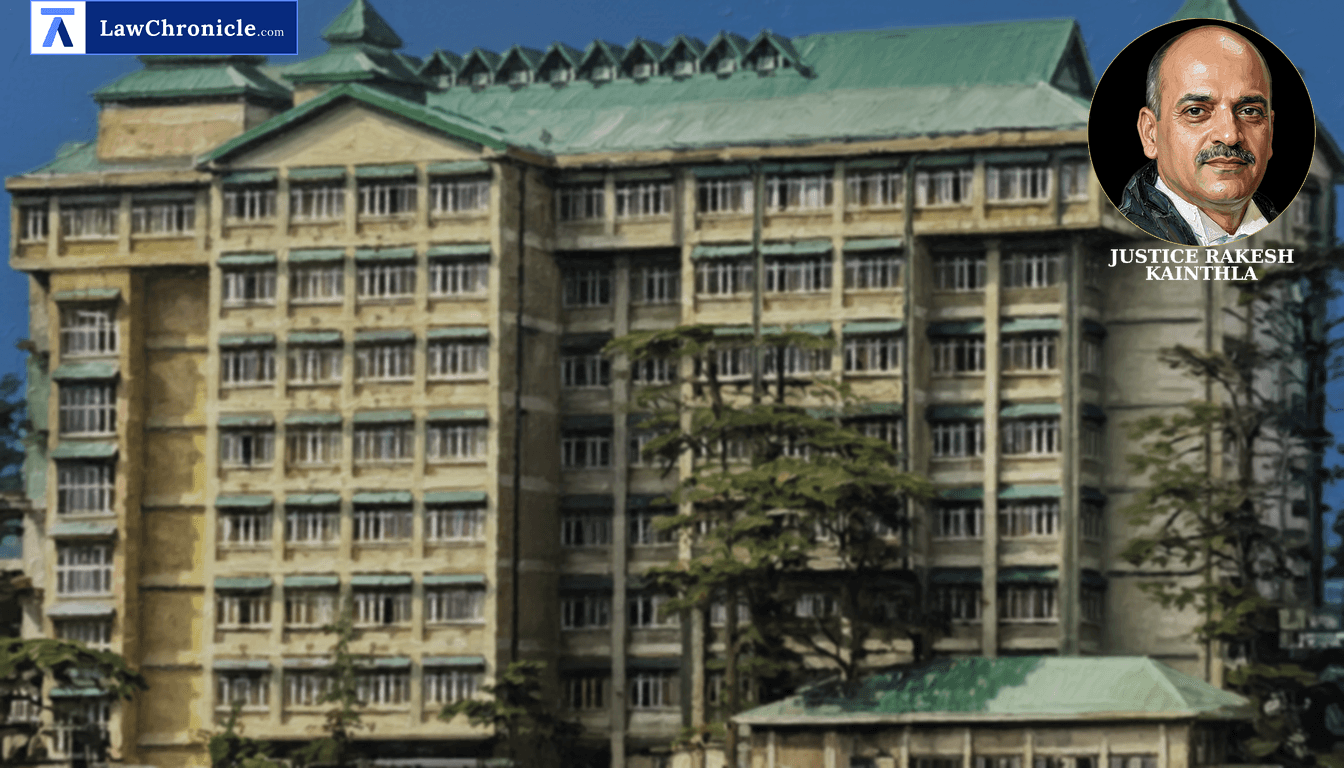
In a revision petition challenging concurrent findings of conviction, Justice Rakesh Kainthla presided over the matter. The court was tasked with determining whether a borrower, who admitted to signing a cheque and taking a loan, could escape liability by claiming the instrument was a blank security cheque filled in by a bank manager.
Key Takeaways
- Security Cheques Are Not Waste Paper
The court clarified that an instrument issued as security is a valid pledge of payment and attracts criminal liability if the underlying debt is not discharged by the due date. - Presumption of Liability Against Signatories
Once the execution of a cheque and signatures are admitted, the law mandates a reverse onus, requiring the accused to prove the non-existence of a debt. - Validity of Third-Party Entry
The court held that a cheque remains valid even if the amount or date is filled by someone other than the drawer, provided the signature is genuine. - Limited Scope of Revisional Jurisdiction
The judgment emphasizes that High Courts cannot re-appreciate evidence or upset concurrent factual findings in revision unless there is a patent jurisdictional error or perversity.
Legal Presumptions and Rebuttable Onus
Justice Rakesh Kainthla noted that under Section 139 of the Negotiable Instruments Act, 1881, there is a mandatory presumption that the holder of a cheque received it in discharge of a debt. Referring to APS Forex Services (P) Ltd. v. Shakti International Fashion Linkers, the court emphasized that when signatures are not disputed, the burden shifts to the accused to lead evidence that the full amount had been paid. The court observed that the petitioner admitted to taking a loan of ₹10,00,000/- and failed to produce any proof of repayment, making the complainant’s version of a subsisting liability acceptable.
Observations on Security Cheques and Blank Instruments
The Court, in its reasoning, observed: "A cheque issued as security pursuant to a financial transaction cannot be considered a worthless piece of paper under every circumstance. 'Security' in its true sense is the state of being safe, and the security given for a loan is something given as a pledge of payment. It is given, deposited or pledged to make certain the fulfilment of an obligation to which the parties to the transaction are bound. If in a transaction, a loan is advanced and the borrower agrees to repay the amount in a specified timeframe and issues a cheque as security to secure such repayment; if the loan amount is not repaid in any other form before the due date... the cheque which is issued as security would mature for presentation and the drawee of the cheque would be entitled to present the same."
Regarding the plea that the bank manager filled the cheque, the court relied on Bir Singh v. Mukesh Kumar ( "(2019) 4 SCC 197: (2019) 2 SCC (Cri) 40: (2019) 2 SCC (Civ) 309: 2019 SCC OnLine SC 138": 2019 CaseBase(SC) 1292) to hold that a drawer who signs a blank cheque and makes it over to the payee remains liable. The court remarked that it is immaterial who fills the particulars as long as the signature is voluntary.
Competency of Branch Managers to File Complaints
The petitioner had also challenged the authority of the Branch Manager to file the complaint. However, the Court noted that the manager (CW1) had testified to his authority and was not cross-examined on this point during the trial. Citing State of Uttar Pradesh Versus Nahar Singh, the court held that when the testimony of a witness is not challenged in cross-examination, it cannot be contested during final arguments.
Ratio
A cheque issued as 'security' towards a financial transaction is not exempt from the penal provisions of Section 138 of the Negotiable Instruments Act, 1881. If a debt or liability exists on the date of presentation, the dishonour of such a cheque attracts criminal liability. Furthermore, the presumption of a legally enforceable debt under Section 139 arises immediately upon the admission of the signature and execution of the instrument, and the mere fact that the cheque was filled by the payee rather than the drawer does not invalidate it or rebut the presumption.
Background
The matter arose from a loan transaction where the accused availed ₹10,00,000/- from the H.P. State Co-operative Agriculture and Rural Development Bank. A cheque for ₹95,000/- was issued for partial repayment, which was subsequently dishonoured for "insufficient funds." The Judicial Magistrate First Class, Banjar, convicted the accused, sentencing him to two months' simple imprisonment and compensation. This was upheld by the Sessions Judge, Kullu.
The High Court, while dismissing the revision, relied on several precedents including Malkeet Singh Gill v. State of Chhattisgarh ( "(2022) 8 SCC 204: (2022) 3 SCC (Cri) 348: 2022 SCC OnLine SC 786": 2022 CaseBase(SC) 49) and State of Gujarat v. Dilipsinh Kishorsinh Rao ( "(2023) 17 SCC 688: 2023 SCC OnLine SC 1294": 2023 CaseBase(SC) 760) regarding the limited scope of revision, and Sampelly Satyanarayana Rao vs. Indian Renewable Energy Development Agency Limited ( "2016(10) SCC 458": 2016 CaseBase(SC) 961) regarding the compensatory nature of the Act. The Court found no infirmity in the lower courts' judgments and upheld the conviction.
The Court has the following directions:
"The present revision fails and is dismissed. The present revision stands disposed of, and so are the pending miscellaneous application(s), if any. The record of the learned Courts below be returned with a copy of the judgment."
Case Details:
Case No.: Cr. Revision No. 58 of 2025
Neutral Citation: 2026:HHC:31278
Case Title: Dola Singh Versus H.P. State Co-operative Agriculture and Rural Development Bank Ltd & Anr.
Appearances:
For the Petitioner(s): Mr N.K. Bhardwaj, Advocate.
For the Respondent(s): Mr Narender Singh Thakur, Advocate (Respondent No.1); Mr Tarun Pathak, Deputy Advocate General (Respondent No.2/State).
Source: 2026 CaseBase(HP) 8461
Similar Articles
 Breaking News


