


Mere Recovery of Tainted Money Cannot Sustain PC Act Conviction: Karnataka HC
 Copy Link
 Share
 Save
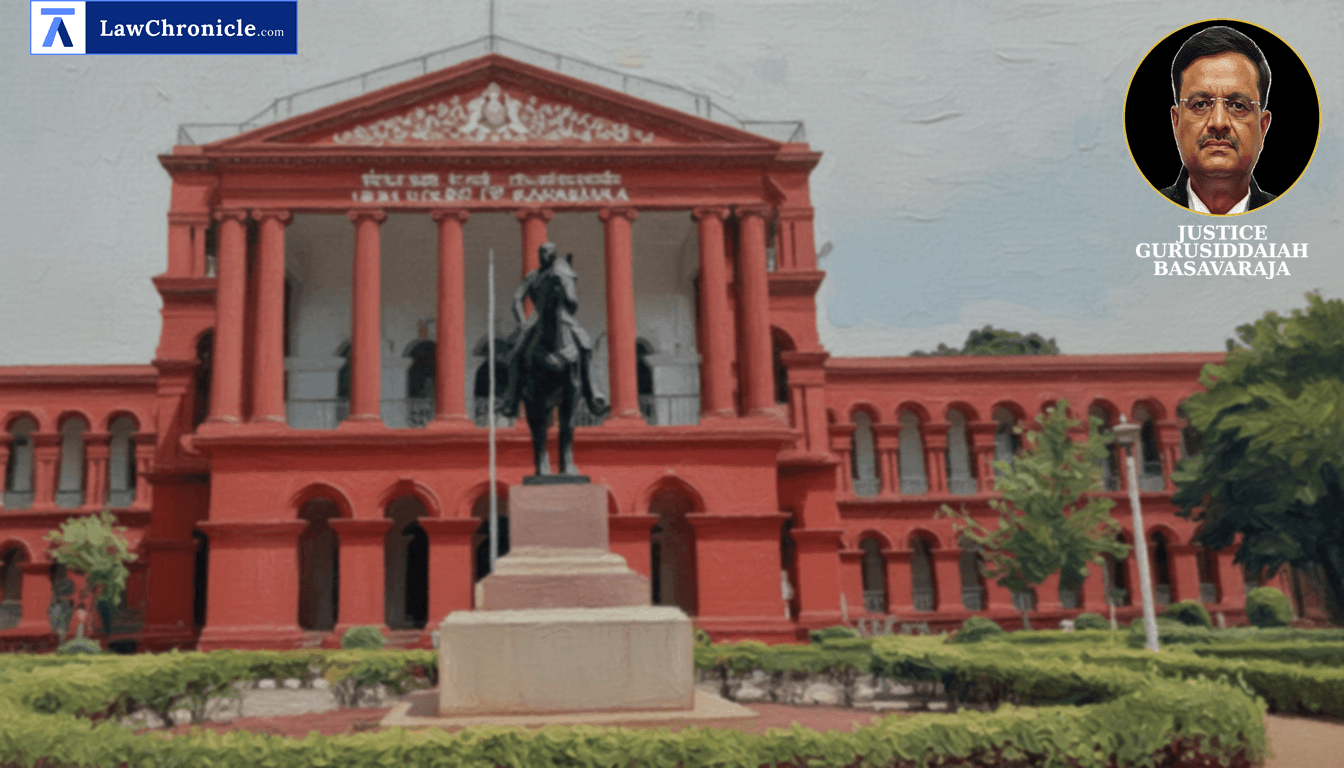
Setting a strict benchmark against procedural lapses in corruption trials, the High Court has held that recovery of tainted currency and positive chemical tests are legally insufficient to establish guilt under the Prevention of Corruption Act, 1988 without concrete proof of prior demand.
Justice G Basavaraja delivered the ruling while allowing the appeal of a police official who was convicted by the Special Court for allegedly accepting a bribe. The bench noted that demand is the fundamental prerequisite for an offence under the Prevention of Corruption Act, 1988, and mere handling of currency notes does not shift the burden of proof onto the accused.
Key Takeaways
- Demand as Absolute Pre-requisite: The prosecution must independently establish the foundational fact of demand; recovery alone cannot substitute for proof of solicitation.
- Substantive Lacunae in Investigation: Non-examination of critical material witnesses, such as investigating officers or complaining officials linked to underlying disputes, fatalizes the prosecution's case.
- Limitation of Section 20 Presumption: Statutory presumptions under Section 20 of the Prevention of Corruption Act, 1988 cannot be triggered until the core facts of demand and voluntary acceptance are proved beyond reasonable doubt.
- Scope of Handling Tainted Notes: Contact with phenolphthalein-treated money establishes mere handling, which cannot automatically be equated to conscious acceptance of illegal gratification.
Court's Rationale on Demand and Recovery
Evaluating the evidentiary framework in corruption cases, the Court emphasized that proof of demand remains the gravamen of offences under the Prevention of Corruption Act, 1988. The Court observed that the trial judge had erroneously proceeded from recovery to demand without first establishing the essential foundational facts.
The Court, in its reasoning, observed: "A positive phenolphthalein test demonstrates contact with the treated currency; it does not disclose the conversation between the complainant and the appellant, the purpose for which the amount was received, or whether the appellant accepted it as gratification for himself. Thus, in the absence of reliable proof of demand, recovery cannot by itself sustain the conviction."
The Court has the following directions:
"i. Criminal Appeal is allowed.
ii. The judgment of conviction and order on sentence dated 28-12-2012 passed by the learned Special Judge, Bangalore Urban District, Bangalore City in Special Case No.188/2017 convicting the appellant/Accused No.1 for the offences punishable under Sections 7 and 13(1)(d) read with Section 13(2) of the Prevention of Corruption Act, 1988, is hereby set aside;
iii. The appellant/Accused No.1 is hereby acquitted of the aforesaid offences;
iv. The bail bond, if any, executed by the appellant shall stand cancelled;
v. The fine amount, if deposited by the appellant pursuant to the impugned judgment, shall be refunded to him in accordance with law;
vi. The records of the Trial Court shall be transmitted forthwith to the concerned Court along with a copy of this judgment."
Ratio
Proof of demand of illegal gratification is sine qua non for establishing offences under Sections 7 and 13(1)(d) read with Section 13(2) of the Prevention of Corruption Act, 1988. Possession and recovery of tainted currency notes, alongside positive chemical test results, cannot serve as a substitute for proof of demand, nor can they activate the statutory presumption under Section 20 of the Prevention of Corruption Act, 1988 in the absence of basic proof of voluntary acceptance.
Background
The case arose from a Lokayukta trap conducted in 2007 against Sub Inspector of Police N. Chandrasekar (Accused No.1) and another staff member (Accused No.2). The prosecution alleged that the appellant demanded Rs.50,000/-, later reduced to Rs.30,000/-, to assist in a land-related matter. Following a trap, phenolphthalein-treated money was handed over and subsequently recovered from Accused No.2. The Special Judge convicted the appellant under Sections 7 and 13(1)(d) read with 13(2) of the Prevention of Corruption Act, 1988, while acquitting Accused No.2.
During the trial, the complainant (PW1) turned hostile and resiled from core aspects of the prosecution story, testifying instead that the money was received under instructions to be handed over to a Police Inspector who was actually investigating the underlying land dispute case registered under Section 192-A of the Karnataka Land Revenue Act. The appellant maintained in his statement under Section 313 of the Code of Criminal Procedure that he acted merely as an intermediary on the orders of the investigating officer.
On appeal, the High Court analyzed established precedents including C.M. GIRISH BABU v. CBI, B. Jayaraj v. State of Andhra Pradesh ( "(2014) 13 SCC 55": 2014 CaseBase(SC) 529), P. Satyanarayana Murthy V. District Inspector Of Police, State Of Andhra Pradesh, Neeraj Dutta V. State (Government Of Nct Of Delhi), and State Of Uttar Pradesh V. A.K. Gaba etc. ( "Criminal Appeals No.3383-3385 of 2025 decided on 27.05.2026": 2026 CaseBase(SC) 494). The Court underscored that key witnesses including the Tahsildar who filed the initial FIR and the concerned Police Inspector were not examined by the prosecution, creating fatal evidentiary gaps. Consequently, the High Court set aside the trial court's judgment and acquitted the appellant.
Case Details:
Case No.: Criminal Appeal No. 92 of 2013
Case Title: Sri N Chandrasekar v. State by Police Inspector, City Division, Karnataka Lokayuktha, Bangalore
Appearances:
For the Petitioner(s): Sri. Mohan Kumar G., Adv.
For the Respondent(s): Sri. Venkatesh S. Arabatti, Adv.
Source: 2026 CaseBase(KAR) 16908
Similar Articles



 Breaking News


