


SC Bars Insolvency Process As Substitute For Enforcement Of Money Decrees
 Copy Link
 Share
 Save
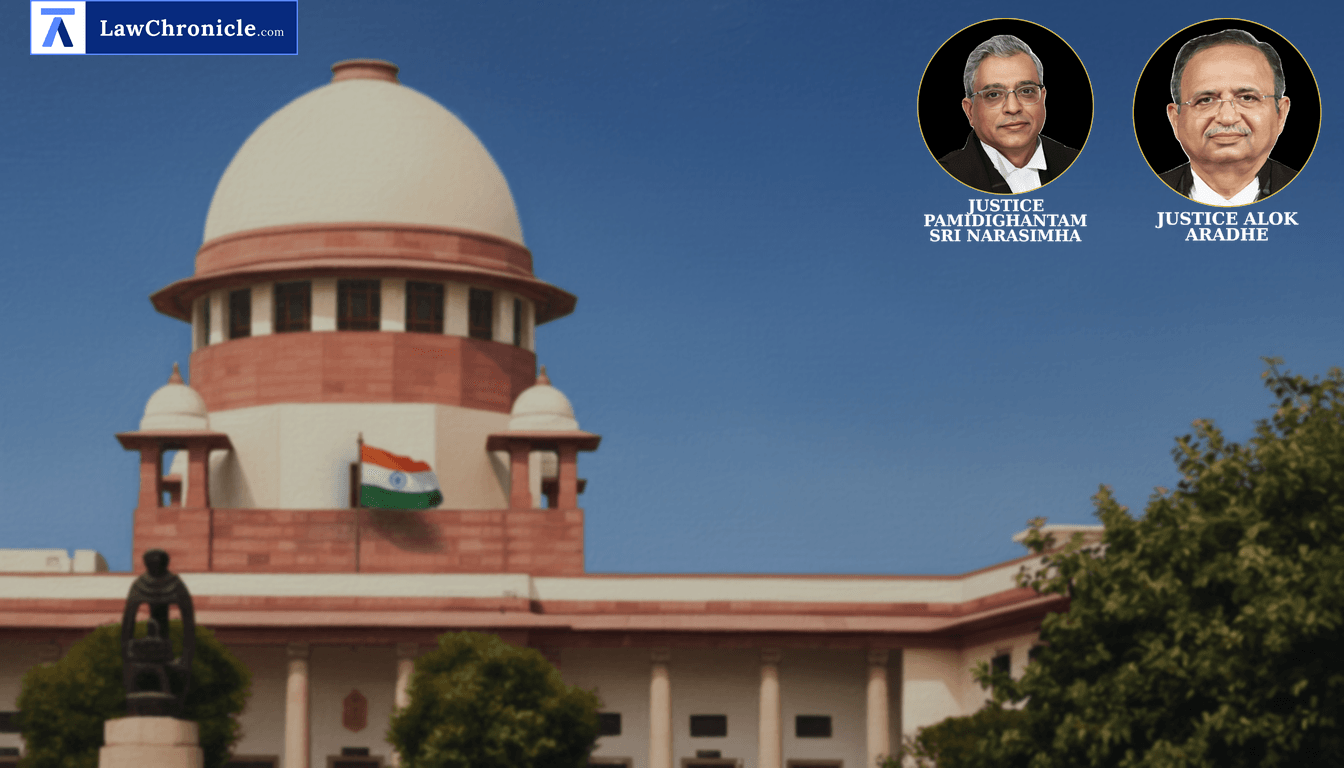
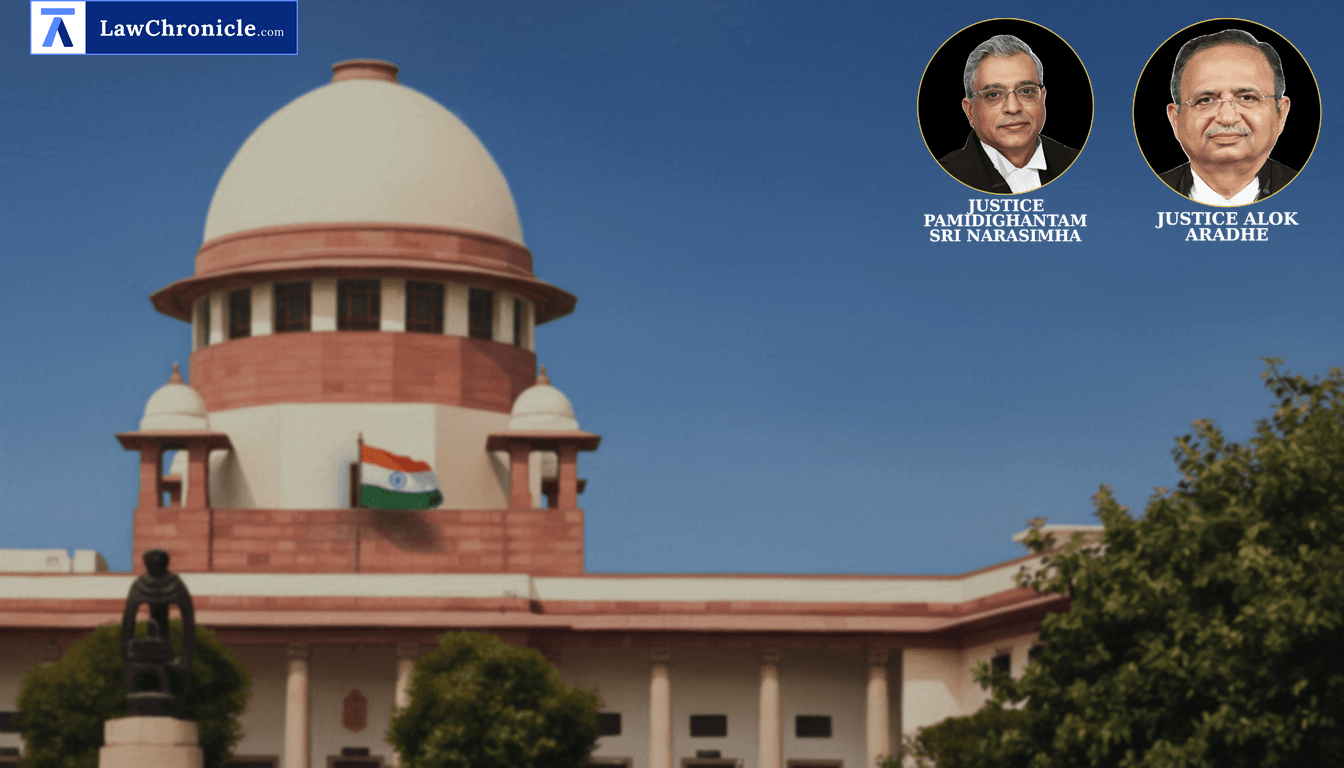
The Supreme Court of India reaffirmed that the Corporate Insolvency Resolution Process is a remedy with far-reaching consequences and must be reserved for cases of genuine insolvency or financial distress, not for the enforcement of money decrees. A Division Bench comprising Justice Pamidighantam Sri Narasimha and Justice Alok Aradhe heard an appeal under Section 62 of the Insolvency and Bankruptcy Code, 2016. The appellant challenged a National Company Law Appellate Tribunal order that had overturned the NCLT's decision and directed the admission of a Section 7 petition filed by a decree holder to initiate the corporate insolvency resolution process.
The Court summarized its holding by observing that initiation and maintenance of CIRP could not be sustained where a creditor held a money decree and adequate alternative remedies of execution existed; the insolvency machinery must not be used as a recovery tool and the NCLAT had erred in admitting the Section 7 petition.
The Court, in its reasoning, observed: "The distinction drawn above by this Court is important and bears emphasis. While the IBC incidentally results in the satisfaction of creditors’ claims, that consequence is a byproduct of the resolution process and not its primary object. The object is the revival of the corporate debtor as a going concern. It follows that a creditor who approaches the NCLT not with any genuine concern for the resolution of the corporate debtor but purely to secure payment of his individual dues is acting contrary to the purpose and spirit of the Code. The existence of adequate and efficacious alternative remedies makes such misuse all the more apparent." The judgment also noted plainly that "The decree has attained finality. No one disputes this." and therefore the proper recourse was execution rather than invocation of the insolvency process.
Background
The dispute arose from short-term loan advances to the appellant and the dishonour of security cheques, which led to proceedings under Section 138 of the Negotiable Instruments Act, 1881. The parties later recorded compromises and the respondent pursued a summary suit in the Delhi High Court which resulted in a money decree dated 11.01.2018. That decree was affirmed on appeal and the Special Leave Petition in this Court was dismissed, such that the decree attained finality. Instead of proceeding to execution under the Code of Civil Procedure, 1908, the respondent filed a petition under Section 7 of the Insolvency and Bankruptcy Code, 2016. The NCLT dismissed the petition on the ground, inter alia, that the decretal claim did not qualify as a "financial debt" for the purposes of Section 5(8) of the Insolvency and Bankruptcy Code, 2016 and that the IBC was not a recovery mechanism, but the NCLAT reversed, finding that the underlying loan agreements satisfied the time‑value‑of‑money requirement and directing admission.
The judgment explained that the Court had regard to a line of authority on the character and purpose of the insolvency code. It recorded the relevance of Swiss Ribbons (P) Ltd. v. Union of India in explaining that the Code was designed for revival and was not a mere recovery legislation, and noted that Pioneer Urban Land and Infrastructure Ltd. v. Union of India emphasised that insolvency jurisdiction was not a back door for individual creditors to realise dues. The Court relied on GLAS Trust Co. LLC v. BYJU Raveendran for the proposition that the IBC must not be used as a tool for coercion and debt recovery by individual creditors, and cited Tottempudi Salalith v. State Bank of India ( "(2024) 1 SCC 24.": 2023 CaseBase(SC) 1050) for the distinction between insolvency remedies and other recovery fora. The judgment also took account of parallel tax proceedings under the Income Tax Act, 1961, including the ITAT’s extraction of the respondent’s own computation, and the pending application under Section 151 of the Code of Civil Procedure, 1908 in the Delhi High Court which cast doubt on the quantum claimed by the respondent.
Applying those principles to the facts, the Court found that the respondent had a final decree and that execution under the Code of Civil Procedure, 1908 was the appropriate remedy; the respondent had bypassed execution and invoked the insolvency process against a company that was shown to be functioning and solvent, had made substantial deposits and had disputed the quantum. The Court held that initiation of CIRP in these circumstances amounted to an abuse of process and a use of the IBC as a recovery mechanism, and therefore allowed the appeal, set aside the NCLAT order dated 01.11.2022, restored the NCLT order dated 20.06.2022 which had dismissed the Section 7 application, and left the respondent free to pursue execution of the decree in accordance with law. The Court awarded costs of Rs. 5,00,000 to the appellant.
Case Details:
Case No.: CIVIL APPEAL NO. 8247 OF 2022
NeutralCitation: 2026 INSC 410
Case Title: ANJANI TECHNOPLAST LTD. v. SHUBH GAUTAM
Appearances:
For the Petitioner(s): Mr. Mukul Rohatgi, learned senior counsel
For the Respondent(s): Mr. Gaurav Singh, learned counsel
Source: 2026 CaseBase(SC) 359
Similar Articles
 Breaking News


