


Investigation Without Specific Notification Voids Prosecution Under SC/ST Act: Karnataka HC
 Copy Link
 Share
 Save
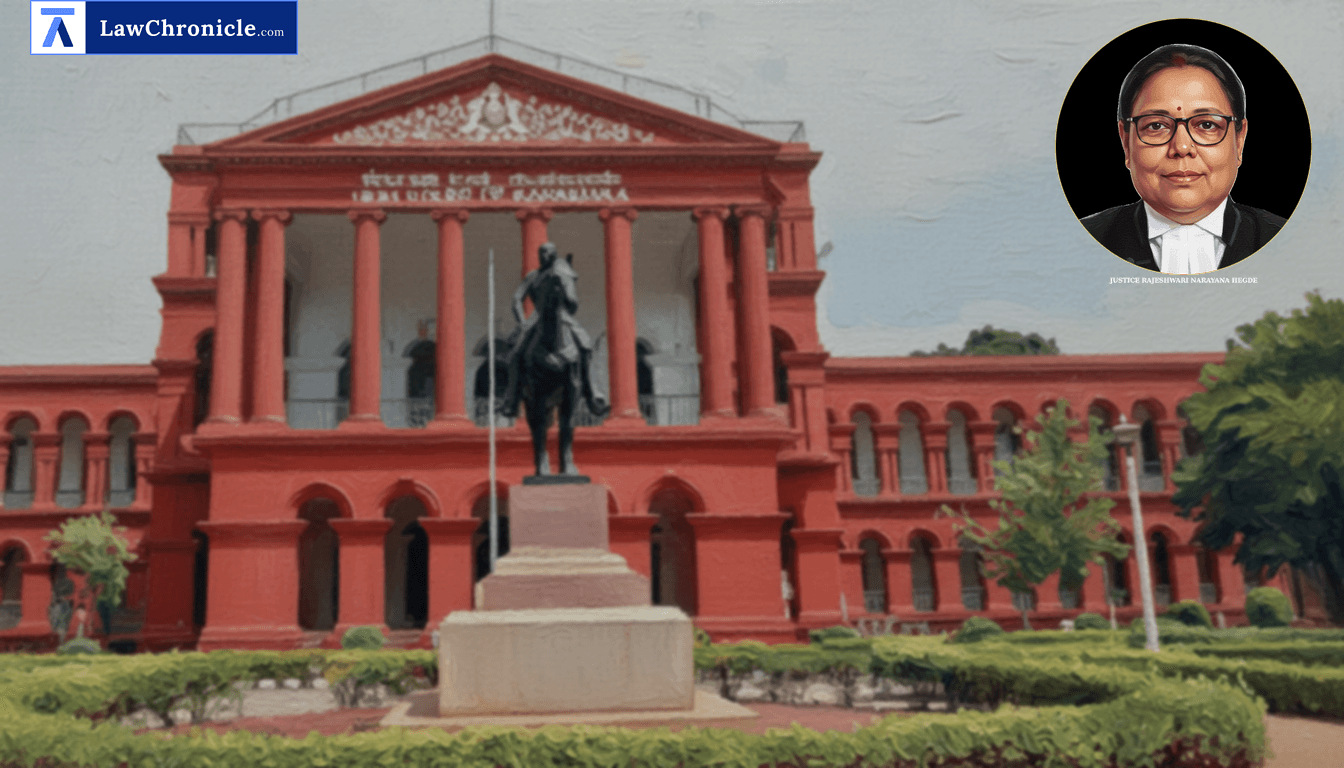
In a decisive ruling that reinforces the procedural sanctity of special criminal laws, the Karnataka High Court has held that an investigation conducted by a Deputy Superintendent of Police into offences under the Scheduled Castes and Scheduled Tribes (Prevention of Atrocities) Act, 1989 is legally unsustainable unless that specific officer was explicitly authorized by the State. This decision underscores that mere rank is insufficient for competency in atrocity cases, mandating a formal conferment of power to satisfy the statutory requirements of the SC/ST (POA) Rules.
Justice Rajeshwari N. Hegde, presiding as a single-judge bench, delivered this judgment while hearing an appeal against a conviction order from the Special Court in Belagavi. The Court was tasked with determining whether the lack of a specific notification authorizing the Investigating Officer, despite him holding the rank of Deputy Superintendent of Police (DySP), would vitiate the proceedings under the Scheduled Castes and Scheduled Tribes (Prevention of Atrocities) Act, 1989.
Mandatory Compliance with Rule 7 of Atrocities Rules
The Court observed that while the investigating officer (PW.9) held the appropriate rank of DySP, the prosecution failed to produce any notification or order from the State Government or Director General of Police specifically authorizing him to investigate this particular case as required under Rule 7 of the SC/ST (POA) Rules. Citing the precedent set by the Supreme Court in State of Andhra Pradesh v. Vishwanadula Chettibabu, the High Court noted that the mandate of the law requires not just the rank, but a specific appointment after considering the officer's experience and sense of justice.
While the Court found the investigation into the offences under the Indian Penal Code to be valid based on the testimony of the complainant (PW.2) and eyewitnesses (PW.3 and PW.4), it held the conviction under the Atrocities Act to be procedurally flawed.
Modified Directions and Sentences
Consequently, the Court acquitted the appellant of the charges under the Scheduled Castes and Scheduled Tribes (Prevention of Atrocities) Act, 1989 but confirmed the conviction for voluntarily causing hurt, intentional insult, and criminal intimidation. The Court has the following directions:
"a. The appeal is allowed in part.
b. The impugned judgment, insofar as it relates to the conviction of the appellant for the offence punishable under Section 3(1)(x) of the SC/ST (POA) Act, is set aside and thereby the accused has been acquitted for the said offence.
c. And the conviction of the appellant for the offences punishable under Sections 324, 504 and 506 of the IPC is confirmed.
d. The accused shall undergo the sentence as under:
i. He shall pay a fine of ₹35,000/- for the offence punishable under Section 324 of the IPC. In default of payment of fine, he shall undergo simple imprisonment for a period of six months.
ii. He shall pay a fine of ₹10,000/- for the offence punishable under Section 504 of the IPC. In default of payment of fine, he shall undergo simple imprisonment for a period of three months.
iii. He shall pay a fine of ₹10,000/- for the offence punishable under Section 506 of the IPC. In default of payment of fine, he shall undergo simple imprisonment for a period of three months.
iv. Out of the total fine amount of ₹55,000/-, a sum of ₹50,000/- is ordered to be paid to the complainant as compensation, and the remaining sum of ₹5,000/- is ordered to be paid to the State Government.
v. The accused is directed to deposit the fine amount before the Trial Court within two months from the date of this order.
vi. The Trial Court is directed to release the amount of Rs.50,000/- out of the fine amount, in favour of the complainant, upon proper identification, and communicate to this office about the compliance."
The Court, in its reasoning, observed: "In the present case, no such notification or order conferring such power upon the said police officer has been produced by the prosecution. Therefore... in the absence of any notification authorising PW.9, the Investigating Officer, to investigate the matter, the investigation conducted by him suffers from an irregularity. Accordingly... the charge framed against the accused for the offence punishable under Section 3(i)(x) of the SC/ST (POA) Act cannot be sustained."
Key Takeaways
Statutory Authorization Mandatory
For a valid prosecution under the Atrocities Act, a DySP must be specifically authorized to investigate the specific case; rank alone does not confer jurisdiction.
Procedural Errors Benefit Accused
Failure of the prosecution to produce the government notification authorizing the IO will result in the acquittal of the accused from special act charges.
Judicial Discretion in Sentencing
In disputes involving long-standing civil land rivalries, courts may favor substantial monetary compensation for the victim over custodial sentences for IPC offences.
Ratio
An investigation into offences under the Scheduled Castes and Scheduled Tribes (Prevention of Atrocities) Act, 1989, conducted by an officer who though holding the rank of Deputy Superintendent of Police has not been specifically appointed or authorized by the State Government or competent authority as per Rule 7 of the 1995 Rules, constitutes a fatal procedural irregularity that renders a conviction under the Act unsustainable in law.
Background:
The case originated from a land dispute in Badachi Village. The complainant, an Anganwadi worker, alleged that on July 25, 2011, she found the accused carrying out agricultural operations on land belonging to her late husband. Upon questioning him, the accused allegedly abused her using caste-based slurs and assaulted her with a stone. The Trial Court had previously convicted the appellant under Sections 324, 504, and 506 of the Indian Penal Code and Section 3(1)(x) of the Scheduled Castes and Scheduled Tribes (Prevention of Atrocities) Act, 1989.
In the appeal, the appellant's counsel argued that the investigation was void as the IO was not authorized under Rule 7 and highlighted a pending civil dispute regarding the land which had been decided in favor of the accused. The High Court, while finding the IPC offences proved through witness testimony, accepted the procedural argument regarding the Atrocities Act and modified the sentence to a fine-based punishment given the civil nature of the background conflict.
Case Details:
Case No.: CRL.A No. 100282 of 2016
NeutralCitation: 2026:KHC-D:9970
Case Title: Sadashiva S/O Appasab Borade v. The State of Karnataka
Appearances:
For the Petitioner(s): Sri. Jagadish Patil, Advocate
For the Respondent(s): Sri Jairam Siddi, HCGP
Source: 2026 CaseBase(KAR) 910
Similar Articles


 Breaking News


