


Is adulterous wife entitled to maintenance during pendency of application u/s 125(4) CrPC? SC Answers
 Copy Link
 Share
 Save
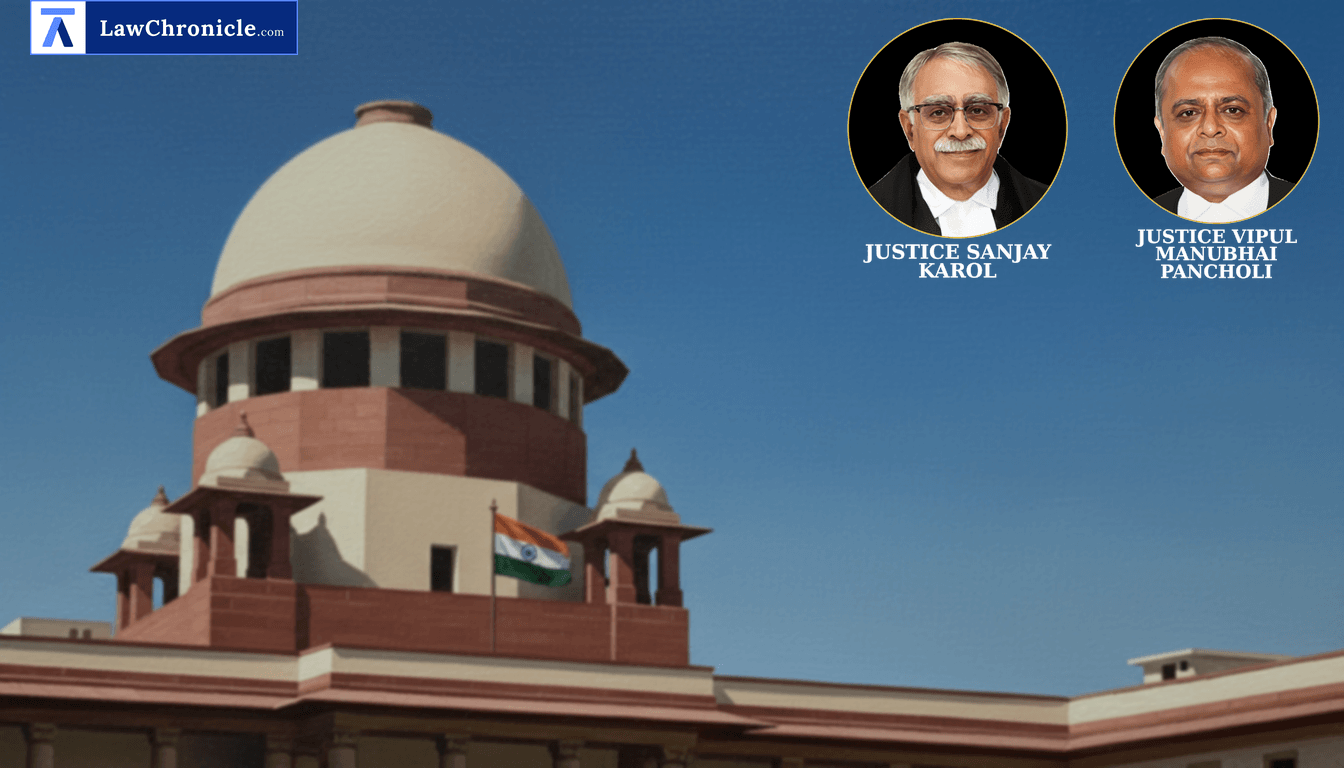
The Supreme Court has held that husbands facing maintenance claims can block interim relief by presenting ex-facie proof of an adulterous wife. The Apex Court established that adultery pleas under Section 125(4) of the Code of Criminal Procedure, 1973 must be adjudicated prior to final determination rather than postponed to the end of trial.
A bench comprising Justice Sanjay Karol and Justice Vipul M. Pancholi examined the statutory framework governing interim and final maintenance allowances when allegations of spousal infidelity are raised under Section 125(4) of the Code of Criminal Procedure, 1973. Answering the question to "Is an adulterous wife entitled to maintenance while husband’s application under Section 125(4) CrPC is pending, the Bench gave significant clarity. The Apex Court also sought statutory regulation for Private Investigators in matrimonial disputes by the legislature.
Adjudication of Adultery Bars at the Interim Stage
The Supreme Court clarified the operational sequence of maintenance proceedings, noting that while interim relief aims to prevent destitution, clear evidence demonstrating disqualification under Section 125(4) of the Code of Criminal Procedure, 1973 cannot be pushed back to the final disposal stage.
The Court, in its reasoning, observed: "...if a husband files an application under Section 125(4) and is, at the first instance, able to establish the charge through evidence ex facie, then only, there can be said to be a bar to interim maintenance. The courts below clearly fell into error to hold that it was only at the stage of final adjudication that such a question could be decided. This view would render otiose what has been provided in the statute."
Regulation of Private Detectives
Addressing the lack of regulatory safeguards regarding surveillance data and private detectives frequently used to prove marital infidelity, the Court issued specific instructions to administrative authorities. The Court has following directions:
"In view of the above discussion, on the aspect of private investigation, we direct that a copy of this judgment be sent to the Secretary, Ministry of Law and Justice, Government of India, and also the Chairman, Law Commission of India to take a view, as may be appropriate in the matter."
Key Takeaways
- Immediate Relief Bar upon Ex-Facie Proof: Husbands who submit undisputed or ex-facie clear evidence of spousal adultery can secure a stay or denial of interim maintenance without waiting for full trial completion.
- Sequential Stage Framework: The Court demarcated maintenance proceedings into three distinct stages—interim maintenance under proviso to Section 125(1), adjudication of Section 125(4) disqualifications, and final order under Section 125(1).
- Regulatory Push for Private Investigators: Highlighting privacy concerns and potential evidence doctoring, the Apex Court triggered executive and legislative review for regulating private investigative agencies.
Ratio
An application under Section 125(4) of the Code of Criminal Procedure, 1973 alleging adultery or other statutory disqualifications must be decided after the grant of interim maintenance but before final adjudication of the main maintenance application. If clear and cogent evidence ex-facie establishes adultery at the initial stage, interim maintenance cannot be granted or continued.
Factual Background of Maintenance to Adulterous Wife
The dispute arose out of a matrimonial rift where the respondent-wife filed an application for maintenance for herself and her child under Section 125 of the Code of Criminal Procedure, 1973 before the Magistrate. In response, the appellant-husband filed an application under Section 125(4) of the Code of Criminal Procedure, 1973 claiming that the wife was living in adultery, relying on electronic records including photographs and compact discs. He also filed an application under Section 91 of the Code of Criminal Procedure, 1973 seeking financial and call records. The trial court dismissed the Section 125(4) application, holding that allegations of adultery based on electronic evidence could only be tested after evidence was exhibited at the final trial, while granting interim maintenance. The High Court affirmed this approach, holding that there is no provision requiring preliminary adjudication of adultery. The Supreme Court was particularly sought to answer the question: Is adulterous wife entitled to maintenance?
Analyzing the statutory scheme, the Supreme Court highlighted the summary and civil nature of maintenance, referring to precedents such as Dukhtar Jahan v. Mohd. Farooq ( "(1987) 1 SCC 624": 1987 CaseBase(SC) 232), Vimala (K.) v. Veeraswamy (K.) ( "(1991) 2 SCC 375": 1991 CaseBase(SC) 277), Nagendrappa Natikar v. Neelamma ( "(2014) 14 SCC 452": 2013 CaseBase(SC) 911), Danial Latifi v. Union of India ( "(2001) 7 SCC 740": 2001 CaseBase(SC) 2710), Rajnesh v Neha ( "(2021) 2 SCC 324": 2020 CaseBase(SC) 717), Dwarika Prasad Satpathy v. Bidyut Prava Dixit ( "(1999) 7 SCC 675": 1999 CaseBase(SC) 285), Chanmuniya v. Virendra Kumar Singh Kushwaha ( "(2011) 1 SCC 141": 2010 CaseBase(SC) 540), Kamala v. M.R. Mohan Kumar ( "(2019) 11 SCC 491": 2018 CaseBase(SC) 605), Rina Kumari v. Dinesh Kumar Mahto, Iqbal Bano v. State of U.P., Bhagwan Dutt v. Kamla Devi ( "(1975) 2 SCC 386": 1974 CaseBase(SC) 40), Chaturbhuj v. Sita Bai ( "(2008) 2 SCC 316": 2007 CaseBase(SC) 783), Mohd. Ahmed Khan v. Shah Bano Begum ( "(1985) 2 SCC 556": 1985 CaseBase(SC) 28), Mohd. Abdul Samad v. State of Telangana ( "(2025) 2 SCC 49": 2024 CaseBase(SC) 626), Inderjit Kaur v. Union of India ( "(1990) 1 SCC 344": 1989 CaseBase(SC) 182), Vanamala v. H.M. Ranganatha Bhatta, and Swapan Kumar Banerjee v. State of W.B.. The Court held that while interim maintenance under Section 125(1) ensures immediate social justice, an application under Section 125(4) must be decided between the interim stage and final order. Examining the evidentiary standard for private surveillance data, the Court cited Navinchandra N. Majithia v. State of Meghalaya ( "(2000) 8 SCC 323": 2000 CaseBase(SC) 516), R. Sarala v. T.S. Velu ( "(2000) 4 SCC 459": 2000 CaseBase(SC) 904), R.M. Malkani v. State of Maharashtra ( "(1973) 1 SCC 471": 1972 CaseBase(SC) 65), Naresh Kumar Garg (Dr.) v. State of Haryana, Arjun Panditrao Khotkar v. Kailash Kushanrao Gorantyal ( "(2020) 7 SCC 1": 2020 CaseBase(SC) 775), Anvar P.V. v. P.K. Basheer ( "(2014) 10 SCC 473": 2014 CaseBase(SC) 606), Shafhi Mohammad v. State of H.P. ( "(2018) 2 SCC 801": 2017 CaseBase(SC) 1093), and Taylor v. Taylor, emphasizing mandatory certification under Section 65-B of the Indian Evidence Act, 1872 (or BSA, 2023) and provisions of the Information Technology Act, 2000.
Consequently, the Supreme Court set aside the High Court order and remanded the matter back to the trial court to decide the Section 125(4) application on merits.
Case Details:
Case No.: Criminal Appeal No(s). of 2026 (Arising out of SLP (Crl.) No(s). 3171 of 2025)
Neutral Citation: 2026 INSC 778
Case Title: Himanshu Chordia v. State of Rajasthan & Anr.
Source: 2026 CaseBase(SC) 712
Similar Articles

 Breaking News


