


No Adverse Adultery Finding Without Hearing The Named Co-Adulterer: Allahabad HC
 Copy Link
 Share
 Save
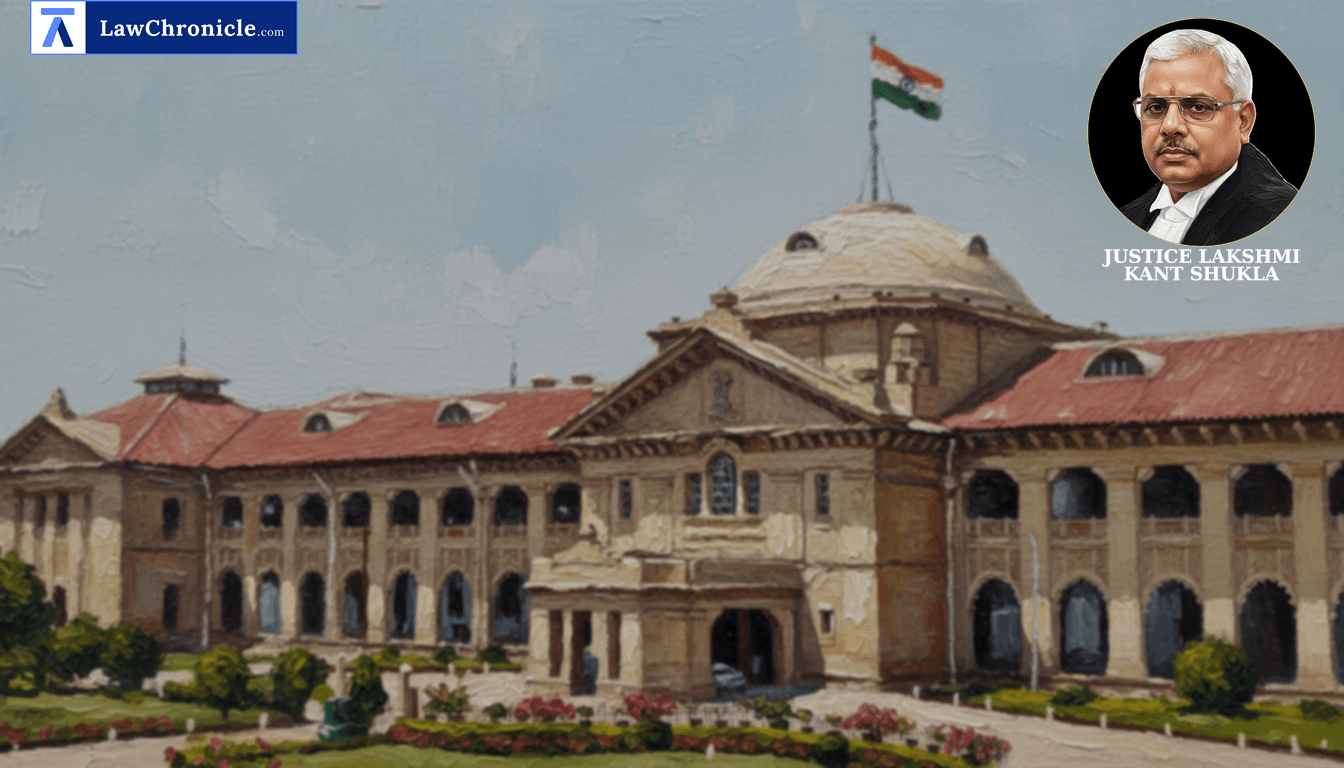
The Allahabad High Court has held that no adverse finding of adultery can be recorded against a specifically named third party in maintenance proceedings without affording them an opportunity to be heard. The Bench underscored that the right to reputation is an integral facet of the Right to Life under Constitution of India, mandating that even summary proceedings under Section 125 of the Code Of Criminal Procedure, 1973 must adhere to the fundamental principle of audi alteram partem.
Justice Lakshmi Kant Shukla presided over the matter, emphasizing that judicial findings attributing sexual misconduct to identifiable individuals cannot be treated as inconsequential observations. The Bench noted a procedural gap in the Code Of Criminal Procedure, 1973 regarding the impleadment of alleged co-adulterers and directed the Registrar General to place the matter before the Chief Justice for framing appropriate procedural rules.
Key Takeaways
Protection of Reputation
Findings of adultery against named third parties are not mere observations; they impact an individual's dignity and require a fair hearing.
Natural Justice in Summary Proceedings
While Section 125 Code Of Criminal Procedure, 1973 proceedings are summary in nature, they cannot bypass the rule of audi alteram partem when character is at stake.
Evidence Standards for Electronic Records
Mere submission of electronic evidence under Section 14 of the Family Courts Act, 1984 does not dispense with the need to prove its authenticity and source.
Procedural Reform Mandated
High Court directs framing of rules to bridge the procedural gap regarding impleadment of co-adulterers in maintenance disputes.
Court Scrutinizes Admissibility of Electronic Evidence
The Allahabad High Court addressed whether electronic material could be admitted without a certificate under Section 65-B of the Indian Evidence Act, 1872. While Section 14 of the Family Courts Act, 1984 grants flexibility, the Court clarified that this does not equate to automatic authenticity. The Bench observed that "The question of admissibility or reception of electronic material is distinct from the question of its authenticity, reliability and evidentiary value. The material relied upon by the revisionist, in the circumstances of the present case, cannot be treated as conclusive proof of the allegation of adultery."
Requirement of Hearing Alleged Co-Adulterer
The Bench highlighted that when a specific person is named as a co-adulterer, their reputation is at risk. Relying on Subramanian Swamy v. Union of India, Ministry of Law and others ( "(2016) 7 SCC 221": 2016 CaseBase(SC) 1081), the Allahabad High Court noted that reputation is a component of Article 21. It further observed that although Section 125 Code Of Criminal Procedure, 1973 is for social justice, as held in Chaturbhuj v. Sita Bai ( "(2008) 2 SCC 316": 2007 CaseBase(SC) 783) and Rajnesh v. Neha and another ( "(2021) 2 SCC 324": 2020 CaseBase(SC) 717), it cannot be used to condemn a third party unheard.
The Allahabad High Court issued the following directions: "The Registrar General of this Court is directed to place this matter before Hon’ble the Chief Justice for appropriate consideration and directions and for taking necessary steps either to frame appropriate rules prescribing the procedure for impleadment or issuance of notice to a specifically named alleged co-adulterer in proceedings under Section 125 Cr.P.C., or for extending the principle contained in Rule 6(a) of the Hindu Marriage and Divorce Rules, 1956, with such necessary modifications as may be considered appropriate, to proceedings under Section 125 Cr.P.C."
Ratio
When a specific name and identity of a third person are disclosed in proceedings under Section 125 Code Of Criminal Procedure, 1973 with an allegation of adultery, the Court cannot record an adverse finding against such person without affording them an opportunity to explain or rebut the allegation. This requirement flows from the principles of natural justice and the constitutional right to reputation under Article 21 of the Constitution of India.
Background
The revisionist, Gaurav Srivastav, challenged an order of the Family Court, Kanpur Nagar, which directed him to pay maintenance to his wife and minor son. He contended that his wife was living in adultery with a specifically named individual and produced photographs as evidence. The Family Court had rejected the electronic evidence for lack of a certificate under Section 65-B of the Indian Evidence Act, 1872.
The Allahabad High Court examined whether the Family Court could receive such evidence under Section 14 of the Family Courts Act, 1984 and whether the alleged co-adulterer needed to be heard. The Court cited Arjun Panditrao Khotkar v. Kailash Kushanrao Gorantyal ( "(2020) 7 SCC 1": 2020 CaseBase(SC) 775) regarding the mandatory nature of Section 65-B for electronic records but noted the flexibility of Family Courts. However, it found the photographs in this case were unauthenticated and potentially manipulated. The Bench ultimately dismissed the revision, affirming the maintenance order and calling for procedural reforms.
Case Details:
Case No.: CRIMINAL REVISION No. - 3039 of 2025
Case Title: Gaurav Srivastav Versus State of U.P. and 2 others
Appearances:
For the Petitioner(s): Kalyan Sundram Srivastava, Raghunandan Singh
For the Respondent(s): G.A., Santosh Kumar Singh
Source: 2026 CaseBase(ALL) 1206
Similar Articles


 Breaking News


