


Is Assembling considered Manufacturing for Imported Modules? Supreme Court says NO
 Copy Link
 Share
 Save
Addressing the question of law “Is Assembling considered Manufacturing?”, the Supreme Court explained grouping of parts for taxes. The Supreme Court refused to hold mere packing, pinning, or grouping imported modules and components in line with customer specifications as manufacturing activity under excise law, if no new commercially distinct commodity emerges. The Apex court upheld the finding that custom 'kitting' of photocopier parts cleared under complete machine tariffs fails to trigger central excise tax liabilities.
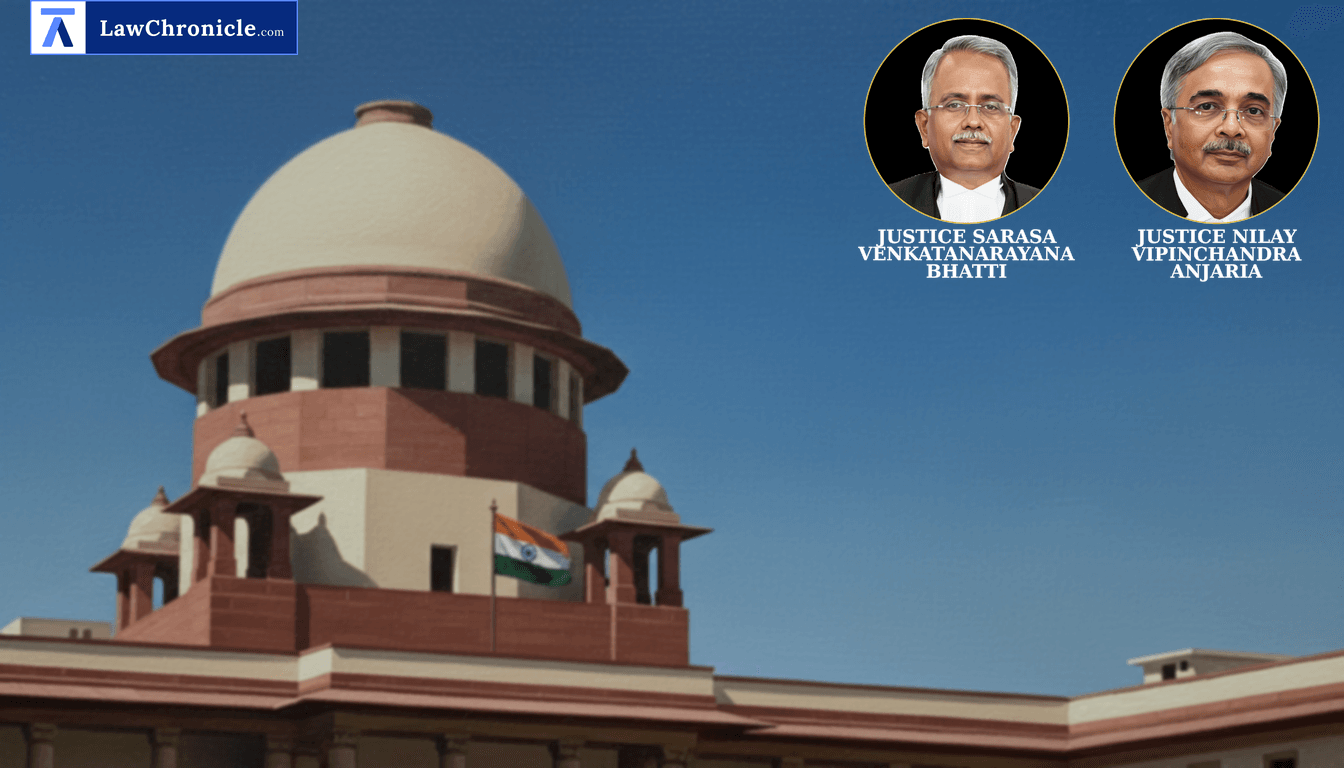
A bench comprising Justice S.V.N. Bhatti and Justice N.V. Anjaria dismissed the Revenue's appeals against Xerox India Ltd., affirming the Customs, Excise and Service Tax Appellate Tribunal's (CESTAT) ruling that assembling or configuring imported modules into custom photocopier setups at warehouses does not constitute manufacture.
Key Takeaways
- Kitting Is Not Manufacture: Simple pinning, plugging, and custom grouping of pre-imported modules according to customer specifications does not constitute a manufacturing process under central excise laws.
- Consistency in Tariff Assessment: Revenue cannot treat goods as complete machines for customs and countervailing duty purposes while simultaneously classifying them as incomplete or unfinished to invoke deeming provisions for excise duties.
- Evidentiary Burden on Revenue: The tax department must present concrete evidence, such as physical inspection or visual proof of transformation, rather than relying on structural assumptions, to establish an excisable activity.
Excise Liability and Deeming Provisions
Summarizing the core controversy, the bench examined whether the process of combining imported parts in complete knocked down or semi-knocked down conditions with local components satisfies the threshold of manufacture under Section 2(f) of the Central Excise Act, 1944 read with Note 6 to Section XVI of the First Schedule to the Central Excise Tariff Act, 1985.
Addressing the scope of deeming fictions under tariff rules, the Supreme Court observed that Note 6 operates strictly upon an article that is incomplete or unfinished but possesses the essential character of a finished article. Rejection of the Revenue's reliance on this provision was grounded in the finding that the goods were already imported and assessed as complete machines under Tariff Heading 8471. The Court, in its reasoning, observed: "The Revenue cannot, upon one and the same set of facts, treat the goods as complete machines for the purpose of levying customs duty including CVD, and as incomplete articles for the purpose of attracting Note 6. Nor does Rule 2(a) of the General Rules for the Interpretation of the Schedule carry the matter further."
Analyzing the broader evidentiary standards required in tax litigation, the Supreme Court expressed disappointment over the absence of physical verification by tax officials. The Court held: "In a matter such as the present, the Revenue need not traverse on a winding journey to explain what it wants to establish. It is required to merely justify that there is excisable activity resulting in the excisable duty demanded... the Revenue could have proved, through best evidence, that the photocopier is a product of change, not a result of 'kitting'."
Ratio
A process or activity amounts to manufacture under Section 2(f) of the Central Excise Act, 1944 only if it transforms an existing commodity into a new, distinct article recognized by the market in name, character, and use. Simple assembly, kitting, or custom packaging of pre-assessed modules without altering their essential character or producing a physically transformed, distinct commercial product does not constitute manufacture or attract excise duty liability.
Background
The dispute arose when the Revenue issued show cause notices demanding central excise duty and penalties from Xerox India Ltd. for the period between April 2002 and November 2006. The tax authorities alleged that the assessee's activities at its warehouses in Hyderabad and Rampur, specifically assembling imported modules and components in knocked-down conditions into customized photocopiers and multi-functional printers, amounted to manufacture under Section 2(f) of the Central Excise Act, 1944 and Note 6 to Section XVI of the Central Excise Tariff Act, 1985. The Commissioner confirmed duty demands exceeding Rs. 17.86 crore along with penalties under Rule 26 of the Central Excise Rules, 2002.
On appeal, CESTAT set aside the Commissioner's orders, concluding that Xerox India merely undertook 'kitting', grouping components in sets using computer systems without carrying out any physical manufacturing or transforming incomplete machines into complete machines. Aggrieved, the Revenue appealed to the Supreme Court.
During the proceedings, the Revenue relied on precedents including M/s Narne Tulaman Manufacturers Pvt. Ltd., Hyderabad v. Collector of Central Excise, Hyderabad ( "(1989) 1 SCC 172": 1988 CaseBase(SC) 162), BPL India Ltd. v. Commissioner of Central Excise, Cochin, and Quippo Energy Ltd. v. Commissioner of Central Excise, Ahmedabad-II to argue that assembling distinct components into functional equipment creates a new commercial product. Conversely, the assessee cited landmark judgments including Union of India and another v. Delhi Cloth and General Mills Co. Ltd. ( "(1962) SCC OnLine SC 148": 1962 CaseBase(SC) 143), Satnam Overseas Limited v. Commissioner of Central Excise, New Delhi, Servo-Med Industries Private Limited v. Commissioner of Central Excise, Mumbai, and Alupro Building Systems to emphasize that minor adjustments, convenience packaging, or simple assembly without transformation fail the test of manufacture.
Is Assembling Considered Manufacturing? - NO
Evaluating the precedents, the Supreme Court affirmed CESTAT's factual conclusions, holding that the imported modules were cleared in their original packaging without undergoing any manufacturing transformation at the warehouse. Finding no perversity in the Tribunal's order, the Supreme Court dismissed all appeals filed by the Revenue.
Case Details:
Case No.: Civil Appeal Nos. 5939-5941 of 2010
Neutral Citation: 2026 INSC 805
Case Title: Commissioner of Central Excise, Hyderabad-IV v. M/s Xerox India Ltd. & Ors.
Appearances:
For the Petitioner(s): Mr. Raghavendra P. Shankar, Learned Additional Solicitor General of India
For the Respondent(s): Mr. V Lakshmikumaran, Advocate
Source: 2026 CaseBase(SC) 738
Similar Articles


 Breaking News


