


Job Work Processing of Handloom Fabrics Exempted From Textile Cess: Supreme Court
 Copy Link
 Share
 Save
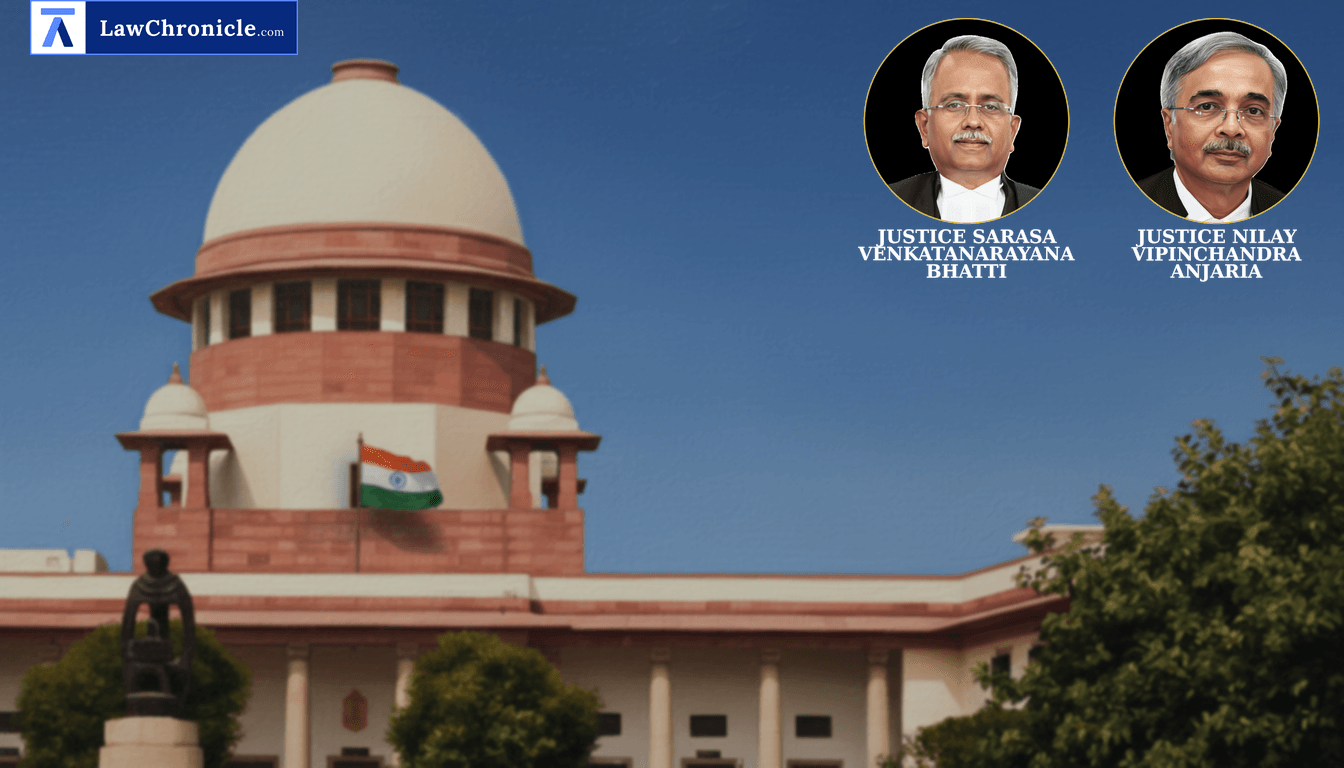
In a crucial clarification protecting small-scale textile processors, the Supreme Court has held that independent units engaged purely in dyeing and bleaching powerloom or handloom fabrics act merely as an extended arm of primary manufacturers and cannot be taxed under statutory cess provisions. A Division Bench comprising Justice S.V.N. Bhatti and Justice N.V. Anjaria affirmed an Allahabad High Court decision, holding that process activities like dyeing and bleaching do not amount to fresh 'manufacturing' under the Textiles Committee Act, 1963.
Key Takeaways
- No Importation of Alien Definitions: Terms undefined in a specific statutory scheme cannot be bodily lifted from external legislations without explicit statutory reference.
- Protection for Job Workers: Processing units refining handloom or powerloom fabrics operate purely as extended arms of primary manufacturers, keeping them outside the purview of additional cess liability.
- Scope of Tax Exemptions Preserved: Upgrading or refining fabric on job work basis does not obliterate the statutory tax exemption granted to powerloom and handloom products.
Cess Applicability and Statutory Definitions
Summarizing the statutory framework, the Supreme Court noted that the Textiles Committee Act, 1963 does not define the term 'manufacture', making it impermissible to borrow definitions from tax laws like the Central Excise Act, 1944. The Bench observed that the processing activities undertaken by independent units do not alter the foundational character of the exempted fabrics. The Apex Court further explained that "….the word 'manufacture' is not defined in the Act, and it is neither safe nor permissible in law to advert to and adopt the connotation 'manufacture' as defined in another statute, and on the basis of such alien definition, treat the activity undertaken by respondent No.1 to be the manufacturing activity. Therefore, while interpreting the word 'manufactured' which occurs in Section 5A of the Act in the present case, it has to be understood in its common parlance and not in any special sense by borrowing a special ingredient of the concept from other statute."
Addressing established canons of statutory interpretation, the Bench reinforced that statutory definitions from other laws cannot be applied unless legislations are in pari materia. The Supreme Court relied on Union of India and Others vs. R.C. Jain and Others ( "(1981) 2 SCS 308": 1981 CaseBase(SC) 378) to affirm that un-imported definitions from separate enactments cannot govern undefined terms. This legal position was further supported by Jagatram Ahuja vs. Commissioner of Gift Tax, Hyderabad ( "(2000) 8 SCC 249": 2000 CaseBase(SC) 1774) and Maheshwari Fish Seed Farm vs. T.N. Electricity Board and Another.
Ratio
When a term is left undefined in a statutory enactment, it must be interpreted in accordance with its common parlance within the context of that specific statute, and definitions from external or non-pari materia statutes cannot be imported to impose tax or cess liabilities.
Background
The controversy originated when audit observations from the office of Comptroller General of India led the Assessing Officer of the Textiles Committee to issue a show cause notice raising a demand of Rs. 2,68,293/- as textile cess against an independent processing unit processing 100% man-made fabrics supplied by powerloom and handloom units. The processor contended that the fabrics were received on job work basis from small household powerloom weavers having fewer than 50 looms and were statutory exempt under Section 5A of the Textiles Committee Act, 1963.
The assessing authority rejected the defense, holding that exemption applies only at the loom stage. Upon appeal, the Textiles Committee Cess Appellate Tribunal sustained the demand relying on its earlier ruling in Chandok Textile Exporters Pvt. Ltd. vs. Assessing Officer, Textites Committee. Aggrieved, the processor approached the Allahabad High Court, which quashed the demand by holding that job work activities do not obliterate the exempted status of powerloom textiles. Dismissing the Textiles Committee's appeal, the Supreme Court confirmed the High Court's ruling.
Case Details:
Case No.: Civil Appeal No. 785 of 2016
Neutral Citation: 2026 INSC 1158
Case Title: The Assessing Officer, Textiles Committee v. M/s. Premium Suiting Pvt. Ltd. & Another
Appearances:
For the Petitioner(s): Mr. Chirag M. Shroff, Advocate
For the Respondent(s): Mr. Tanmaya Agarwal, Advocate
Source: 2026 CaseBase(SC) 9488
Similar Articles
 Breaking News


