


Jammu and Kashmir HC: Physical Disability Cannot Be Mechanically Equated With Loss Of Earning Capacity
 Copy Link
 Share
 Save
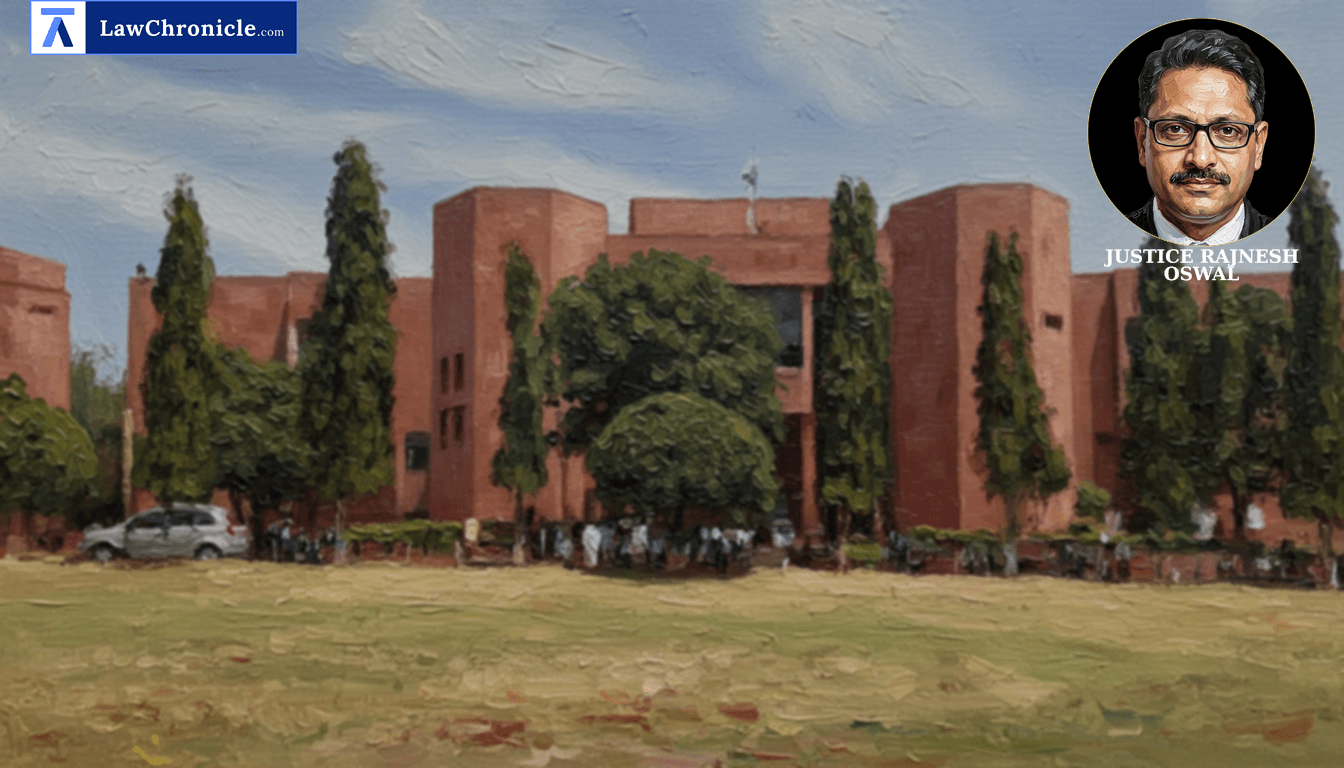
In a significant clarification of motor accident law, the Jammu and Kashmir High Court has ruled that assessing functional disability must reflect the actual impact on a claimant's livelihood rather than relying solely on numerical medical certifications. The Court affirmed that for individuals in specific trades, such as shop keeping, a severe limb injury can effectively translate to total economic incapacity, regardless of a lower physical disability percentage.
A bench of Justice Rajnesh Oswal heard an appeal filed by the insurer challenging a compensation award of over ₹29 Lakhs. The Insurance Company contested the Tribunal’s decision to equate an 85% limb disability with a corresponding loss of earning capacity for a shopkeeper, arguing for a significant reduction based on whole-body assessments.
Assessing Functional Disability vs. Physical Impairment
The Court rejected the insurer's plea to reduce the disability percentage, emphasizing that the nature of the claimant's work is the primary yardstick for compensation. Relying on the precedent set in Raj Kumar v. Ajay Kumar and another ( "(2011) ACJ 1": 2010 CaseBase(SC) 368), the Court noted that a physical disability must be judged with reference to the nature of the work being performed by the person who suffered the disability.
The Court, in its reasoning, observed: "...the assessment of functional disability must be determined on the basis of the impact of the injuries on the claimant's earning capacity and is not confined to the numerical percentage of permanent physical disability certified by the Medical Board... the inquiry is not confined to the numerical percentage of physical impairment certified by the Medical Board, but extends to evaluating whether the claimant, in light of his educational background, skill set and nature of employment, is capable of meaningfully pursue his avocation."
Validity of Interest on Future Income
The appellant further questioned whether interest could be awarded on the 'future income' component of the compensation. The Court cited the principle from M Paramesh vs. VRL Logistics ltd. and another ( "2026 INSC 655": 2026 CaseBase(SC) 612) and Shankar Dutt v. United India Insurance Co. Ltd. and others ( "2026 SCC OnLine SC 1193": 2026 CaseBase(SC) 613), affirming that claimants are deprived of these funds during litigation and are entitled to interest from the date of filing. It held that if the amounts were disbursed on a rough calculation at the time of the accident, interest liability would not arise; however, refusal to settle justifies the interest burden.
Final Decision and Directions
Finding the appeal misconceived, the Court upheld the Tribunal's award, including the 7.5% interest rate. The Court has following directions: "The amount deposited with the Registry of this Court shall be released in favour of respondent No. 1 in accordance with the directions contained in the award passed by the learned Tribunal, subject to payment of the requisite court fee, if any."
Key Takeaways:
Impact-Centric Assessment
Courts must prioritize the functional impact of an injury on a specific vocation over theoretical medical percentages of the whole body.
Economic Context of Interest
Insurer challenges to interest rates based on changing banking economies are unlikely to succeed if the rate (e.g., 7.5%) is deemed reasonable and just by the Court.
Duty to Settle
Insurance companies are encouraged to settle claims provisionally to avoid the accumulation of interest on future prospect components during lengthy trial periods.
Ratio Decidendi:
The exact rule of law established is that the determination of loss of earning capacity under the Motor Vehicles Act is not a mechanical exercise of adopting medical disability percentages but a realistic appraisal of how the injury restricts the claimant’s ability to pursue their specific profession or avocation.
Background:
The matter arose from an accident in October 2021 where the claimant, a 63-year-old GST-registered Karyana shop owner, suffered an above-knee amputation of the right lower limb and other deformities. The Medical Board assessed his limb disability at 85%. The claimant testified that his shop had to be closed as he became completely dependent on attendants. The Tribunal awarded ₹29,44,482/-, which the insurer challenged as excessive, arguing that 85% limb disability should be converted to less than 40% for the whole body. The High Court, after reviewing precedents like United India Insurance Co. Ltd. v. Madan Lal and others, R. Halle vs. Reliance General Insurance Company ltd., Sarnam Singh vs. Shriram General Insurance Co. ltd. and ors. ( "2023 LiveLaw (SC) 498": 2023 CaseBase(SC) 330), and Sarla Verma v. Delhi Transport Corporation ( "(2009) 6 SCC 121": 2009 CaseBase(SC) 380), dismissed the appeal, holding the compensation to be just and reasonable.
Case Details:
Case No.: Mac App No. 175/2024
NeutralCitation: 2026:JKLHC-JMU:2139
Case Title: United India Insurance Co. ltd. v. Ghulam Ali and ors.
Appearances:
For the Petitioner(s): Ms. Damini Singh Chauhan, Adv.
For the Respondent(s): Mr. Irfaan Khan, Advocate
Source: 2026 CaseBase(JK) 10
Similar Articles

 Breaking News


