


Amputation of Limb for Professional Driver Constitutes 100% Functional Disability: Gujarat HC
 Copy Link
 Share
 Save
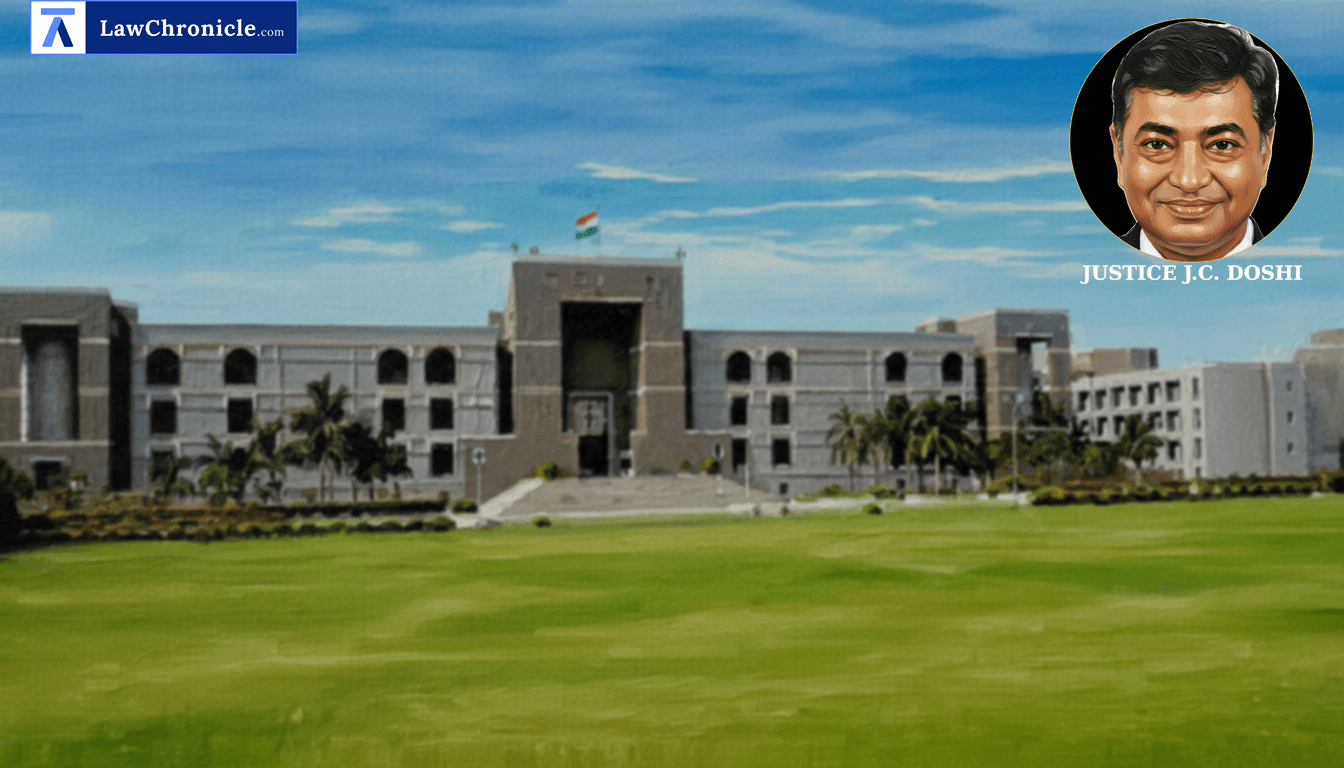
The Gujarat High Court has reinforced the doctrine of 'just and fair compensation,' ruling that the loss of a limb for a manual worker like a driver translates to total functional disability, necessitating a liberal assessment of future earning capacity. This judgment underscores the judicial shift from mechanical disability calculations to a pragmatic, person-centric evaluation of economic loss under the Motor Vehicles Act, 1988.
Justice J. C. Doshi presided over the appeal, which challenged a 2013 Tribunal award on the grounds of inadequacy. The Court scrutinized the impact of a right-leg amputation on a professional bus driver, emphasizing that physical frame destruction cannot be fully repaired by money, yet the law must value life and limb on a generous scale to restore a victim as close as possible to their pre-accident state.
Key Takeaways
Functional Over Physical Disability
The Court established that for manual vocations like driving, the loss of a leg constitutes 100% functional disability regardless of the medical percentage, as it completely eliminates the capacity to perform that specific trade.
Future Prospects Mandatory
Following recent apex court mandates, the High Court held that granting loss of future prospects is an integral part of 'just and fair' compensation in cases of permanent disability.
Realistic Approximation Principle
Judicial bodies must adopt a holistic and pragmatic view rather than a niggardly or moderate approach when computing damages for victims of road accidents.
Court's Rationale on Economic Loss and Future Earnings
The Court observed that the Motor Accident Claims Tribunal had erred by granting compensation for actual loss of income as if the disability were partial, failing to recognize that the claimant had been rendered 'deadwood' for his profession. The Court, in its reasoning, observed: "The work of a driver is essentially a physical and manual avocation requiring continuous use and support of both legs. The material on record further reveals that on account of the injuries suffered in the accident, the appellant underwent amputation of his right leg. Therefore, it is a case of 100% injury."
Drawing from M.Paramesh Versus Vrl Logistics Ltd. ( "2026 INSC 655": 2026 CaseBase(SC) 612), the Bench noted that the distinction between physical disability and functional disability is vital. The Court highlighted that the same permanent disability may result in different percentages of loss of earning capacity depending on the nature of the profession and job.
The Court has the following directions:
"8.1 The present appeal is partly allowed.
8.2 The Insurance Company is directed to deposit the enhanced amount Rs.10,03,400/- with 8% p.a. interest from the date of claim petition till its realization before the concerned Tribunal, within a period of 12 weeks from the date of receipt of this order.
8.3 Rest of the directions issued in the impugned judgment and award shall remain unaltered.
8.4 The Tribunal shall disburse the entire awarded amount lying in the FDR and/or with the Tribunal, with accrued interest thereon, if any, to the claimant, by account payee cheque / NEFT / RTGS, after proper verification and after following due procedure.
8.5 While making the payment, the Tribunal shall deduct the courts fees, if not paid, in accordance with rules/law."
Ratio
The determining factor for compensation in motor accident claims is the effect of permanent disability on the earning capacity specific to the victim's avocation. When a physical injury renders a claimant incapable of performing their primary professional duties, it must be treated as 100% functional disability for calculating the loss of future earnings, inclusive of future prospects.
Background
The dispute originated from an accident on August 31, 2010, when the appellant, a bus driver, was struck head-on by a rashly driven truck on the Gudadi National Highway. The collision resulted in ten fractures in his right leg, eventually leading to its amputation at Vadilal Hospital, Ahmedabad. Seeking Rs. 15,00,000 in compensation, the claimant approached the Motor Accident Claims Tribunal, Jetpur. The Tribunal in 2013 awarded a sum of Rs. 5,20,600, which the appellant contested as being on the 'lower side' regarding pain, shock, and medical expenses.
The High Court, while enhancing the compensation to a total of Rs. 15,24,000, relied on Raj Kumar vs. Ajay Kumar and Another ( "(2011) 1 SCC 343": 2010 CaseBase(SC) 368) to reiterate that Tribunals must not mechanically apply medical disability percentages but must instead assess the economic impact. The Court found the Tribunal's previous award insufficient and ordered the insurance company to deposit an additional Rs. 10,03,400 with 8% interest.
Case Details:
Case No.: R/FIRST APPEAL NO. 2348 of 2013
Neutral Citation: 2026:GUJHC:62814
Case Title: Dineshbhai Manibhai Jotangiya Versus Kodiyatar Visabahi Babubhai & Ors.
Appearances:
For the Petitioner(s): Mr Tushar L Sheth(3920)
For the Respondent(s): Mr Palak H Thakkar(3455) For Defendant No. 3, Mr. Alkesh N Shah(3749) for Defendant No. 5
Source: 2026 CaseBase(GUJ) 29391
Similar Articles
 Breaking News


