


Post-Accident Salary Increase No Bar to Compensation for Future Earning Capacity: Gujarat HC
 Copy Link
 Share
 Save
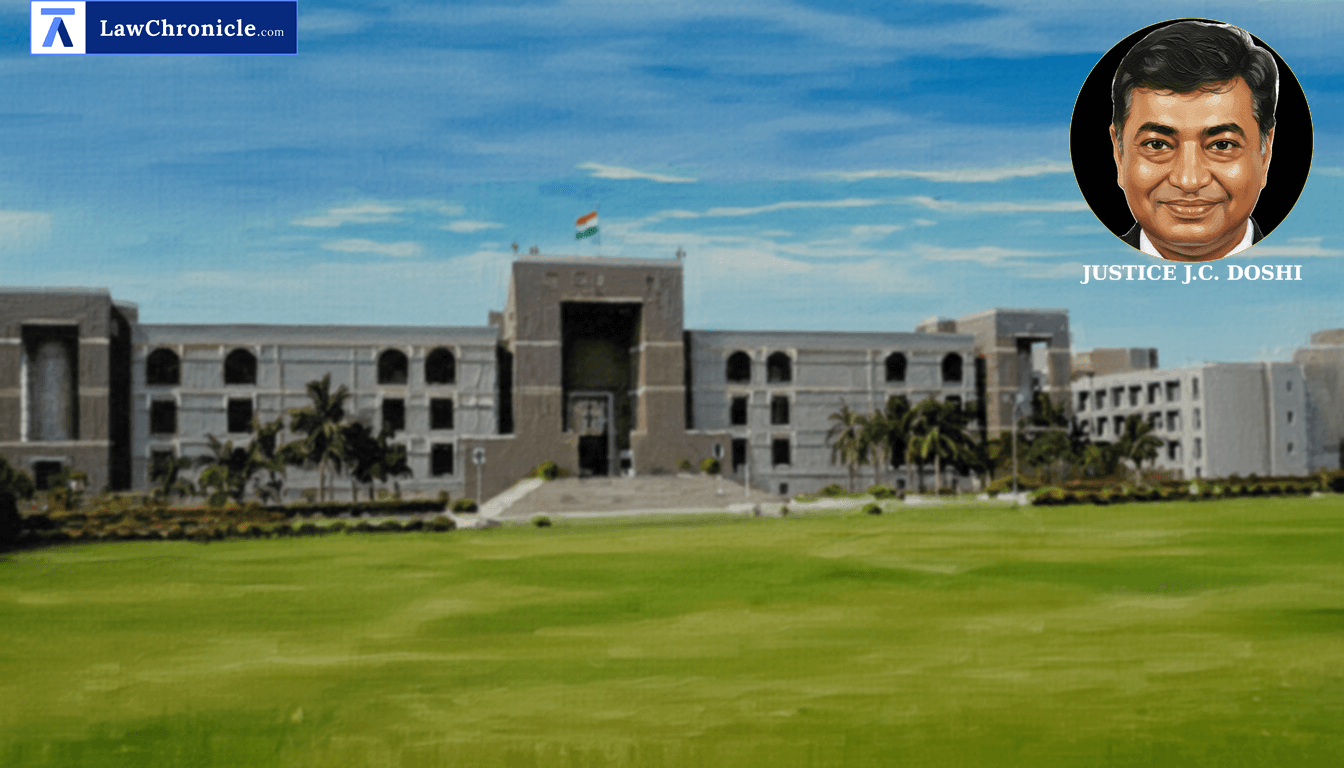
The Gujarat High Court has established that a victim's post-accident career progression and salary increments cannot serve as an automatic legal bar to claiming compensation for loss of future earning capacity. In a significant intervention for motor accident victims, the court ruled that permanent functional disability must be assessed based on the claimant's long-term professional potential rather than a temporary snapshot of their immediate employment status.
Justice J. C. Doshi presided over the appeal, which challenged the Motor Accident Claims Tribunal's refusal to award damages for future prospects to an MBA student who suffered an arm amputation. The court highlighted the need for a sensitive and empathetic approach by tribunals, emphasizing that the objective of the Motor Vehicles Act, 1988 is to provide 'just and fair' compensation that restores the victim, as much as possible, to their pre-accident financial trajectory.
Key Takeaways
Earnings Not Conclusive of Economic Loss
Evidence of increased income post-recovery does not negate the existence of functional disability or the loss of long-term occupational opportunities.
Primacy of Professional Potential
Tribunals must evaluate notional income based on educational qualifications and professional potential, rather than limiting compensation to minimum wage standards for skilled workers.
Mandatory Future Prospects
Following settled law, the addition of compensation for future prospects is a binding norm under Constitution of India, applicable to both salaried individuals and those pursuing professional degrees.
Functional vs. Medical Disability
Courts must undertake a realistic assessment of how a physical impairment restricts a claimant's efficiency and previous level of performance in their specific field.
The Court, in its reasoning, observed: "The mere fact that a victim of a road accident continues to earn income after recovering from the injuries cannot, by itself, constitute a ground to deny compensation towards loss of future earning capacity or future prospects. The relevant consideration is not merely whether the injured claimant continues to work or receive the same income, but whether the injuries have resulted in permanent functional disability affecting his capacity to earn, efficiency, occupational opportunities or ability to sustain his previous level of performance."
Addressing the specific facts of the case, the Bench relied on Raj Kumar v. Ajay Kumar ( "(2011) 1 SCC 343": 2010 CaseBase(SC) 368) and Pappu Deo Yadav v. Naresh Kumar ( "(2020) 17 SCC 688": 2020 CaseBase(SC) 1924) to reiterate that physical disability percentages should not be mechanically equated with loss of earning capacity. The Court noted that an engineering graduate pursuing an MBA has a high professional potential that is intrinsically diminished by the loss of a limb, regardless of immediate employment.
The Court has the following directions:
"The Insurance Company is directed to deposit the aforesaid enhanced amount of compensation with accrued interest within a period of 8 weeks from today after giving credit for the amount already deposited or paid pursuant to the impugned judgment and award. The amount already deposited or paid shall be duly set off against the total amount payable. Upon deposition of the entire amount, the learned Tribunal shall disburse the entire amount lying in the FDR and/or with the Tribunal, with accrued interest thereon, if any, to the claimant/s by Account Payee Cheque/NEFT/RTGS, after proper verification and after following due procedure. While making the payment, the Tribunal shall deduct the courts fees, if not paid, in accordance with rules/law."
Ratio
The continuance of employment or a post-accident increase in salary is not conclusive of the absence of economic loss under Section 168 of the Motor Vehicles Act, 1988. Functional disability must be assessed in the context of the claimant’s occupation, educational background, and the impact of the injury on their future career trajectory and earning efficiency.
Background
The dispute originated from a 2007 accident where a luxury bus driver's negligence resulted in the vehicle ramming into a divider. The appellant, a 25-year-old Electrical Engineering graduate then pursuing an MBA, sustained injuries leading to the amputation of his left upper limb above the elbow. While the Motor Accident Claims Tribunal acknowledged the accident, it refused to award compensation for loss of future earning capacity because the appellant had successfully completed his MBA and secured a job at a bank with an increasing salary.
The High Court found this approach to be "wholly unjustified and irrational," citing N.K.V.Bros.Private Limited Versus M.Karumai Ammal and K. Suresh V. New India Assurance Co. Ltd ( "(2012) 12 SCC 274": 2012 CaseBase(SC) 425) to underscore that parsimony in compensation defeats the jurisprudential foundation of state relief for disabled citizens. By applying the principles in Sarla Verma v. Delhi Transport Corporation and Another ( "(2009) 6 SCC 121": 2009 CaseBase(SC) 380) and National Insurance Company Limited v. Pranay Sethi and Others ( "(2017) 16 SCC 680": 2017 CaseBase(SC) 551), the Court enhanced the total compensation from Rs. 3.79 Lakhs to Rs. 14.67 Lakhs, including specific amounts for matrimonial prospects and enhanced pain and suffering.
Case Details:
Case No.: R/FIRST APPEAL NO. 657 of 2014
Neutral Citation: 2026:GUJHC:65526
Case Title: Ranjitsinh Mohanlal Patel Versus Krishna Shankarbhai Mali & Ors.
Appearances:
For the Petitioner(s): Mr. Hiren M Modi
For the Respondent(s): Mr. Sunil B Parikh
Source: 2026 CaseBase(GUJ) 29396
Similar Articles
 Breaking News


