


Jharkhand HC Issues Binding Directives to Overhaul Hazaribagh Traffic Crisis
 Copy Link
 Share
 Save
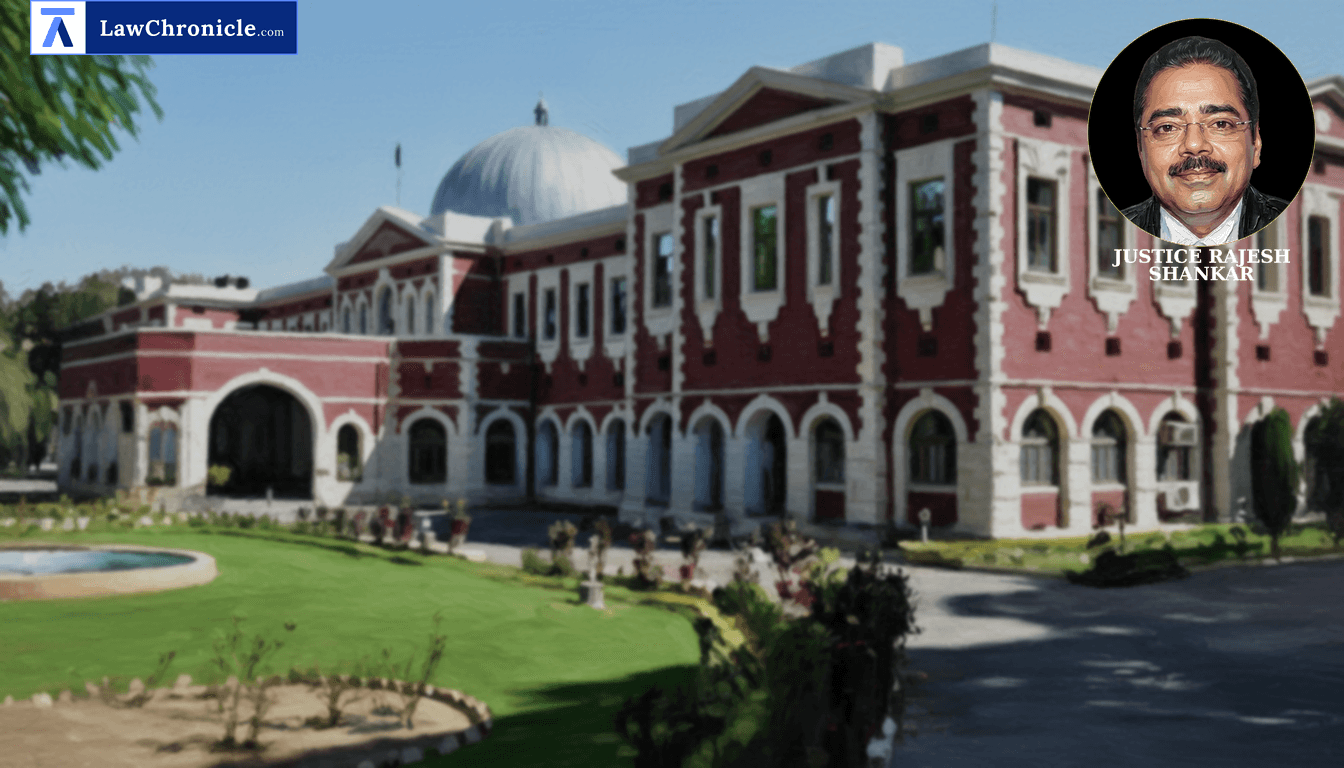
The Jharkhand High Court has declared the right to a clean, dignified, and safe urban life as an integral facet of Article 21, mandating the state to eliminate chaotic traffic management that endangers human lives. By rejecting the plea of financial stringency, the Court has placed personal responsibility on top administrative and police officials to ensure walkable footpaths and functional surveillance systems within a strict four-month timeline.
A Division Bench comprising Chief Justice M. S. Sonak and Justice Rajesh Shankar heard a Public Interest Litigation (PIL) highlighting the systemic failure of civic and traffic management in Hazaribagh. The Court addressed the lack of monitoring systems, rampant encroachments, and the persistent 'blame game' between state administration and municipal authorities that had rendered public safety a casualty.
Key Takeaways
Judicial Mandate for Urban Safety
The Court established that administrative inconvenience or lack of funds cannot be used as a shield to abdicate the constitutional duty of ensuring safe public spaces.
Personal Accountability of Top Officials
By directing the Deputy Commissioner, Superintendent of Police, and Municipal Commissioner to file personal compliance affidavits, the Court has shifted accountability from subordinate staff to the heads of departments.
Strict Timelines for Infrastructure
The judgment imposes a rigid four-month deadline for the operationalization of an Automated Traffic Light Management System across twenty major intersections.
Pedestrian Rights Primacy
Reaffirming that footpaths are essential infrastructure, the Court ordered the removal of all encroachments, emphasizing that private occupation cannot negate public safety.
State Inaction and the Evolution of Judicial Oversight
Initially, the respondents contested the factual assertions of the chaotic traffic situation. However, a report by an Advocate Commissioner confirmed the conspicuous absence of traffic personnel and functional CCTVs. The Court noted that despite repeated orders since 2021, remedial measures were piecemeal. It was only under judicial pressure that the police personnel deployment increased from 35 to 212 and significant fines were realized for motor vehicle violations.
Constitutional Obligation and the Right to Life
The Court, in its reasoning, observed: "Ultimately, the respondents must remain aware that the right to a clean, dignified and reasonably safe urban life is an integral facet of the right to life guaranteed under Constitution of India, 1950. Further, Article 19(1)(d) and other rights enshrined in Constitution of India, 1950 protect the freedom of movement of every citizen, whether navigating the city as a pedestrian, motorist or commuter. Besides, the respondents also cannot afford to ignore the statutory framework of the Motor Vehicles Act, 1988, and the provisions of the Municipal Corporation Act, which govern the functioning of the Corporations. This constitutional and statutory framework obliges the respondents to take effective steps to redress such issues of chaotic traffic management, which result in the loss of valuable lives among people from the area."
The Court has following directions:
“(i) The Municipal Commissioner, Hazaribagh Municipal Corporation, shall ensure that all works under the agreement dated 19.08.2026 with M/s. Keyhole Design Private Limited for the supply, installation, testing, and trial run of the Automated Traffic Light Management System are completed, and the system is put to operational trial, within four months from today.
(ii) The trial shall cover at least the twenty major intersections identified on record: Hazaribagh District Court Chowk (near Jain Petrol Pump), Korrah Chowk, Babugaon Chowk, Matwari Chowk, St. Columba’s College More, Barkagaon More (near Kargil Petrol Pump), Bharat Mata Chowk, PTC Chowk, DVC Chowk (near Upkar Hotel), District More Chowk (near Arogyam Hospital), Circuit House Chowk, Indrapuri Chowk, Jhanda Chowk, Old Bus Stand Chowk, New Bus Stand Chowk, Bansilal Chowk, Sardar Chowk, Carmel School Chowk, Kallu Chowk and Panch Mandir Chowk.
(iii) For any intersection outside the contracted scope, the Municipal Commissioner shall state in the compliance affidavit whether signalisation is proposed, with cost and timeline, or the engineering reason why it is not required.
(iv) A joint completion-and-trial certificate, signed by the Municipal Commissioner, the Superintendent of Police and the Executive Engineer of the Corporation, shall be appended to the compliance affidavit under clause (XVI). (v) Zebra markings and statutory signage at the signalised junctions shall form part of the certificate.
(vi) A Three-Member Monitoring and Maintenance Team; an Officer of the Corporation not below Assistant Engineer, a Traffic Police Officer not below the rank of Inspector, and a representative of the contractor, shall be constituted within three weeks. It shall maintain a daily downtime log. Any signal dark or stuck beyond forty-eight hours shall be restored within the next forty-eight hours, failing which the reasons shall be reported in the compliance affidavit.
(vii) Within two months, the Deputy Commissioner and the Superintendent of Police shall file a joint inventory of all CCTV cameras installed since 2017, unit-wise, stating functionality, storage location, and AMC status. Non-functional cameras shall be repaired or replaced within four months. Junction and ANPR cameras under the 2026 contract shall be integrated with the Police Control Room.
(viii) The Superintendent of Police shall file a peak-hour deployment chart (08:00–11:00 and 16:00–20:00 hours on working days) for each of the twenty intersections, naming the officer accountable for each junction.
(ix) Traffic personnel shall complete a training programme of not less than three days within three months, in coordination with the District Legal Services Authority, Hazaribagh.
(x) The prohibition on entry of heavy and commercial goods vehicles into the notified municipal limits between 08:00 a.m. and 08:00 p.m., save for essential services, shall be enforced as a single rule. The Corporation shall not levy any entry fee not sanctioned by law. The Superintendent of Police and the Municipal Commissioner shall, within four weeks, file a joint one-page order setting out the rule with a sketch of the notified cordon. Any collection official permitting a breach should be made to face departmental action.
(xi) The Municipal Commissioner shall, within three months: (a) file an authenticated map of designated and free parking spaces with date-stamped photographs; (b) keep those spaces free of vending and unauthorised stands; and (c) issue notices under the Jharkhand Municipal Act, 2012 and development control norms to establishments on the PTC Chowk–Korrah Chowk stretch lacking off-street parking, and report the action taken.
(xii) The Deputy Commissioner and the Municipal Commissioner shall, within four months, complete the survey and notification of vending and non-vending zones under the Street Vendors Act, 2014, including a zone near Sadar Hospital, if feasible.
(xiii) Encroachments on footpaths, junctions, zebra crossings and carriageways shall be removed in accordance with the law. Re-occupation after clearance shall be proceeded against under Section 606 of the Jharkhand Municipal Act, 2012.
(xiv) Silence zones of not less than one hundred metres shall, within two months, be notified under the Noise Pollution (Regulation And Control) Rules, 2000, around the Civil Court complex, major hospitals including Sadar and Arogyam, and educational institutions including St. Columba’s College and Carmel School. The Superintendent of Police shall enforce and report monthly on pressure horns and unauthorised amplification.
(xv) The Deputy Commissioner shall, within four months, place on record the status of land for a bus terminal on the bypass and of the old bus stand’s relocation, together with a routing plan for autos and e-rickshaws.
(xvi) The Deputy Commissioner, the Superintendent of Police and the Municipal Commissioner shall each file a personal compliance affidavit within four months, covering clauses (i) to (xv). The affidavits shall not be sworn by subordinate officers.
(xvii) Copies of the personal affidavits shall be served on the petitioner within one week of filing."
Ratio
The right to safe urban navigation and unencroached footpaths is a fundamental right under Articles 19(1)(d) and 21 of the Constitution of India, 1950. State authorities cannot cite financial constraints or inter-departmental lack of coordination as valid grounds to avoid their mandatory constitutional and statutory duties to provide basic civil safety, sanitation, and traffic regulation.
Background
The PIL was filed by a resident highlighting fatal collisions at Barkagaon More and Kargil Chowk and the general lack of parking and surveillance in Hazaribagh. The respondents initially engaged in a blame game, where the Police cited municipal failures for parking, and the Corporation cited lack of police assistance for encroachment removal. The Court relied on Municipal Council, Ratlam v. Vardhichand to dismiss the plea of lack of funds and cited Ahmedabad Municipal Corporation v. Nawab Khan Gulab Khan ( "(1997) 11 SCC 121": 1996 CaseBase(SC) 12) and Sudhir Madan v. Municipal Corporation of Delhi ( "(2009) 17 SCC 597": 2007 CaseBase(SC) 1519) to emphasize that public streets and pavements are for the general public and cannot be monopolized by squatters. Referencing M.C. Mehta v. Union of India ( "(2019) 10 SCC 614": 2019 CaseBase(SC) 1141) and Maniyar Iliyaz @ Shaik Riyaz v. P. Ayyappan ( "2026 INSC 647": 2026 CaseBase(SC) 594), the Court reinforced the duty of municipal bodies to protect pedestrian infrastructure. The Court disposed of the petition while ensuring the Chairperson of DLSA, Hazaribagh, was kept in the loop for necessary compliance monitoring.
Case Details:
Case No.: W.P. (PIL) No. 4534 of 2021
Neutral Citation: 2026:JHHC:29257-DB
Case Title: Achyut Swaroop Mishra v. The State of Jharkhand & Ors.
Appearances:
For the Petitioner(s): Achyut Swaroop Mishra (Party-in-Person)
For the Respondent(s): Mr Vibhor Mayank (A.C. to A.G. for State), Mr Ranjit Kumar (Advocate for Resp. No. 4)
Source: 2026 CaseBase(JHKD) 3171
Similar Articles
 Breaking News


