


Judicial Inquiry Under Section 176(1A) CrPC Has Wider Scope Than Executive Inquest: Madhya Pradesh HC
 Copy Link
 Share
 Save
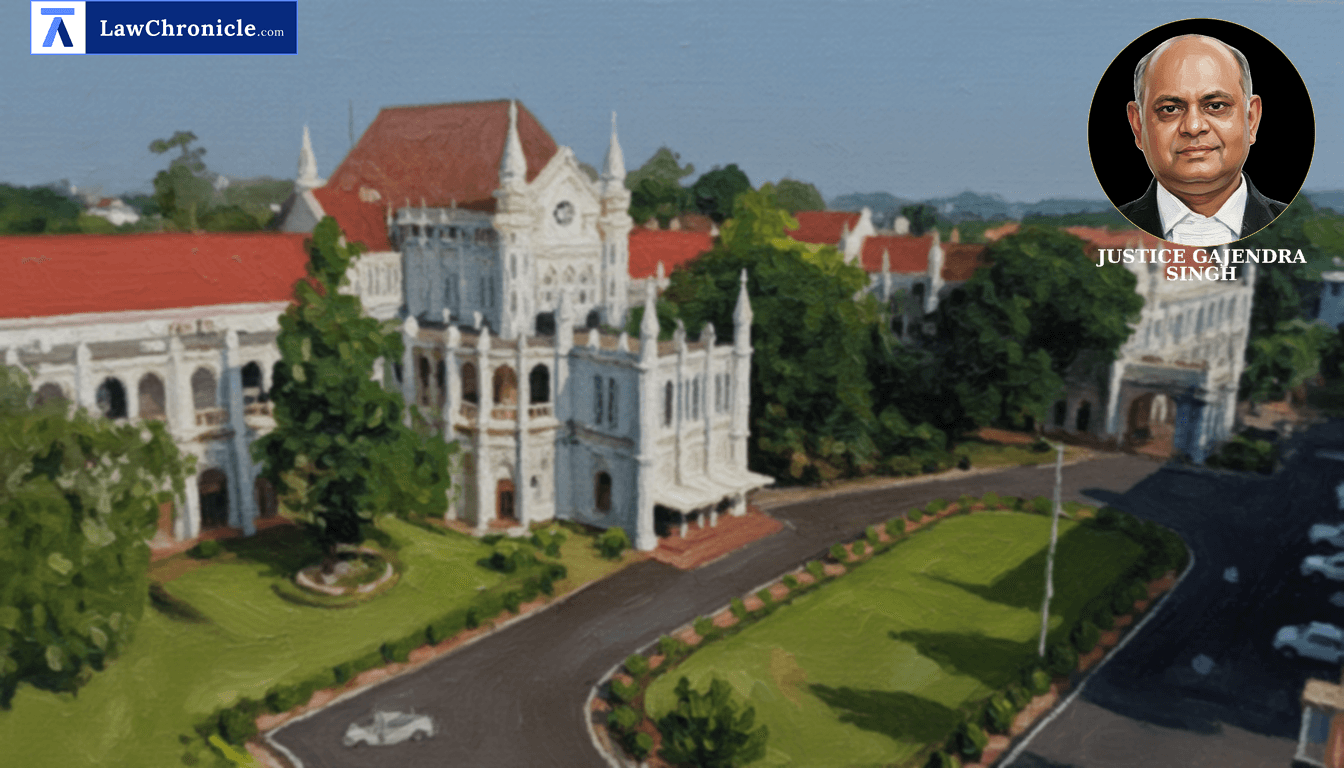
In a decisive verdict enforcing accountability in custodial violence, the High Court has affirmed that a Judicial Magistrate conducting a custodial death inquiry under Section 176(1A) of the Code Of Criminal Procedure, 1973 is fully empowered to identify responsible individuals alongside determining the medical cause of death.
A single-judge bench of Justice Gajendra Singh dismissed a batch of petitions challenging a Judicial Magistrate's inquiry report that implicated police officials in a custodial death at Police Station Maanpur, Indore. The Court reprimanded police authorities for delaying parallel criminal investigations under the pretext of pending judicial inquiries, observing that such delays often lead to the disappearance of vital evidence like CCTV footage.
Key Takeaways
Wider Scope of Judicial Inquiry: Inquiries conducted under Section 176(1A) of the Code Of Criminal Procedure, 1973 are judicial in nature and empower Magistrates to name individuals suspected of causing custodial deaths.
Simultaneous Police Investigation Mandated: A judicial inquiry under Section 176(1A) is in addition to, and not a substitute for, a full-fledged police investigation, which must proceed without waiting for the inquiry report.
Rejection of Impugned Reliefs: Challenges brought by police personnel to quash the Magistrate's inquiry report were dismissed for lack of legal merit.
Court Observations and Directions
The Court analyzed the statutory evolution of Section 176 of the Code Of Criminal Procedure, 1973, distinguishing between executive inquests under Section 176(1) and judicial inquiries under Section 176(1A). Relying on its previous coordinate bench decision in Ram Sharan Prajapati vs. State of Madhya Pradesh, the Court reiterated that Section 176(1A) intentionally omits the restrictive phrase "inquiry into the cause of death," thereby bestowing broader powers upon Judicial Magistrates to examine the overall circumstances and name the individuals responsible.
Addressing the evidentiary scope, the Court highlighted the necessity of a holistic assessment by Judicial Magistrates during such inquiries. The Court, in its reasoning, observed: "...the inquiry held by a Judicial Magistrate or Metropolitan Magistrate is a judicial inquiry in character and the same does not either form part of the investigation or part-take the character of investigation... The law is clear that the judicial enquiry is not a substitute of investigation. There was no bar to conduct investigation by the police and at least to secure the evidence in the form of CCTV Footage by the police."
Reprimanding police laxity, the Court further noted that officers often exhibit an uncalled-for professional solidarity, allowing crucial evidence to deteriorate or disappear while victims' families are left struggling for justice.
Ratio
An inquiry conducted by a Judicial Magistrate under Section 176(1A) of the Code Of Criminal Procedure, 1973 (or corresponding provisions under the Bharatiya Nagarik Suraksha Sanhita, 2023) is wider in scope than an executive inquest under Section 176(1). The Judicial Magistrate is legally competent not only to ascertain the medical cause of death but also to document the complete sequence of events and explicitly name the persons responsible for the custodial death. Furthermore, such judicial inquiries run parallel to, and do not bar or substitute, mandatory police investigations into the crime.
Background
The case arose from the custodial death of one Arjun Singare, who was taken into custody on September 2, 2022, by officers of Police Station Maanpur, Indore, in connection with offenses under the IPC and the Arms Act, 1959. Shortly thereafter, he was declared dead at a civil hospital on September 3, 2022. Pursuant to a request by the Superintendent of Police, an inquiry under Section 176(1A) of the Code Of Criminal Procedure, 1973 was initiated by a Judicial Magistrate First Class (JMFC), Indore.
The JMFC submitted an inquiry report concluding that the deceased suffered multiple injuries due to physical assault while in police custody, culminating in his death. Aggrieved by these findings, the then Station In-charge, Vijay Kumar Sisodia, filed writ petitions, while Constable Avinash Chouhan filed a petition under Section 528 of the Bharatiya Nagarik Suraksha Sanhita, 2023 seeking to quash the JMFC report.
The High Court systematically analyzed precedents, relying on Radha Mohan Singh alias Lal Saheb vs. State of U.P. ( "(2006) 2 SCC 450": 2006 CaseBase(SC) 361) to outline the limited scope of inquests under Section 174 of the Code Of Criminal Procedure, 1973, while relying on Tarachand v. The State of Madhya Pradesh and Rajaram Dangi vs. State of MP to validate the expansive jurisdiction under Section 176(1A). Consequently, the High Court found no illegality in the JMFC report and dismissed all petitions.
Case Details:
Case No.: WP No.27409/2026 and Others
Neutral Citation: 2026:MPHC-IND:24087
Case Title: Vijay Kumar Sisodiya vs. The State of Madhya Pradesh and Others
Appearances:
For the Petitioner(s): Shri Vishal Baheti, learned Senior counsel with Shri Gagan Bajad, learned counsel (P-1 in WP 27409/2026 & WP 33870/2024); Shri Manish Yadav, counsel (Petitioner in MCRC 33769/2026)
For the Respondent(s): Shri Romil Verma, counsel for the State [R-1]; Shri Amit Yadav, learned counsel for the Intervener [INT]
Source: 2026 CaseBase(MP) 16162
 Breaking News


