


Court Cannot Order Production of Auto-Deleted CCTV Footage: Chhattisgarh HC
 Copy Link
 Share
 Save
Courts cannot compel the prosecution to produce police station CCTV footage that has been automatically deleted after the mandatory retention period, as the law does not demand impossibilities. Rejecting an application under Section 94 of the Bharatiya Nagarik Suraksha Sanhita, 2023, the High Court affirmed that where electronic records no longer exist in the system, issuing a writ of mandamus for their production becomes legally untenable.
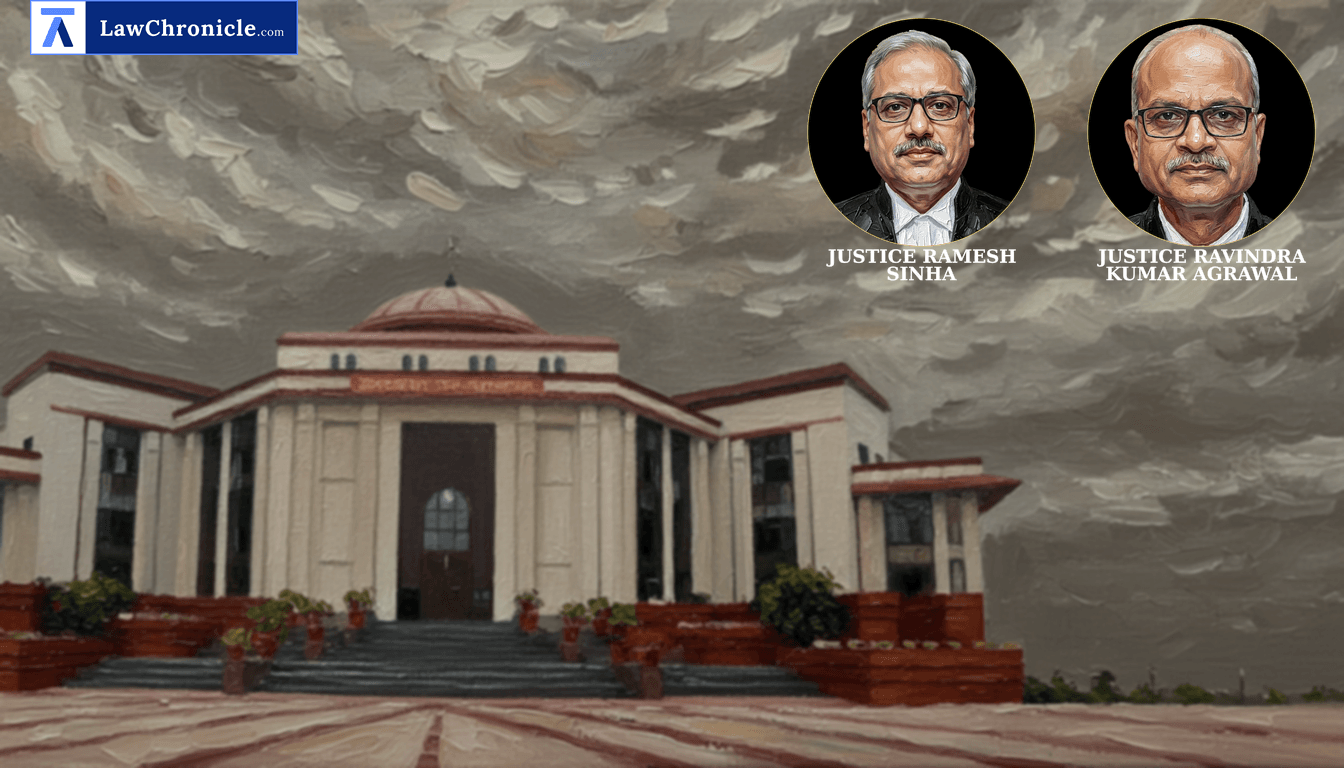
A Division Bench comprising Chief Justice Ramesh Sinha and Justice Ravindra Kumar Agrawal heard a writ petition challenging a Special NDPS Court's order that refused to direct the State to produce 36 hours of CCTV footage from Police Station Gourela and cell tower location data to support a plea of illegal detention.
Key Takeaways
Limits of Section 94 BNSS: Section 94 of the Bharatiya Nagarik Suraksha Sanhita, 2023 confers broad powers to summon documents, but it cannot be invoked to mandate the production of auto-deleted or non-existent electronic evidence.
Automatic Deletion Protocol: Courts recognized that CCTV footage automatically overwrites after the mandatory 18-month storage period unless a timely preservation order is issued.
Mandatory CCTV Oversight: The State administration faces strict directives to enforce monthly DLOC inspections, ensuring uninterrupted power backups and functional retention systems in all police stations.
Evidentiary Value of CDRs: Call Detail Records and mobile tower locations supplied by police can be independently evaluated during trial without halting proceedings for parallel inquiries.
Court Observations and Directions
The High Court emphasized that while Section 94 of the Bharatiya Nagarik Suraksha Sanhita, 2023 facilitates fair trial procedures, its exercise strictly depends on the availability of the material. The Court noted that the desired CCTV footage from September 2024 automatically deleted after 18 months under the state protocol, rendering its production impossible. However, the Bench sternly reiterated the binding nature of Apex Court rulings concerning surveillance accountability in police stations.
The Court issued the following directions:
"This Court, therefore, hopes and trusts that the State of Chhattisgarh, through the concerned authorities and the oversight committees constituted for the said purpose, shall ensure strict, effective and continuous compliance with the aforesaid directions of the Hon’ble Apex Court. It is further expected that the State authorities shall ensure that CCTV systems installed in all Police Stations remain functional at all times, are subjected to regular inspection and monitoring, have adequate power backup and storage capacity, and that the CCTV footage is preserved for the period prescribed in accordance with law, so that relevant electronic evidence is not lost on account of administrative or technical lapses. The State shall also ensure that the oversight mechanism constituted pursuant to the aforesaid judgments functions effectively and not merely as a matter of form, and that responsibility is duly fixed wherever any lapse or non-compliance is noticed."
The Court, in its reasoning, observed:
"The power is undoubtedly wide and is intended to facilitate a fair and effective adjudication. However, the existence of such power does not mean that the Court is required to issue a direction for production of every document or electronic record merely because an accused asserts that the same may be favourable to his defence. The exercise of the power necessarily depends upon the existence or availability of the material sought and its demonstrated relevance to the proceedings."
Ratio
The statutory power of a criminal court to compel the production of documents or electronic records under Section 94 of the Bharatiya Nagarik Suraksha Sanhita, 2023 is contingent upon the actual existence and availability of such material; courts cannot issue futile directions for the production of electronic evidence that has been auto-deleted in the ordinary course of system storage protocols.
Background
The petitioners were arrested and booked under Sections 20(b) and 29 of the Narcotic Drugs And Psychotropic Substances Act, 1985 read with Section 111 of the Bharatiya Nyaya Sanhita, 2023 in Crime No. 304/2024 at Police Station Gourela. Claiming that they were illegally detained at the police station a day prior to the alleged arrest and falsely implicated, the accused filed an application under Section 94 of the Bharatiya Nagarik Suraksha Sanhita, 2023 before the Special Judge (NDPS), Bilaspur.
They sought unedited CCTV footage from the police station for a 36-hour period between September 13, 2024, and September 15, 2024, alongside complete Cell Detail Records (CDR) and tower location data. The petitioners invoked the constitutional principles laid down in Paramveer Singh v. Baljit Singh ( "(2021) 1 SCC 184": 2020 CaseBase(SC) 686) and Safi Mohammad v. State of Himachal Pradesh ( "(2018) 5 SCC 311": 2017 CaseBase(SC) 1093) to argue that the State must preserve electronic evidence to ensure a fair trial under Article 21 of the Constitution of India, 1950.
The prosecution opposed the plea, submitting a report from the Station House Officer stating that no prior preservation order existed and the CCTV footage was automatically erased after 18 months per administrative directives. The trial court rejected the application on May 15, 2026. Challenging this order before the High Court, the petitioners relied on D.K. Basu v. State of West Bengal and Noor Aga v. State of Punjab regarding wrongful implication and safeguards against human rights abuses.
During the High Court proceedings, personal affidavits were called from the Chief Secretary and Director General of Police, Chhattisgarh, referencing compliance with In Re: Lack of Functional CCTVs in Police Stations. The Court observed that the CDR details had already been submitted on the trial court record, leaving no surviving grievance on that front. Holding that the interlocutory order suffered from no perversity, the High Court dismissed the writ petition.
Case Details:
Case No.: WPCR No. 306 of 2026
Neutral Citation: 2026:CGHC:37545-DB
Case Title: Banwari Lal Gupta & Others v. State of Chhattisgarh
Appearances:
For the Petitioner(s): Mr. Rajeev Kumar Dubey and Ms. Maya Chaturvijani, Advocates
For the Respondent(s): Mr. Shashank Thakur, Additional Advocate General
Source: 2026 CaseBase(CTH) 13468
Similar Articles



 Breaking News


