


Kerala HC: Handwriting Expert Opinion Allowed if Complainant Claims Accused Filled Cheque
 Copy Link
 Share
 Save
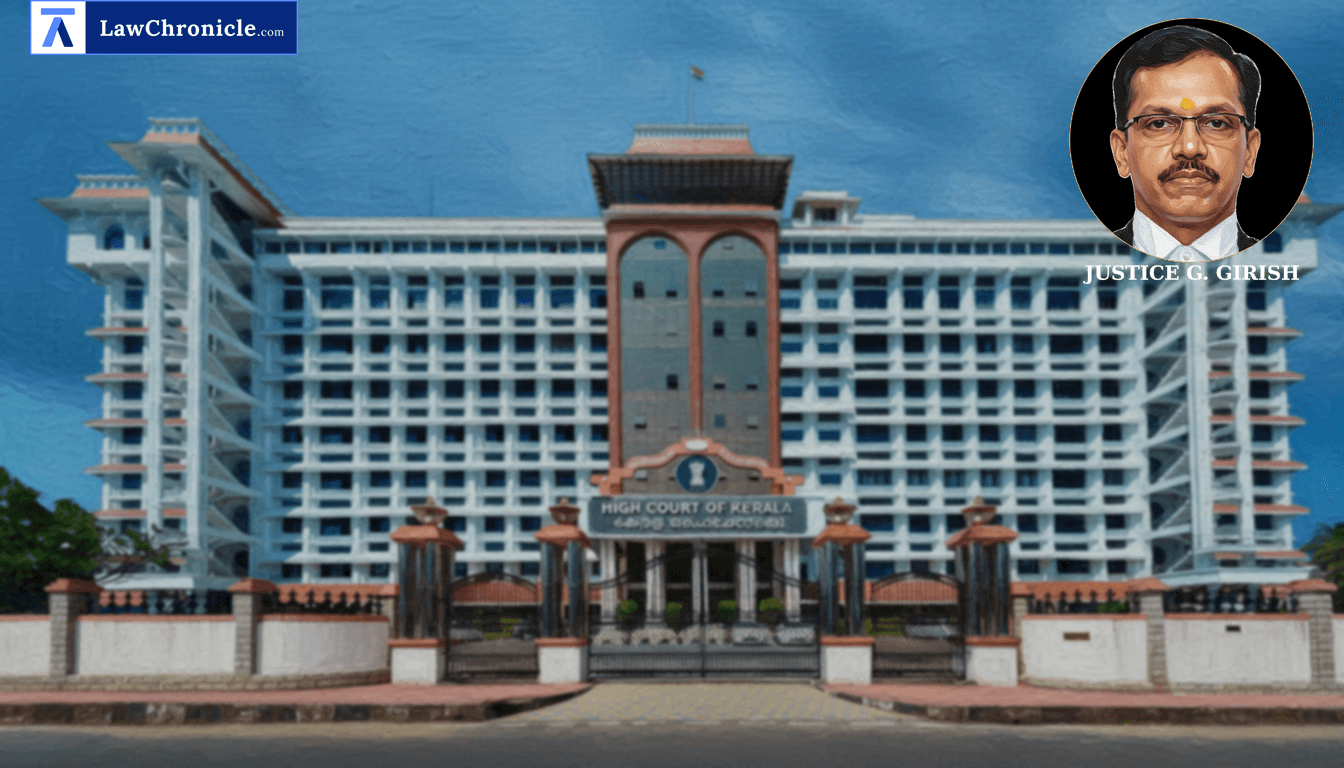
The Kerala High Court has held that an accused must be granted an opportunity to send an impugned cheque for expert analysis if the complainant specifically asserts that the entries were made in the handwriting of the accused. A single-judge bench of Justice G. Girish, while exercising jurisdiction under Constitution of India, set aside the orders of a Magistrate that had dismissed applications for expert opinion on the grounds of statutory presumption.
Relevancy of Handwriting in the Face of Statutory Presumption
The Court addressed whether the handwriting on a cheque remains relevant once the execution is established under Section 139 of the Negotiable Instruments Act, 1881. While acknowledging that in normal circumstances the handwriting is of no consequence if the signature is admitted, the Court carved out a specific exception. It observed that if a complainant comes forward with a definite contention that the accused wrote the entries in their presence, the accused cannot be denied the chance to disprove that specific claim.
Impact on Credibility of Evidence
The Court noted that in both cases before it, the complainants had stated in their testimony and proof affidavits that the accused had filled in the cheque entries. The Court, in its reasoning, observed: "In such cases, if the accused succeeds in proving that the handwritings in the impugned cheques are not that of the accused, then the aforesaid aspect would strike on the acceptability and credibility of the case of the complainant... the credibility of the evidence tendered by the complainant about the execution of the cheques by the accused, would be at stake, if it is shown that the handwritings found in the impugned cheques were not that of the accused."
Court Directions
The Court has the following directions:
"(i) The order dated 11.08.2025 in C.M.P.No.4344/2025 in S.T.C.No.1969/2019 and the order dated 07.08.2025 in C.M.P.No.4346/2025 in S.T.C.No.4005/2023 of the Judicial First Class Magistrate Court, Taliparamba, are hereby set aside.
(ii) The learned Magistrate is directed to take necessary steps to send the impugned cheques in those cases for expert analysis of the entries in it to ascertain whether it were in the handwritings of the accused.
(iii) It is made clear that the petitioners/ accused will be having the responsibility to make available the specimen handwritings of the accused for the contemporary period for facilitating the expert analysis. The expenses for such expert analysis shall also be met by the accused.
(iv) If the petitioner/accused fails to make available the specimen handwritings as stated above within a reasonable period, the Trial Court will be free to wind up the proceedings and to proceed with the disposal of the cases on the basis of the available evidence."
Background:
The petitioners, representing a chit fund company, were accused in two separate cases under Section 138 of the Negotiable Instruments Act, 1881. In the first case, a cheque for Rs. 4,00,000/- was issued towards a chitty amount, while in the second, a cheque of the same amount was allegedly issued after the petitioners failed to accommodate the complainant as a Director in their company. Both cheques were dishonoured due to 'stop payment' instructions. During the defence evidence stage, the petitioners sought to send the cheques for expert analysis to prove the handwriting was not theirs. The Trial Court dismissed these applications, relying on the presumption that once execution is established, the handwriting is irrelevant. The High Court, however, found that because the complainants specifically claimed to have witnessed the accused writing the cheques, the expert analysis was necessary to test the veracity of those claims.
Case Details:
Case No.: OP(Crl.) Nos.717 & 716/2025
NeutralCitation: 2026:KER:45852
Case Title: PTB CHITS PVT LTD vs. PRASAD P.
Appearances:
For the Petitioner(s): SRI.M.ANUROOP, SRI.M.DEVESH, SHRI.MURSHID ALI M., SMT.JYOTHIS MARY (Advocates)
For the Respondent(s): SHRI.ASWANTH P.T., SHRI.MANUEL P.J. (Advocates)
Source: 2026 CaseBase(KER) 361
Similar Articles
 Breaking News


