


Karnataka High Court Reverses Conviction Under NI Act Citing Doubtful Transaction And High Interest
 Copy Link
 Share
 Save
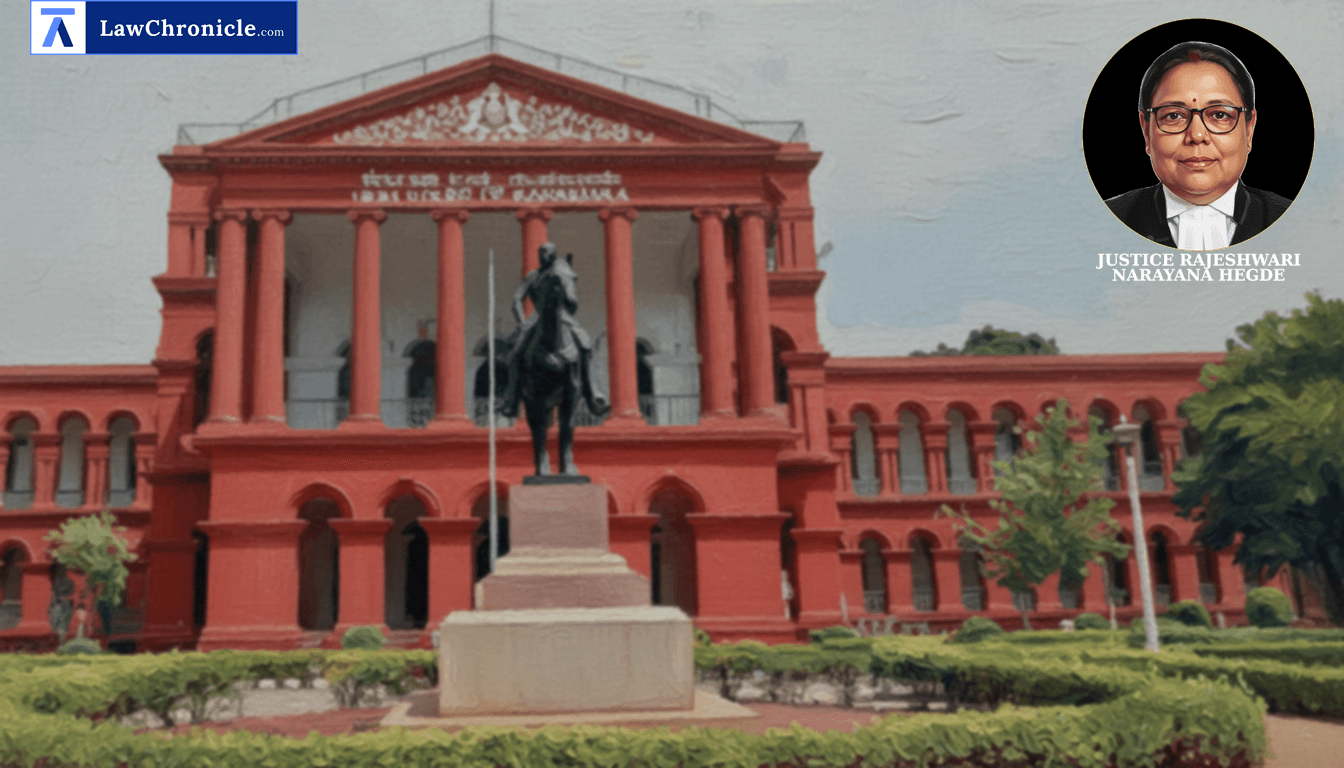
The High Court of Karnataka has overturned a concurrent conviction in a cheque bounce case, ruling that admissions regarding high-interest lending and third-party writing on a cheque can effectively rebut the statutory presumption of a legally enforceable debt. In a significant intervention, the court exercised its revisional jurisdiction to acquit an elderly petitioner after finding that the lower courts failed to properly appreciate evidence that cast a serious doubt on the existence of the alleged hand loan transaction.
A single-judge bench of Justice Rajeshwari N. Hegde presided over the criminal revision petition filed under Section 397 read with Section 401 of the Criminal Procedure Code, 1973. The petitioner challenged the orders of the Additional Civil Judge and JMFC, Gangavati, and the I Additional District and Sessions Judge, Koppal, which had both found him guilty of an offence under Section 138 of the Negotiable Instrument Act.
Key Takeaways
Rebuttal of Statutory Presumptions
Evidence showing that a cheque was filled by a third party and that the loan carried high interest can be sufficient to rebut the legal presumptions under Sections 118 and 139 of the Negotiable Instrument Act.
Judicial Scrutiny of Financial Transactions
Courts must look beyond the mere signature on a cheque to evaluate the credibility of the underlying financial transaction, especially when the complainant admits to unlicensed money lending activities.
Revision Jurisdiction to Correct Perversity
High Courts can interfere with concurrent findings of lower courts if there is a clear case of improper appreciation of evidence that leads to a miscarriage of justice.
Inconsistent Evidence and Rebuttable Presumptions
The Court observed that while the accused admitted his signature on the cheque, the complainant (PW1) made critical admissions during cross-examination that undermined the prosecution's case. Specifically, PW1 admitted to charging interest at 2% per month (24% per annum) and acknowledged that the particulars on the cheque were written by a friend, rather than the accused himself. The Court noted that such factors, when combined with the accused's defense of illiteracy, created a plausible doubt.
The Court has following directions:
"The revision petition is allowed. The judgment of conviction and order of sentence passed by the learned Addl.Civil Judge and JMFC at Gangavathi in CC No.255/2019 dated: 21.10.2020 and confirmed by the I Addl.Distirct and Sessions Judge, Koppal in Criminal Appeal No.7/2020 dated: 04.09.2021 are hereby set aside. Consequently, the petitioner/accused is acquitted of the offence punishable U/s 138 of NI Act. Amount of Rs.45,000/- deposited by the accused/petitioner before the trial court ordered to be returned to the complainant. The trial court is directed to return the said amount to the complainant / respondent on proper identification."
The Court, in its reasoning, observed: "Though the statutory presumptions under Sections 118 and 139 of the Negotiable Instruments Act operate in favour of the holder of the cheque, such presumptions are rebuttable. In the facts and circumstances of the present case, the material elicited in the cross-examination of PW1, coupled with the defence of the accused, raises a serious doubt regarding the existence of the alleged transaction between the complainant and the accused."
Ratio
Statutory presumptions under the Negotiable Instrument Act are not absolute; when the complainant admits to lending money at interest without a license and the cheque's contents are written by a third party, the accused successfully raises a probable defense, shifting the burden back to the complainant to prove the existence of a legally enforceable debt.
Background
The dispute originated from a complaint alleging that the petitioner borrowed Rs. 1,00,000 as a hand loan for family necessities and issued a cheque that was subsequently dishonored due to 'insufficient funds'. The Trial Court and the First Appellate Court had previously convicted the petitioner, sentencing him to a fine of Rs. 1,20,000.
The petitioner argued that he had no acquaintance with the complainant and had instead issued cheques to a third party named Yasubabu for a separate Rs. 80,000 loan, which he claimed were misused. During the revision proceedings, the petitioner relied on K. R. Raja Reddy @ Kallem Raja Reddy v. State of Haryana and another to suggest that the proceedings should end due to his willingness to compound, despite the complainant's absence. While the Court found the lower courts' appreciation of evidence perverse, it ultimately allowed the petition and acquitted the accused, directing the partial deposit of Rs. 45,000 to be handed to the complainant to close the matter.
Case Details:
Case No.: CRIMINAL REVISION PETITION NO.100216 OF 2021
Case Title: Yankobappa Nayak V. Rajarao G.
Appearances:
For the Petitioner(s): SRI. SHIVANAND MALASHETTI, ADVOCATE
For the Respondent(s): NOTICE SERVED UNREPRESENTED
Source: 2026 CaseBase(KAR) 21689
Similar Articles




 Breaking News


