


Kerala High Court Refuses Time-Bound Disposal Direction Citing Supreme Court Precedent
 Copy Link
 Share
 Save

In a firm reiteration of judicial discipline, the Kerala High Court refused to issue a time-bound mandate to a trial court for case disposal, holding that constitutional courts must refrain from disrupting trial court schedules absent extraordinary circumstances. The Court highlighted that giving out-of-turn priority to litigants who can afford to approach higher forums undermines the patience of other litigants awaiting their turn.
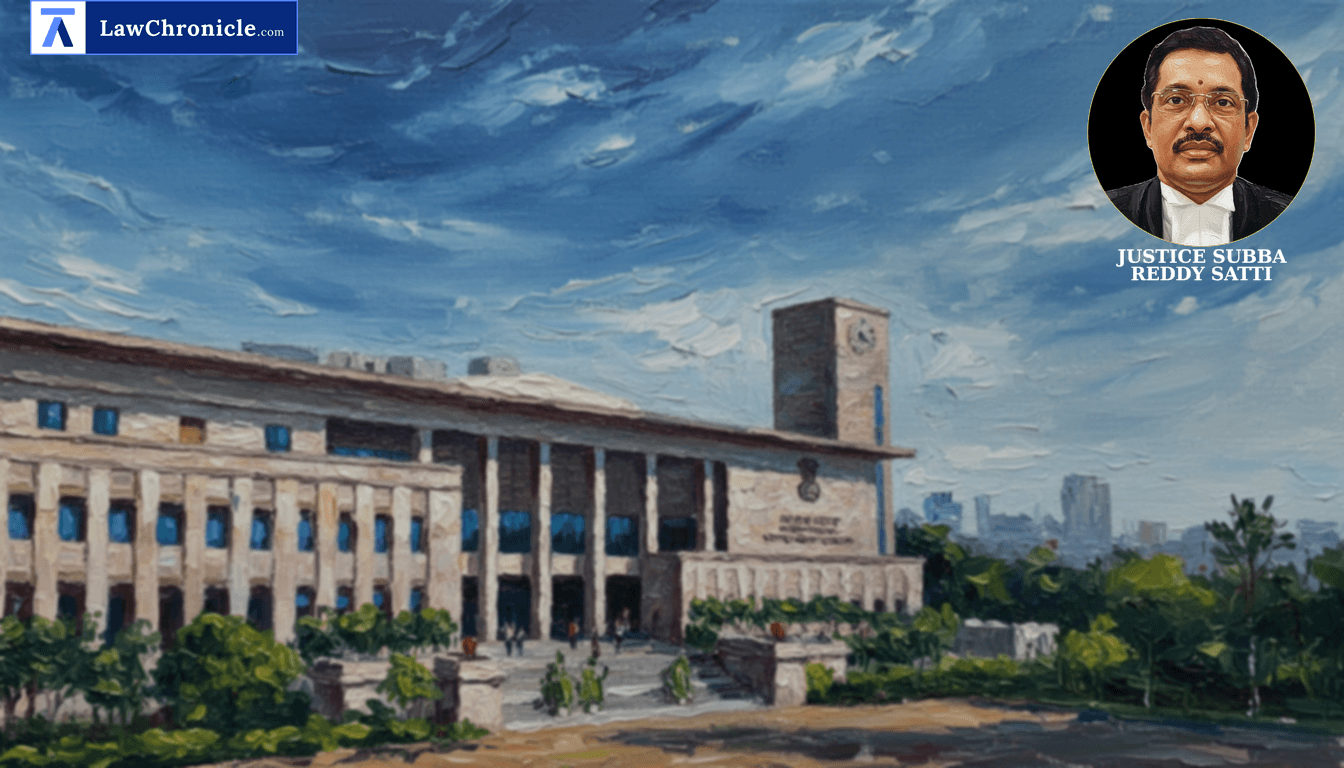
A single-judge bench comprising Justice G. Girish dismissed the original petition filed under Article 227 of the Constitution of India seeking directions for the expedited trial of a 2024 criminal case.
Key Takeaways
- No Routine Time Limits: Higher courts should avoid imposing rigid schedules on lower courts for routine case disposals.
- Trial Court Autonomy: Grassroots judges are best positioned to assess local pendency and fix priorities rationally.
- Litigant Parity: Litigants approaching constitutional courts cannot bypass queues over others waiting patiently.
- Discretionary Consideration: Trial courts may still consider expeditious hearings based on individual hardship without formal time-bound mandates.
Referring to the law laid down by the Supreme Court in Allahabad High Court Bar Association v. State of U.P. and Others, the High Court emphasized that constitutional courts are cautioned against prescribing time limits for lower court proceedings unless compelling reasons exist.
The Court, in its reasoning, observed: "As per the judgment rendered in Allahabad High Court Bar Association v. State of U.P. and Others, the Hon’ble Supreme Court has cautioned the constitutional courts from prescribing time limits for the disposal of the cases pending before the courts below, unless there are compelling reasons to adopt such a course."
Addressing the specific facts, the Court noted that the case originated in 2024 and could not be fast-tracked over older pending matters. However, considering the petitioners' grievance, the Court issued specific observations.
The Court has following directions:
"However, the learned Magistrate shall consider expeditious disposal of C.C.No.172/2024, keeping in view of the reasons stated by the petitioners that their employment prospects are adversely affected due to the pendency of the aforesaid case."
Ratio
Constitutional courts must not normally fix time-bound schedules for case disposals in subordinate courts under Article 227 of the Constitution of India, leaving priority management to the trial judges unless extraordinary circumstances dictate otherwise.
Background
The petitioners, Accused Nos. 1 and 2 in C.C. No. 172/2024 on the file of the Judicial First Class Magistrate Court, Angamaly (arising out of Crime No. 153/2024 of Nedumbassery Police Station), approached the High Court seeking a direction for time-bound disposal of their case. They contended that the ongoing criminal prosecution severely impaired their prospects of securing foreign employment, necessitating urgent resolution.
The State opposed out-of-turn disposal, maintaining that routine cases from recent years should not leapfrog older matters pending before trial courts. Concurring with this view and relying on binding precedents, the High Court closed the original petition while directing the Magistrate to consider expeditious disposal in light of the petitioners' personal hardships.
Case Details:
Case No.: OP(Crl.) No. 609 of 2026
Neutral Citation: 2026:KER:67177
Case Title: Sanoob A H & Anr. v. State of Kerala & Anr.
Appearances:
For the Petitioner(s): Smt. Khadeeja Rishbath Kallingal, Sri. Abhilash Akbar, Shri. Syam K.P., Shri. Ashish Gopal K G, Smt. Vinimol V.S., Smt. Namitha Prasad, Shri. P. Muhammed Shiyas
For the Respondent(s): Smt. Neelanjana Nair, Public Prosecutor
Source: 2026 CaseBase(KER) 18371
Similar Articles

 Breaking News


