


Law Graduates Graduating After August 2025 Ineligible for ongoing CJJD Exam: Bombay HC
 Copy Link
 Share
 Save
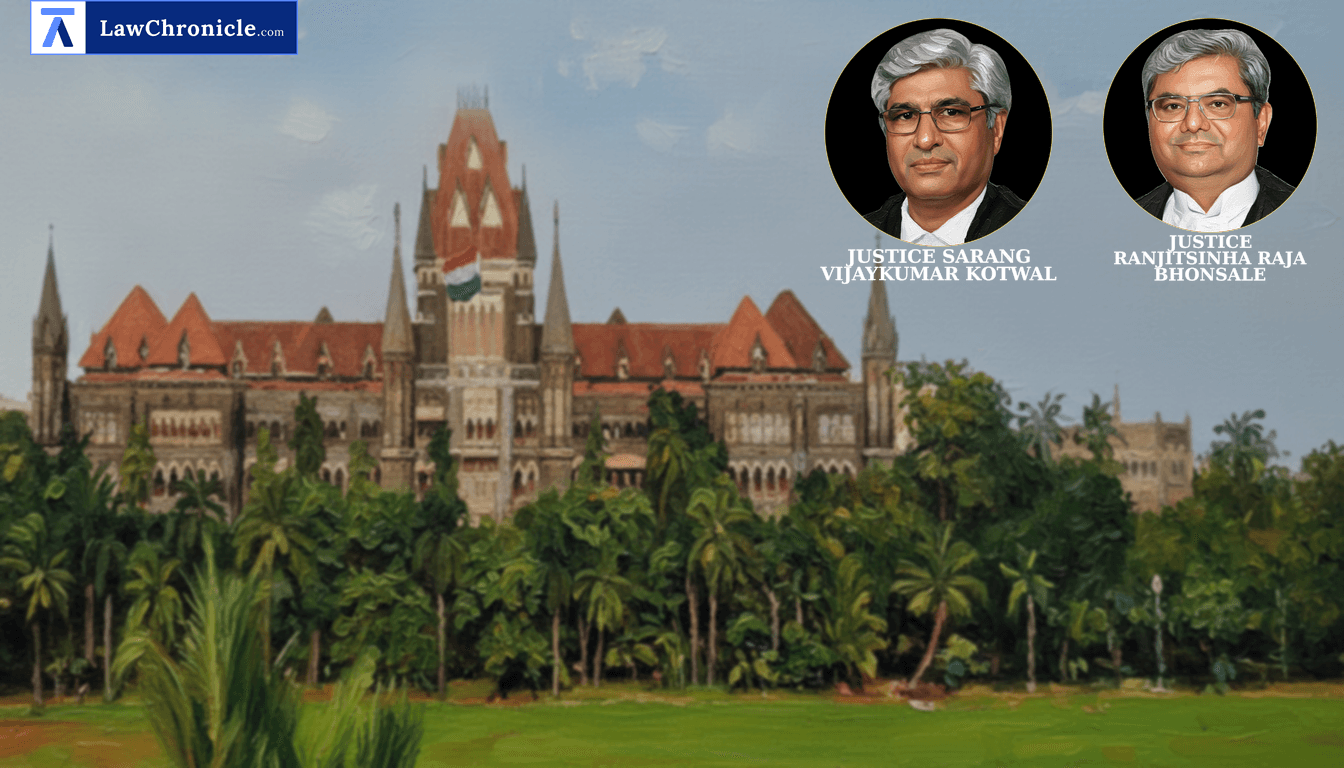
The Bombay High Court has slammed the door on fresh law graduates seeking immediate entry into the judiciary, ruling that a mandatory one-year buffer period is non-negotiable for judicial eligibility during the current transitional recruitment cycle. In a decisive interpretation of recent Apex Court directives, the Bench affirmed that only those who obtained their degrees before August 22, 2025, can benefit from the 'deemed practice' status, effectively barring 2026 graduates from the ongoing judicial services examination.
A division bench comprising Justice Sarang V. Kotwal and Justice Ranjitsinha Raja Bhonsale heard the challenge brought by recent law graduates who sought to participate in the recruitment for Civil Judge Junior Division & Judicial Magistrate First Class (CJJD & JMFC). The petitioners challenged a corrigendum issued by the Maharashtra Public Service Commission (MPSC) that restricted eligibility to those who graduated prior to a specific cutoff date, citing the Supreme Court's mandate in Bhumika Trust Vs. Union of India and others ( "2026 SCC OnLine SC 1687": 2026 CaseBase(SC) 816).
Key Takeaways
Mandatory Practice Buffer
The court reaffirmed that immediate entry into the judiciary upon graduation is no longer permissible, reinforcing the need for at least one year of exposure to legal practice or clerkship.
Transitional Deemed Practice
The 'deemed practice' benefit is a time-bound transitional measure linked to the date of the Supreme Court's judgment in Bhumika Trust Vs. Union of India and others ( "2026 SCC OnLine SC 1687": 2026 CaseBase(SC) 816), not a rolling exemption for all future graduates.
Judicial Temperament Priority
The ruling emphasizes that theoretical knowledge is an insufficient substitute for the 'first-hand experience' of court systems required to handle matters of life, liberty, and property.
Court Upholds MPSC Corrigendum on Eligibility Cut-off
The petitioners, who enrolled as Advocates in June 2026, argued that the Supreme Court's directions in Bhumika Trust Vs. Union of India and others ( "2026 SCC OnLine SC 1687": 2026 CaseBase(SC) 816) applied to "all Law Graduates" without an artificial date-based classification. However, the Bombay High Court noted that the corrigendum was rooted in the specific timeline of the Bhumika Trust Vs. Union of India and others ( "2026 SCC OnLine SC 1687": 2026 CaseBase(SC) 816) judgment delivered on August 21, 2026. The MPSC had invited fresh graduates who obtained degrees before August 22, 2025, to apply, as they were deemed to have completed the necessary one year of practice.
The Bombay High Court accordingly issued the following directions:
"In light of the above discussion, we consider it appropriate to issue the following directions, which would apply to all recruitment notification/advertisement(s) issued to the post of Civil Judge (Junior Division) in the transitional period, i.e., notification/advertisement(s) issued after the Judgment under Review up to 31.03.2027:
(i) All law graduates shall be eligible to apply, notwithstanding the three-year practice requirement. Having regard to the fact that more than one year has elapsed since the Judgment under Review was pronounced, such candidates shall, for the purposes of their applications, be deemed to have completed one year of active practice. They shall not be required to furnish a separate Certificate of Practice in support of the said deemed period;
(ii) Candidates selected pursuant to the aforesaid recruitment shall, upon appointment, be designated as “Trainee Judicial Officers” and shall undergo a compulsory period of one year of intensive training at the concerned State Judicial Academy. This period shall be treated as equivalent to one year of practice at the Bar for the purposes of the three-year requirement;...
(vii) Upon completion of the Law Clerkship, the sitting Judge of the High Court under whose supervision the Trainee Judicial Officer has served shall submit a reasoned evaluation report concerning the performance and suitability of the trainee. Upon such evaluation being found satisfactory, the Trainee Judicial Officer shall be appointed to the regular post in the field and shall thereafter be entitled to the regular pay scale and other service benefits attached to the post."
The Bombay High Court further clarified that "Direction 73(i) does not stop at mentioning all Law Graduates to become eligible. The direction has to be read as a whole. In the same direction 73(i) the Hon’ble Supreme Court has considered that one year has elapsed since the judgment under review was pronounced. In that context, it was observed that ‘such candidates’ (emphasis supplied) be deemed to have completed one year of active practice. This satisfies first requirement of one year of practice at Bar."
Ratio
The eligibility for the post of Civil Judge Junior Division requires a minimum exposure to court proceedings. During the transitional period ending March 31, 2027, the one-year practice requirement is only 'deemed' satisfied for law graduates who completed their degree at least one year prior to the relevant judicial pronouncement. Fresh graduates who have not completed one year of actual practice or do not fall within the deemed period specified by the Supreme Court are ineligible to apply.
Background
The dispute originated when the MPSC issued a corrigendum on October 23, 2026, to an earlier advertisement for the CJJD & JMFC Preliminary Examination-2024. The corrigendum, based on Bhumika Trust Vs. Union of India and others ( "2026 SCC OnLine SC 1687": 2026 CaseBase(SC) 816), allowed law graduates who obtained degrees before August 22, 2025, to apply under a 'deemed practice' clause. The petitioners, 2026 graduates, contended that since Bhumika Trust Vs. Union of India and others ( "2026 SCC OnLine SC 1687": 2026 CaseBase(SC) 816) was issued under Article 142 of the Constitution of India, the MPSC could not create a separate class of graduates.
The Bombay High Court reviewed the history of judicial appointments, citing All India Judges Association and others Vs. Union of India and others ( "2025(11) SCC 233": 2025 CaseBase(SC) 817), All India Judges Association and others Vs. Union of India and others ( "(1993) 4 Supreme Court Cases 288": 1991 CaseBase(SC) 374), and All India Judges Association (3) Versus Union of India ( "(2002) 4 SCC 247": 2002 CaseBase(SC) 69). It noted that while All India Judges Association (3) Versus Union of India ( "(2002) 4 SCC 247": 2002 CaseBase(SC) 69) had removed the three-year practice requirement, All India Judges Association and others Vs. Union of India and others ( "2025(11) SCC 233": 2025 CaseBase(SC) 817) and subsequent reviews reinstated the necessity of court exposure. The Bombay High Court concluded that the one-year requirement is a mandatory condition precedent, and the petitioners, having graduated only in 2026, failed to meet either the 'actual practice' or 'deemed practice' criteria. Consequently, the Writ Petitions were dismissed.
Case Details:
Case No.: WRIT PETITION NO.15159 OF 2026
Neutral Citation: 2026:BHC-AS:45144-DB
Case Title: Satish Maulyawan Patole Vs. State of Maharashtra and others
Appearances:
For the Petitioner(s): Dr. Uday Warunjikar, Advocate; Mr. Satish Maulyawan Patole, Petitioner in-person
For the Respondent(s): Ms. Neha Bhide, Government Pleader; Dr. Milind Sathe, Senior Advocate
Source: 2026 CaseBase(BOM) 7159
Similar Articles

 Breaking News


