


LTI on Will by Literate Testatrix Raises Serious Suspicions: Patna High Court
 Copy Link
 Share
 Save
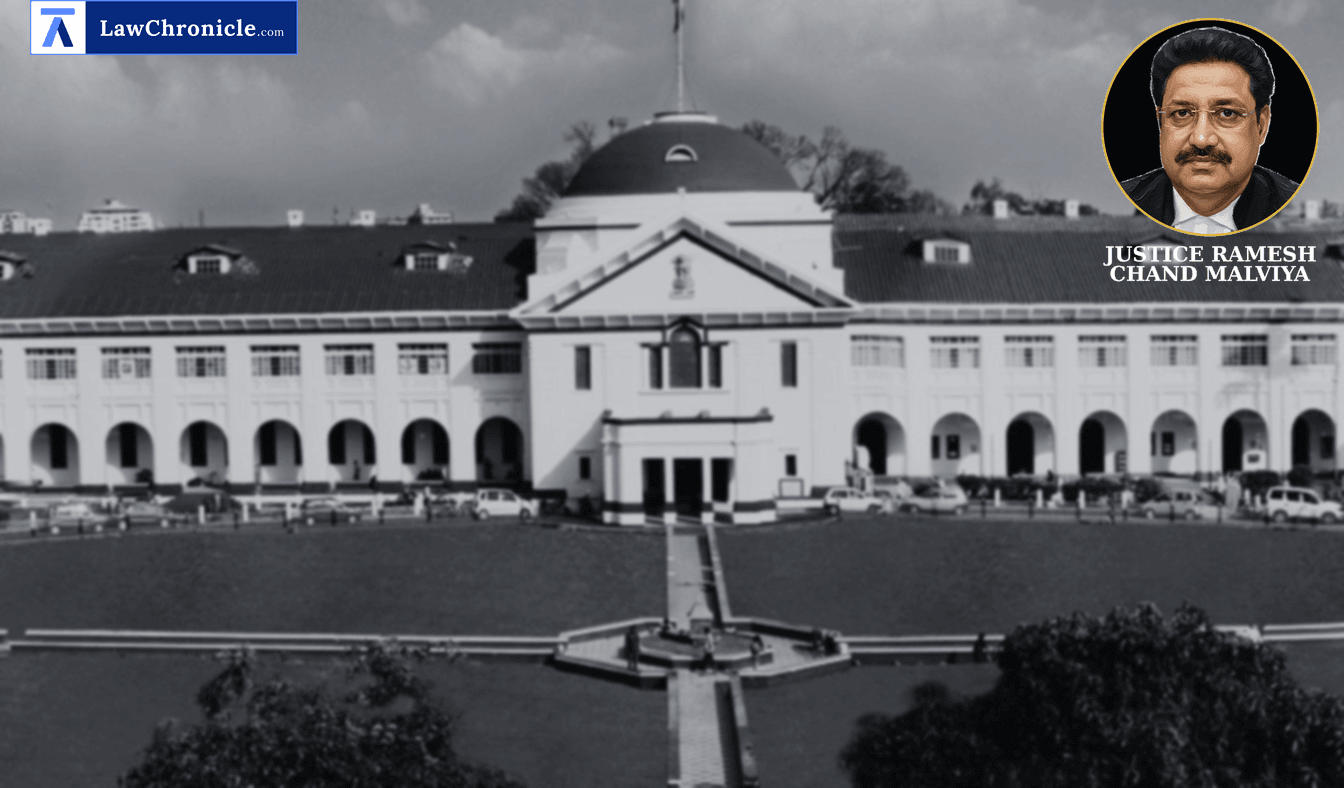
In a decisive check on testamentary claims based on suspicious marks, the Patna High Court has refused probate of a Will where a literate testatrix purportedly used a Left Thumb Impression (LTI) instead of her signature just days after signing a police complaint. The ruling underscores that the propounder's burden to dispel legitimate suspicions remains paramount, even where the contestant's evidence is weak, ensuring that the natural line of succession is not displaced by potentially fraudulent instruments.
A Single Bench of Justice Ramesh Chand Malviya set aside a Trial Court judgment that had granted probate, highlighting that testamentary capacity and understanding must be proved by the propounder irrespective of whether the contestant specifically pleaded unsoundness of mind. The Court emphasized that in probate matters, the 'conscience of the Court' must be satisfied regarding the authenticity of the document.
Key Takeaways
Literacy vs. Thumb Impression
When a literate person who habitually signs documents suddenly uses a thumb impression on a Will, it creates a 'serious suspicion' that the propounder must explain with cogent evidence.
Testamentary Capacity Burden
The propounder must prove the testator was in a sound and disposing state of mind, regardless of whether the objector has specifically challenged mental health in their pleadings.
Interested Witnesses Scrutiny
Evidence of execution provided solely by witnesses closely related to the beneficiaries requires 'exacting scrutiny' and may fail to inspire confidence if independent village witnesses are absent.
Placement of Marks
The placement of a testator's mark at the top margin rather than the foot of the document can be a relevant factor in assessing whether the mark was intended to give effect to the writing as a Will.
Legal Scrutiny of Execution under Section 63
The Court meticulously examined the requirements of Section 63 of the Indian Succession Act, 1925. It observed that for a Will to be valid, the propounder must show that the testator signed or affixed their mark with the intention of giving effect to the writing. In this case, the testatrix had lodged an F.I.R. (Exhibit A) nine days before the alleged Will, which she had signed. The Court found the explanation for using an LTI that her hands were 'trembling' to be inconsistent with her ability to sign a police complaint shortly before.
The Court noted that the probate Court’s duty is to ensure the instrument is the last Will of the deceased and does not extend to deciding complex questions of title. Relying on the principles in H. Venkatachala Iyengar v. B.N. Thimmajamma ( "AIR 1959 SC 443": 1958 CaseBase(SC) 175), the Court reiterated that where execution is surrounded by suspicious circumstances, the onus on the propounder becomes heavier.
The Court has the following directions:
"The findings of the learned Trial Court on Issue Nos. III and IV, namely that the Will is the last testament of the testatrix and was duly executed by her in a fit state of mental and physical health, are set aside... Probate of the Will dated 17.12.1994 (Exhibit 3) is refused, and the probate case is dismissed."
The Court, in its reasoning, observed: "If a genuine and legitimate doubt remains, probate cannot be granted, and the benefit of the doubt goes to the natural line of succession and not to the propounder. In this respect the caution required of the Court is no less than that of a criminal court."
Ratio
The propounder of a Will bears the initial and continuing burden to remove all legitimate suspicions surrounding the document's execution. If a literate testator, who habitually signs, uses a thumb impression without a convincing explanation, or if the propounder takes a prominent part in the execution benefitting their own relatives, the Court must refuse probate if its conscience is not fully satisfied as to the authenticity and the testator's sound disposing mind.
Background
The dispute arose from a probate petition filed by Ruma Devi and Prabha Devi concerning a Will dated December 17, 1994, allegedly executed by their aunt, Sabujwati Kunwari. The objector, a daughter of the testatrix’s sister-in-law, claimed the Will was forged and antedated. The objector relied on an F.I.R. lodged by the testatrix on December 8, 1994, where the testatrix expressed fear that her signatures/marks taken under coercion might be misused.
The Trial Court had granted probate, viewing the objector's admission that the testatrix's LTI was on the paper as an admission of the Will itself. However, the High Court reversed this, citing S.R. Srinivasa v. S. Padmavathamma ( "(2010) 5 SCC 274": 2010 CaseBase(SC) 1027) and Jaswant Kaur v. Amrit Kaur ( "(1977) 1 SCC 369": 1976 CaseBase(SC) 469), holding that mere proof of a mark is not proof of execution with testamentary intent. The High Court further observed that the attesting witnesses were business partners or relatives of the beneficiaries' husbands, making them 'interested witnesses.' Consequently, the appeal was allowed, and the grant of probate was set aside.
Case Details:
Case No.: FIRST APPEAL No.128 of 2017
CNR No. BRHC010972642017
Case Title: Jayant Vishnu Prabhakar Bhardwaj vs. Ruma Devi and Anr
Appearances:
For the Appellant(s): Mr. Jitendra Pd. Singh, Senior Advocate, Mr. Varun Krishna Singh, Advocate
For the Respondent(s): Mr. Shri Nandan Prasad Singh, Senior Advocate, Mr. S.P. Singh, Advocate
Source: 2026 CaseBase(PAT) 3966
Similar Articles




 Breaking News


