


Testamentary Freedom Prevails Over Natural Succession: Bombay HC Grants Probate
 Copy Link
 Share
 Save
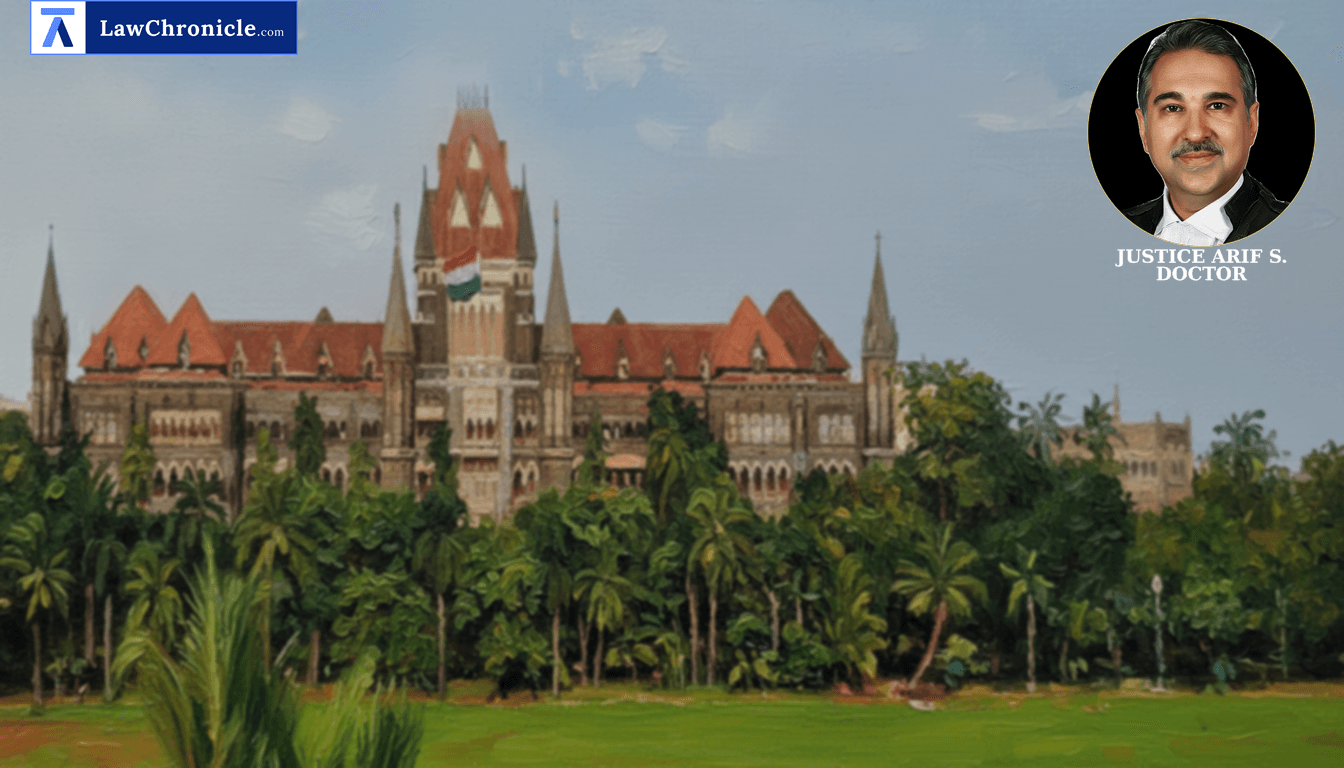
The Bombay High Court has reaffirmed the sanctity of testamentary autonomy, ruling that the deliberate exclusion of natural heirs does not inherently invalidate a Will if the testator's sound disposing mind and the factum of execution are proven through credible attesting witnesses. The Bench held that physical infirmities, including terminal cancer, do not equate to a lack of mental capacity required to execute a valid testamentary document.
Justice Arif S. Doctor presided over the testamentary suit initiated by the nephew of the deceased, who sought probate for a Will executed in November 2004. The sons of the deceased challenged the document, alleging forgery and mental incapacity due to the deceased’s battle with prostate cancer.
Key Takeaways
Testamentary Freedom Upheld
The Bombay High Court clarified that a testator has the absolute right to depart from the natural course of intestate succession, and the exclusion of a spouse or children is not a 'suspicious circumstance' if explained by evidence of strained relations.
Physical Health vs. Mental Capacity
A clear distinction was drawn between physical illness and cognitive failure; the court ruled that physical restricted movement does not imply a lack of sound disposing mind.
Expert Evidence Limitations
The judgment highlights the fallibility of handwriting expert opinions based on secondary materials, emphasizing that direct evidence from attesting witnesses carries greater evidentiary weight than expert reports based on digital scans.
Caveat Pleading Rules
The Bombay High Court reiterated that evidence traveling beyond the initial pleadings in the Affidavit in Support of the Caveat cannot be considered during the trial.
Due Execution and Attestation Proven
The Bombay High Court observed that the Plaintiff successfully established the requirements under Section 63(c) of the Indian Succession Act, 1925 and Section 68 of the Indian Evidence Act, 1872. The two attesting witnesses: a long-term family physician and a close acquaintance, provided consistent testimony regarding the deceased's ability to read, understand, and sign the Will. The court noted that their evidence remained unshaken during cross-examination, whereas the defendants were not even present at the time of execution. The Bombay High Court expressed that "The law does not require an attesting witness to know who drafted or typed the Will, nor does it require an attesting witness to independently examine the wisdom or propriety of the dispositions made by the testator under the Will which is being attested or proved. Equally, an attesting witness's absence during the subsequent registration of the Will is a factor which is wholly irrelevant to proving due execution of the Will in question."
Rejection of Handwriting Expert Opinion
A pivotal point of the dispute was the testimony of a handwriting expert produced by the defendants. The Bombay High Court found the expert's report to be fundamentally flawed, as it was based on scanned copies rather than original documents and utilized comparison signatures that were not formally proved or admitted. Citing Hoshang Pesi Hodiwala v. Bonny Behramshah Bhathena ( "(2014) 6 Mah LJ 656": 2014 CaseBase(BOM) 515), the court emphasized the need for caution in evaluating expert opinions, eventually finding the expert's testimony in this case to be of negligible evidentiary value.
Ratio
The propounder of a Will must establish that the testator was in a sound and disposing state of mind and executed the document of his own free volition; however, once due execution and attestation are proved by credible witnesses, the mere exclusion of natural heirs or the presence of physical infirmity does not constitute an 'unexplained suspicious circumstance' sufficient to deny probate. Furthermore, expert opinion on handwriting is secondary and cannot displace direct, unimpeached ocular evidence of execution.
Background
The dispute arose after the death of Gulab Hukumatrai Gurbani in April 2005. The Plaintiff, his nephew, filed for probate based on a Will that named him the principal beneficiary of the deceased's share in a Jaipur property. The deceased's sons filed caveats, alleging the Will was forged and that their father, suffering from cancer, was not mentally fit. They further claimed a subsequent Will existed, though they failed to produce it.
The Bombay High Court relied on precedents like Sridevi v. Jayaraja Shetty ( "(2005) 2 SCC 784": 2005 CaseBase(SC) 693) to define the burden of proof for the propounder and Ganpatrao Khandero v. Vasantrao regarding physical health. The court also cited Purushottam Vishandas Raheja v. Asha Shrichand Raheja ( "Order passed by Bombay High Court on 26th July 2016 in Appeal No. 598 of 2011": 2016 CaseBase(BOM) 397) and Kattinokkula Murali Krishna v. Veeramalla Koteswara Rao & Ors. ( "(2010) 1 SCC 466": 2009 CaseBase(SC) 272) to dismiss challenges that were not raised in the initial caveat affidavits. Ultimately, the court found the defendants failed to prove forgery and decreed the suit in favor of the nephew.
Case Details:
Case No.: Testamentary Suit No. 74 of 2006
Case Title: Rajkumar Assudomal Gurbani Versus Vijay Gulab Gurbani & Anr.
Appearances:
For the Petitioner(s): Mr. Rahul Soman, Ms. Dhanashree Gaikaiwari, i/b. Bilawala and Co.
For the Respondent(s): Mr. S.H. Mishra, i/b. Mr. Nahar Mahala
Source: 2026 CaseBase(BOM) 5665
Similar Articles
 Breaking News


