


Madhya Pradesh High Court Sets Aside Conviction In Murder Case Due to Material Omissions
 Copy Link
 Share
 Save
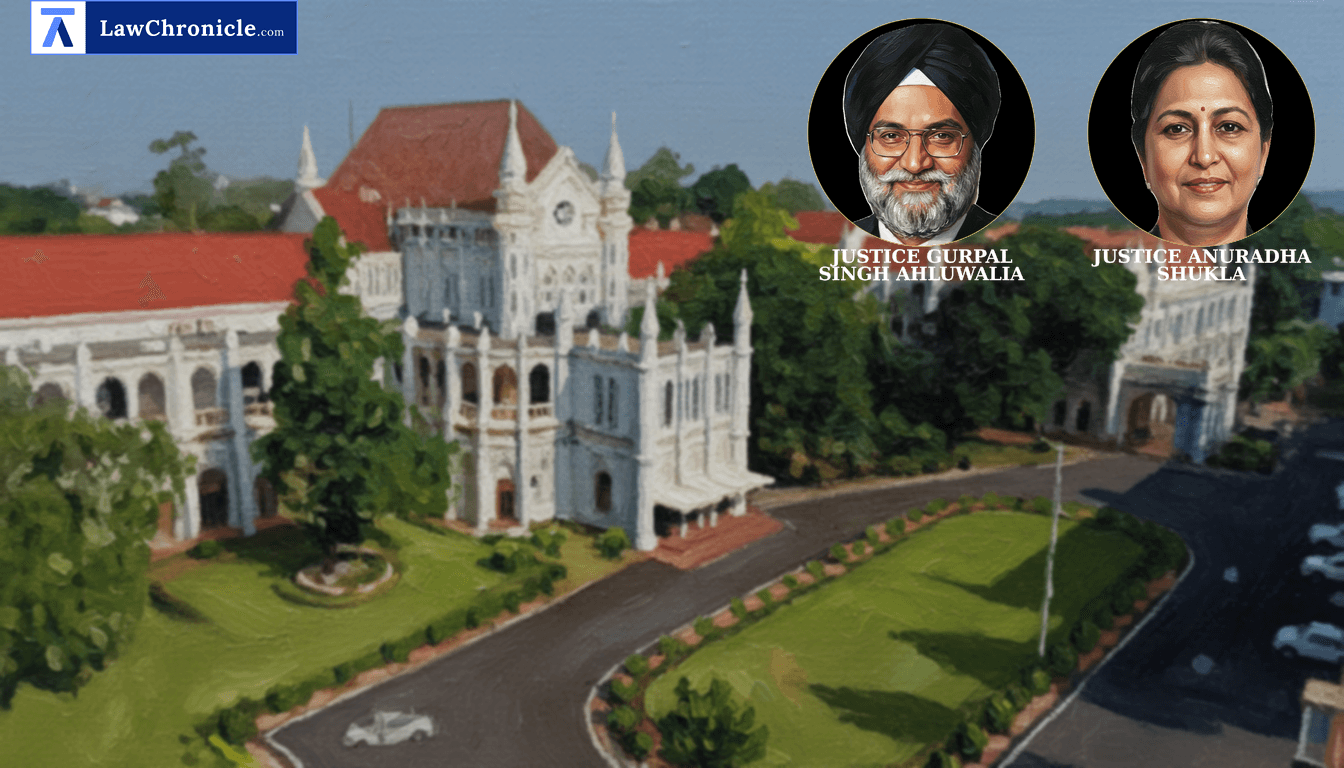
In a pivotal ruling on criminal jurisprudence, the Madhya Pradesh High Court has overturned the life sentences of four appellants in a decade-old murder case, underscoring that material omissions in initial police statements and lack of scientific corroboration are fatal to the prosecution's narrative of a coordinated mob attack.
A bench comprising Justice G. S. Ahluwalia and Justice Anuradha Shukla delivered the verdict while hearing a cluster of appeals arising from a 2008 incident involving political rivalry. The Court scrutinized the reliability of 'interested witnesses' and the evidentiary weight of an accused's absconsion in the absence of clinching ocular or forensic proof.
Key Takeaways
Material Omissions Vitiate Witness Credibility
When critical allegations regarding the overt acts of specific accused persons are missing from the Dehati Nalishi (FIR) and initial Section 161 statements, they are treated as material improvements that undermine the prosecution's case.
Corroboration Essential in Group Attacks
In cases involving large unlawful assemblies and allegations of indiscriminate firing, the absence of physical evidence like gunshot marks on vehicles or seized cartridges makes it hazardous to convict individuals based solely on partisan oral testimony.
Absconsion Not a Sole Ground for Conviction
While fleeing from justice may indicate a guilty mind, it cannot substitute for substantive evidence, as even innocent persons might abscond due to fear of false implication.
Application of Prudence for Related Witnesses
Although the testimony of related witnesses is not inherently unreliable, it must be subjected to 'discerning scrutiny' and a higher bar of caution when deep-seated political enmity exists between parties.
Prosecution Fails to Prove Firing and Restraint
The Court meticulously analyzed the role of appellant Dinesh Giri. The prosecution had alleged that he fired a gunshot to burst a tractor tyre and helped pull the deceased down. However, the Bench noted significant discrepancies regarding the seizure of the tractor and the lack of gunshot marks. The Court, in its reasoning, observed: "Once seizure of pieces of tyre where the gunshot had hit could not be proved by the prosecution, then it is clear that the prosecution has failed to prove that any gunshot had hit the rear tyre of the tractor which resulted in the bursting of the tyre. Furthermore, neither in the seizure memo (Ex.P/100) nor in the evidence of M.L. Dhodi (PW43), there is any mention that the rear tyre of the tractor was found in a burst condition."
Regarding the allegation of pulling the victim from the vehicle, the Court found it to be a material improvement, stating: "Evidence of Suresh Kumar Ahirwar (PW1), Anil Yadav (PW2), Anant Singh (PW3), Chandraprakash (PW4) that deceased Sunil was pulled down from the tractor by appellant Dinesh Giri and Jaipal, cannot be relied upon for the reason that this important allegation is missing in Dehati Nalishi, Ex. P1, Police Statement..."
Specific Role of Ram Kishan Upheld
While four appellants were acquitted, the Court maintained the conviction of Ram Kishan. The Bench found that the ocular evidence consistently attributed the fatal act of pelting a heavy stone to him, a fact corroborated by the post-mortem report and the recovery of a blood-stained stone. The Court rejected the defense theory of a tractor accident, noting that the nature of injuries was incompatible with a vehicle overturning.
The Court has the following directions:
"Appellant Ram Kishan is on bail. His bail bonds and Surety bonds are hereby cancelled. He is directed to immediately surrender before the Trial Court for undergoing the remaining jail sentence. It is directed that in case, if appellant Ram Kishan does not surrender before the Trial Court latest by 14th of October, 2026, then the Trial Court shall issue perpetual warrant of arrest against appellant Ram Kishan and shall also initiate proceedings against the Surety."
Ratio
The core legal principle established is that in cases involving alleged unlawful assemblies under Section 149 of the Indian Penal Code, 1860, if the specific overt acts attributed to individual members are found to be material improvements over initial police statements and lack corroboration from scientific or physical evidence, the collective liability of the assembly cannot be sustained against those members.
Background
The dispute originated from political rivalry in a village following a no-confidence motion against a Sarpanch. On August 27, 2008, the complainant party was returning from meeting the Superintendent of Police when they were allegedly ambushed by a mob armed with firearms and stones. The prosecution cited A.T. Mydeen Vs. Asstt. Commissioner, Customs Department, Mohd. Jabbar Ali v. State of Assam ( "(2023) 19 SCC 672": 2022 CaseBase(SC) 894), Yogesh Singh v. Mahabeer Singh ( "(2017) 11 SCC 195": 2016 CaseBase(SC) 385), Jai Prakash Tiwari v. State of M.P. ( "(2024) 15 SCC 424": 2022 CaseBase(SC) 719), State of M.P. v. Balveer Singh ( "(2025) 8 SCC 545": 2025 CaseBase(SC) 47), Kundula Bala Subrahmanyam v. State of A.P. ( "(1993) 2 SCC 684": 1993 CaseBase(SC) 94), and Guru Dutt Pathak Vs. State of UP ( "(2021) 6 SCC 116": 2021 CaseBase(SC) 488) to argue for the reliability of interested witnesses and the weight of ocular evidence. While the Trial Court convicted several individuals under Sections 148 and 302/149 of the Indian Penal Code, 1860, the High Court partially allowed the appeals, acquitting four appellants due to lack of credible evidence while modifying the conviction of Ram Kishan to Section 302 of the Indian Penal Code, 1860 as a standalone offender.
Case Details:
Case No.: Criminal Appeal No. 351 of 2015, 359 of 2015 & 124 of 2017
Neutral Citation: 2026:MPHC-GWL:27936
Case Title: Yashpal Singh Yadav and Others v. The State of Madhya Pradesh
Appearances:
For the Petitioner(s): Shri Sushil Goswami, Shri Pramod Pachori, and Shri Vibhor Khandelwal, Advocates
For the Respondent(s): Shri Mohit Shivhare, Public Prosecutor; Shri Pawan Devnani, Advocate for Complainant
Source: 2026 CaseBase(MP) 22942
Similar Articles

 Breaking News


