


Magistrates Cannot Mechanically Reject Final Reports On Affidavits: Allahabad HC
 Copy Link
 Share
 Save
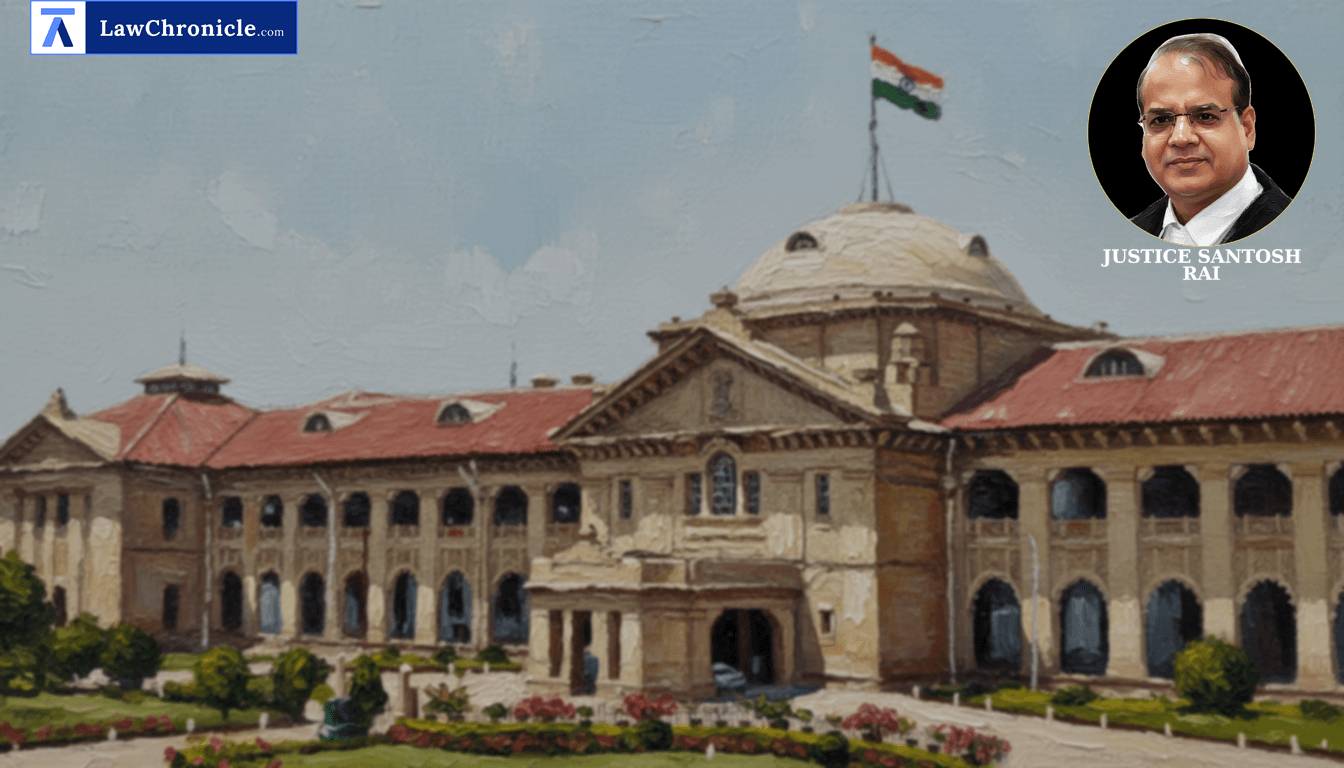
The Allahabad High Court has ruled that Magistrate/Special Courts cannot reject police final reports and convert protest petitions into complaint cases solely on the basis of extraneous materials like affidavits, newspaper cuttings, or photographs without a reasoned judicial scrutiny.
Justice Santosh Rai presided over the matter, setting aside an order passed by a Special Judge under the Scheduled Castes And The Scheduled Tribes (Prevention Of Atrocities) Act, 1989 that had summoned thirteen police personnel despite a police investigation finding no evidence against them. The Allahabad High Court emphasized that cognizance is a judicial act requiring application of mind, not a mechanical exercise triggered by the mere filing of a protest petition.
Key Takeaways
Judicial Reasoning is Mandatory
Courts must record specific, cogent reasons when rejecting a police final report, moving away from 'rubber-stamp' orders that merely state materials were 'perused'.
Extraneous Evidence Restraints
Affidavits of witnesses not part of the police diary, newspaper reports, and photographs cannot be treated as substantive evidence to displace an investigative conclusion at the threshold.
Protection for Public Servants
Section 197 of the Code Of Criminal Procedure, 1973 is a mandatory safeguard; courts must determine if alleged acts have a 'reasonable nexus' with official duty before taking cognizance against public officials.
Correct Trial Procedure
Special Courts under the Scheduled Castes And The Scheduled Tribes (Prevention Of Atrocities) Act, 1989 must follow Sessions trial procedure under Chapter XVIII of the Code, rather than adopting Magistrate-level warrant case procedures.
Cognizance of Offence
The Allahabad High Court observed that the trial court failed to scrutinize material contradictions regarding the presence of witnesses and the timing of the alleged incident. It noted that the prosecution appeared to be a 'counterblast' to an earlier FIR registered against the informant herself for assaulting police personnel. The Bench explained the Magistrate's power of cognizance that "Cognizance is not a mechanical exercise; the Court is required to examine whether the material placed before it discloses the commission of an offence and whether the statutory ingredients are prima facie satisfied... the continuation of such proceedings, in the absence of the foundational ingredients of the offences, would amount to permitting the criminal process to continue despite the absence of a prima facie case."
Regarding the Scheduled Castes And The Scheduled Tribes (Prevention Of Atrocities) Act, 1989, the Allahabad High Court clarified that every insult does not attract the Act unless it is specifically motivated by the victim's caste identity, relying on Hitesh Verma v. State of Uttarakhand ( "(2020) 10 SCC 710": 2020 CaseBase(SC) 649) and Shajan Skaria v. State of Kerala ( "2024 SCC OnLine 2249": 2024 CaseBase(SC) 482).
The Allahabad High Court therefore explained the legal procedural requirements in the following manner:
"(i) Where a Final Report is submitted by the Investigating Officer, the Court shall independently examine the police report and the material collected during investigation before accepting or rejecting the Final Report. (ii) Mere filing of a protest petition along with affidavits shall not, by itself, result in its automatic conversion into a complaint. (viii) Every order of taking cognizance or rejecting a Final Report shall be a ‘speaking and reasoned’ judicial order. (xiii) The learned District and Sessions Judges of all the districts in the State shall monitor aforesaid compliance by the criminal courts under their administrative control in ‘monthly meeting’... Wherever any recurring departure from these guidelines is noticed, appropriate administrative guidance shall be issued to ensure uniform and lawful exercise of judicial power."
Ratio
An order rejecting a police final report and treating a protest petition as a complaint is an 'intermediate order' amenable to appellate jurisdiction under Section 14-A of the Scheduled Castes And The Scheduled Tribes (Prevention Of Atrocities) Act, 1989. Furthermore, a Special Court cannot rely on extraneous materials like affidavits and newspaper cuttings to reject a final report without recording a reasoned disagreement based on the case diary, nor can it bypass the mandatory requirement of prior sanction under Section 197 Code Of Criminal Procedure, 1973 when the accused are public servants acting in their official capacity.
Background
The dispute originated from an incident on June 18, 2017, where the informant, Smt. Saroj, alleged custodial torture and caste-based slurs by police personnel at P.S. Kharkhoda. However, on the same day, an FIR was lodged against the informant for obstructing public servants. After a full investigation, the police filed a Final Report citing a lack of evidence. The Special Judge at Meerut rejected this report, relying on affidavits and media clips produced by the informant, and treated the protest petition as a complaint.
The Allahabad High Court analyzed several precedents including Amar Nath & Ors. Vs. State of Haryana & Anr. ( "(1977) 4 SCC 137": 1977 CaseBase(SC) 48) and Madhu Limaye Vs. The State of Maharashtra ( "(1977) 4 SCC 551": 1977 CaseBase(SC) 193) to determine that the order was not 'interlocutory' but 'intermediate', thus making the appeal maintainable. It further applied the principles of State of Haryana v. Bhajan Lal regarding quashing of mala fide prosecutions. Finding that the Special Court adopted the wrong procedure (warrant case instead of Sessions trial) and ignored Section 197 Code Of Criminal Procedure, 1973, the Allahabd High Court allowed the appeal and quashed all proceedings against the appellants.
Case Details:
Case No.: CRIMINAL APPEAL No. - 7399 of 2026
Case Title: Bhuvnesh Kumari and 12 others Versus State of U.P. and another
Appearances:
For the Petitioner(s): Mohd Raghib Ali, Sr. Advocate; Saghir Ahmad, learned Senior Counsel
For the Respondent(s): G.A.; Sanjay Kumar Srivastava; Shyam Narayan Rai, learned AGA
Source: 2026 CaseBase(ALL) 895
Similar Articles

 Breaking News


