


Caste Remarks During Inquiry Not Official Duty: Punjab & Haryana HC
 Copy Link
 Share
 Save
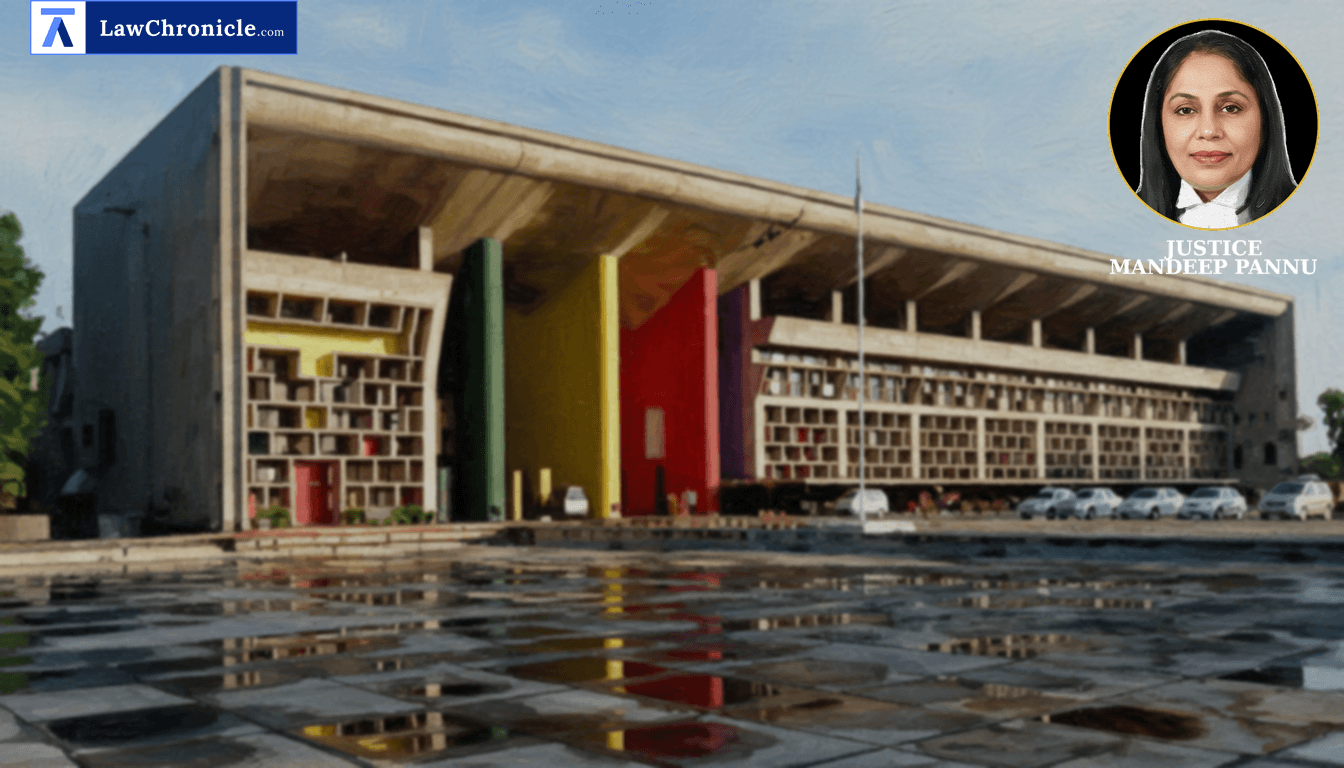
Caste-based slurs uttered during an official departmental inquiry enjoy no legal immunity under sanction rules, but criminal charges still require explicit proof that the offence occurred within public view. The Punjab and Haryana High Court has clarified that hurls of racial or caste derogatory expressions cannot be treated as acts performed in the discharge of official duties.
Presiding over the matter, Justice Mandeep Pannu evaluated a revision petition challenging the discharge of police officials accused of directing caste-based insults at a constable during an internal inquiry.
Key Takeaways
No Sanction Shield For Caste Remarks: Uttering caste-based abuses during an official proceeding does not possess any reasonable nexus with official duties under Section 197 of Code of Criminal Procedure.
Public View Ingredient Essential: An offence under Section 3(1)(x) of Scheduled Castes and the Scheduled Tribes (Prevention of Atrocities) Act, 1989 fails if the complaint lacks specific averments showing the insults occurred in a place within public view.
Office Presence Insufficient: The mere presence of individuals or departmental officials inside a closed office room during an inquiry does not automatically satisfy the "public view" requirement.
Court Observations and Directions
The High Court carefully scrutinised the nexus between official duties and alleged criminal acts, holding that sanction requirements under Section 197 of Code of Criminal Procedure cannot be invoked blindly for caste slurs. Referring to the precedent in Ramkrishna Chauhan vs. State of U.P. and another ( "2026 INSC 895": 2026 CaseBase(SC) 809), the Court reiterated the necessity of the statutory requirement of "public view".
The Court, in its reasoning, observed: "Conducting an inquiry may undoubtedly constitute an official duty, but the alleged use of caste-based derogatory expressions against the complainant cannot, merely because it is alleged to have taken place during such inquiry, be regarded as an act forming part of, or having a reasonable nexus with, the official duty."
Addressing the lack of public view in the allegations, the Court held: "Significantly, the complaint does not contain any specific averment that the said words were uttered in the presence of the public or at a place within public view. Mere presence of persons in an official office or inquiry proceedings cannot, without anything more, satisfy the statutory requirement of the offence having been committed in public view."
Ratio
Uttering caste-based derogatory expressions during an inquiry has no reasonable nexus with the discharge of official duties and is not protected under Section 197 of Code of Criminal Procedure; however, to constitute an offence under Section 3(1)(x) of Scheduled Castes and the Scheduled Tribes (Prevention of Atrocities) Act, 1989, the alleged act must be explicitly shown to have occurred in a place within public view.
Background
The case originated from a complaint filed by a police constable belonging to the Chamar community, who alleged that a Head Constable assaulted and abused him using caste slurs. Following the initial incident, two senior officers conducted an inquiry into the matter. The complainant alleged that during the inquiry, these senior officers hurled derogatory caste remarks at him and threatened his employment.
The Judicial Magistrate First Class summoned all three accused under Sections 3(1)(x) of Scheduled Castes and the Scheduled Tribes (Prevention of Atrocities) Act, 1989 and Section 323, Section 324, and Section 506 read with Section 34 of Indian Penal Code. However, the Special Judge discharged the two inquiry officers on the ground that sanction under Section 197 of Code of Criminal Procedure was mandatory since the words were uttered during an official inquiry. Aggrieved by this discharge order, the complainant preferred a revision petition before the High Court.
While the High Court disagreed with the Special Judge's reasoning regarding the requirement of official sanction, it ultimately dismissed the revision petition on the ground that the complaint failed to establish the essential ingredient of "public view" required under Scheduled Castes and the Scheduled Tribes (Prevention of Atrocities) Act, 1989.
Case Details:
Case No.: CRR No.2814 of 2008 (O&M)
Case Title: Main Pal v. Sher Singh and another
Appearances:
For the Petitioner(s): Mr. Rahul Vats, Advocate
For the Respondent(s): Respondent No.1 expired; Mr. Karamjit Singh Chahal, Advocate, Mr. R.K. Kashyap, Advocate, Mr. Kanav Goyal, Advocate for Respondent No.2; Ms. Sheenu Sura, DAG, Haryana
Source: 2026 CaseBase(PNH) 15214
Similar Articles
 Breaking News


