Mandamus Cannot Be Issued Without Established Statutory Duty: Kerala High Court
 Copy Link
 Share
 Save
The Kerala High Court has decisively ruled that no writ of mandamus can be issued to compel religious boards to engage specific cultural organizations without the existence of a clear statutory obligation or an enforceable legal right. This judgment reinforces the principle that judicial intervention in administrative choices of religious institutions requires the petitioner to demonstrate a prior demand for justice and a corresponding legal duty cast upon the authority.
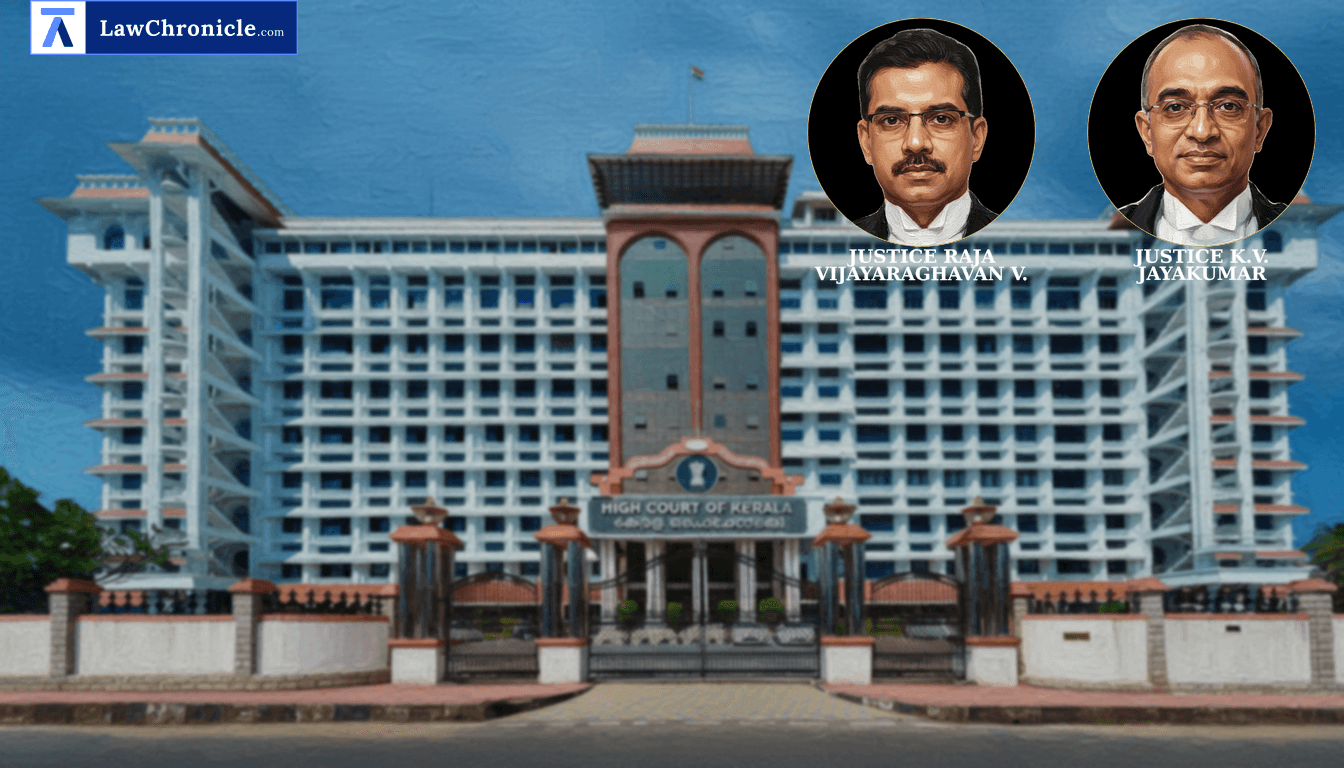
Justice Raja Vijayaraghavan V and Justice K. V. Jayakumar heard the writ petition filed by a cultural organization seeking recognition and the right to perform traditional recitations at the Sabarimala temple. The court scrutinized the maintainability of the petition under Constitution of India, 1950, emphasizing the strict prerequisites for issuing prerogative writs against statutory bodies.
Key Takeaways
Statutory Duty Prerequisite
Mandamus is maintainable only when a petitioner proves a failure by an officer to discharge a specific statutory obligation.
Demand and Refusal Rule
Litigants must first approach the concerned authority with a distinct demand before seeking judicial compulsion for performance.
Enforceable Legal Rights
Cultural and traditional recitations, even if recognized by the State, do not automatically translate into a legally enforceable right to perform at specific religious venues unless backed by law.
Judicial Restraint in Administration
Courts will not interfere in the administrative decisions of Devaswom Boards regarding cultural programs unless there is a violation of the Constitution or a statute.
Legal Preconditions for Writ of Mandamus
The Bench examined the core requirements for the issuance of a writ of mandamus. The Court observed that for such a writ to be issued, the party seeking the remedy must establish the existence of a legal right in its favor and a corresponding legal duty cast upon the authority concerned. The duty must be one imposed by the Constitution of India, 1950, a statute, or rules having the force of law.
The Court, in its reasoning, observed: "In order to obtain a writ of mandamus, the petitioner has to establish that a request was made to the respondent and that the respondent is duty-bound to act on that request. In other words, to invoke the jurisdiction of this Court for a writ of mandamus, the petitioner should have the right to get an order as prayed for and there should be a corresponding duty cast upon the respondent."
Applying the principles laid down in Bihar Eastern Gangetic Fishermen Cooperative Society Ltd v. Sipahi Singh and others ( "AIR 1977 SC 2149": 1977 CaseBase(SC) 27) and Saraswati Industrial Syndicate Ltd. v. Union of India ( "(1974) 2 SCC 630": 1974 CaseBase(SC) 231), the Court noted that there was no evidence of a statutory duty being breached by the Travancore Devaswom Board. The Bench further relied on State of Haryana v. Chanan Mal to highlight that a petitioner must ordinarily first call upon the authority to discharge its legal obligation before approaching the Court.
Court Directions
The Court has the following directions:
"The Writ Petition is dismissed."
Ratio
A writ of mandamus can be granted only where there is a statutory duty imposed upon the officer concerned and a failure to discharge that obligation. The existence of a legally enforceable right and a corresponding legal duty, coupled with a prior demand for performance that was refused, are essential preconditions for invoking the High Court's jurisdiction under Article 226 for mandamus.
Background
The petitioner, an organization registered under the Travancore-Cochin Literary, Scientific and Charitable Societies Registration Act, 1955, represented artists engaged in 'Purana Parayana' (recitation of scriptures). They claimed that their members earn their livelihood through these traditional recitations and are recognized under the Kerala Cultural Activists’ Welfare Fund Act, 2010. The dispute arose when the Travancore Devaswom Board allegedly discontinued an arrangement allowing four members of the petitioner society to conduct recitations at Sabarimala during the Mandala-Makaravilakku season with a fixed honorarium.
The petitioner sought a mandamus to be recognized as the representative body for such activities and requested directions for payment of unpaid donations and the provision of facilities at Pampa. However, the Standing Counsel for the Board raised a preliminary objection on maintainability, arguing that the Board had no mandatory legal duty to engage the petitioner. The High Court upheld this objection, finding that the petitioner failed to demonstrate any statute or rule that compelled the Board to grant the requested reliefs.
Case Details:
Case No.: W.P.(C) No.48132 of 2025
Neutral Citation: 2026:KER:69802
Case Title: Akhila Kerala Purana Parayana Kala Sanghadana v. State of Kerala and Others
Appearances:
For the Petitioner(s): Sri. C. Rajendran, Smt. R. S. Sreevidya
For the Respondent(s): Sri. G. Biju (Standing Counsel, TDB), Sri. K. R. Sunil (Special Government Pleader)
Source: 2026 CaseBase(KER) 21030
Similar Articles
 Breaking News