


No Mandamus for Private Contracts: Calcutta HC Refuses VRS Benefit to Retired Employee
 Copy Link
 Share
 Save
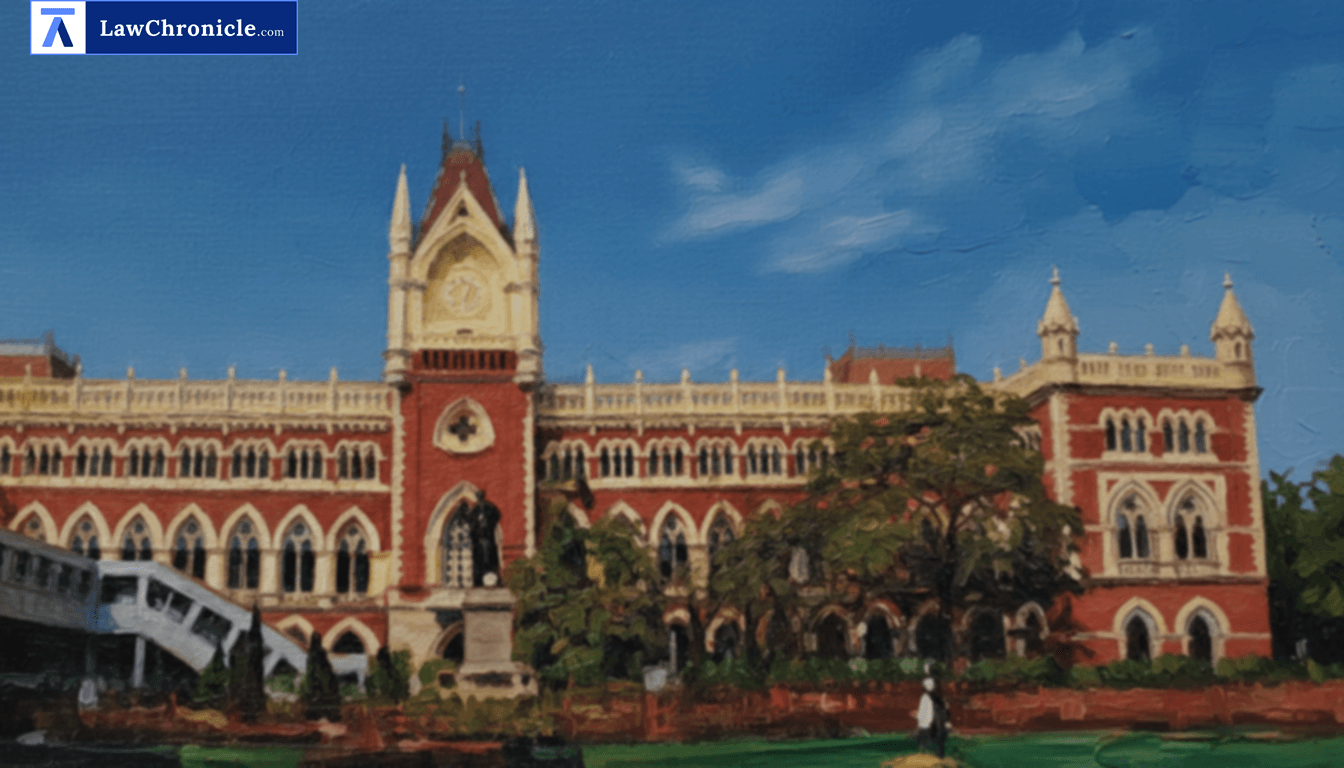
The Calcutta High Court has slammed the door on using writ jurisdiction to enforce private contractual service benefits, ruling that disputes regarding non-statutory Voluntary Retirement Schemes (VRS) lack the 'public law element' necessary for judicial review. This judgment reinforces the high threshold for maintainability under Article 226, shielding institutions from writ petitions where service conditions are not governed by statutory rules.
Justice Amrita Sinha, presiding over the Constitutional Writ Jurisdiction, dismissed the petition filed by a retired Secretary of the Indian Institute of Social Welfare and Business Management (the Institute). The petitioner sought the release of VRS benefits, which the Institute later denied existed, leading to a significant legal battle over the boundaries of the High Court's extraordinary jurisdiction.
Key Takeaways
Jurisdictional Barrier for Private Contracts
Purely contractual disputes between an employer and employee, even if involving a state-aided body, cannot be adjudicated under writ jurisdiction unless a public law element is present.
VRS as a Concluded Contract
Voluntary Retirement Schemes are governed by the Contract Act and represent a contractual offer and acceptance rather than a statutory right.
State Instrumentality Limitation
Merely being 'State' under Article 12 does not make every administrative action of an institution subject to judicial review; the specific action challenged must involve a public duty.
Remedy in Civil Law
Litigants seeking enforcement of service benefits not backed by statute must approach ordinary civil courts rather than invoking Article 226 of the Constitution of India.
Contractual Disputes Beyond Writ Purview
The Court noted that while the Institute might be affiliated with the University of Calcutta and receive government grants, the specific dispute regarding VRS benefits was private in nature. The Bench observed that the petitioner failed to show that any statutory law was violated or that the service conditions were controlled by statutory provisions.
The Court, in its reasoning, observed: "The actions or decisions taken solely within the confines of being ordinary contract of service, having no statutory force or backing, cannot be recognized as being amenable to challenge under Article 226 of the Constitution. In the absence of the service conditions being controlled or governed by statutory provisions, the matter would remain in the realm of being ordinary contract of service."
Regarding the dispute over the very existence of the scheme, the Court stated that it would be improper for the writ Court to adjudicate such contested factual issues. The Court has following directions:
"The writ petition fails and is hereby dismissed. It is, however, made clear that dismissal of the writ petition will not stand in the way of the petitioner to approach the competent forum for remedy, in accordance with law, if so advised."
Ratio
A writ of mandamus will not lie to enforce private law rights or covenants of a private contract of service that lacks statutory backing. Even if an employer is an authority under Article 12 of the Constitution, judicial review is only permissible if the challenged action possesses a public law character or involves the discharge of a public duty.
Background
The petitioner, who joined the Institute in 1999, opted for a Voluntary Retirement Scheme (VRS) allegedly floated by the Board of Governors in 2023 on medical grounds. While her terminal dues like gratuity and provident fund were released, the Institute subsequently claimed that no such VRS rules existed and that the Board of Governors lacked the power to approve such financial schemes without the Board of Trustees.
The petitioner argued the principle of promissory estoppel, citing State of Himachal Pradesh & Anr. v. Oasys Cybernatics Private Limited to claim the state must act reasonably. However, the respondents, relying on Subhodh Kr. Singh Rathour v. Chief Executive Officers & Ors. and Joshi Technologies International INC v. Union of India & Ors., argued that the dispute was purely contractual. The Court further examined HEC Voluntary Retired Employees Welfare Society & Anr. v. Heavy Engineering Corporation Ltd. & Ors., K. K. Saksena v. International Commission of Irrigation and Drainage & Ors., Army Welfare Education Society, New Delhi v. Sunil Kr. Sharma & Ors., Kausik Majumdar v. State of West Bengal & Ors., and Atal Khandelwal v. Institute of Health Management Research and Ors. to conclude that in the absence of statutory service rules, the relationship remained in the realm of private law. Consequently, the High Court dismissed the petition, relegating the petitioner to seek remedy before a competent civil forum.
Case Details:
Case No.: WPO 1230 of 2024
Neutral Citation: 2026:CHC-OS:415
Case Title: Shipra Das Vs. Indian Institute of Social Welfare and Business Management & Ors.
Appearances:
For the Petitioner(s): Mr. Soumya Mazumder, Sr. Adv., Mr. Victor Chatterjee, Adv., Mr. Tapan Sil, Adv., Mr. A. Bhar, Adv.
For the Respondent nos. 1 & 2: Mr. Pijush Biswas, Adv., Mr. Aritra Roy Chowdhury, Adv., Mr. Sudipta Nayan Ghosh, Adv., Mr. Saikat Ghosh, Adv.
For State: Mr. Piush Chaturvedi, Sr. Adv., Mr. Tarun Kumar Das, Adv.
Source: 2026 CaseBase(CAL) 2913
Similar Articles


 Breaking News


