


Matrimonial Disputes With Civil Flavour Can Be Quashed Upon Amicable Settlement: Jharkhand HC
 Copy Link
 Share
 Save
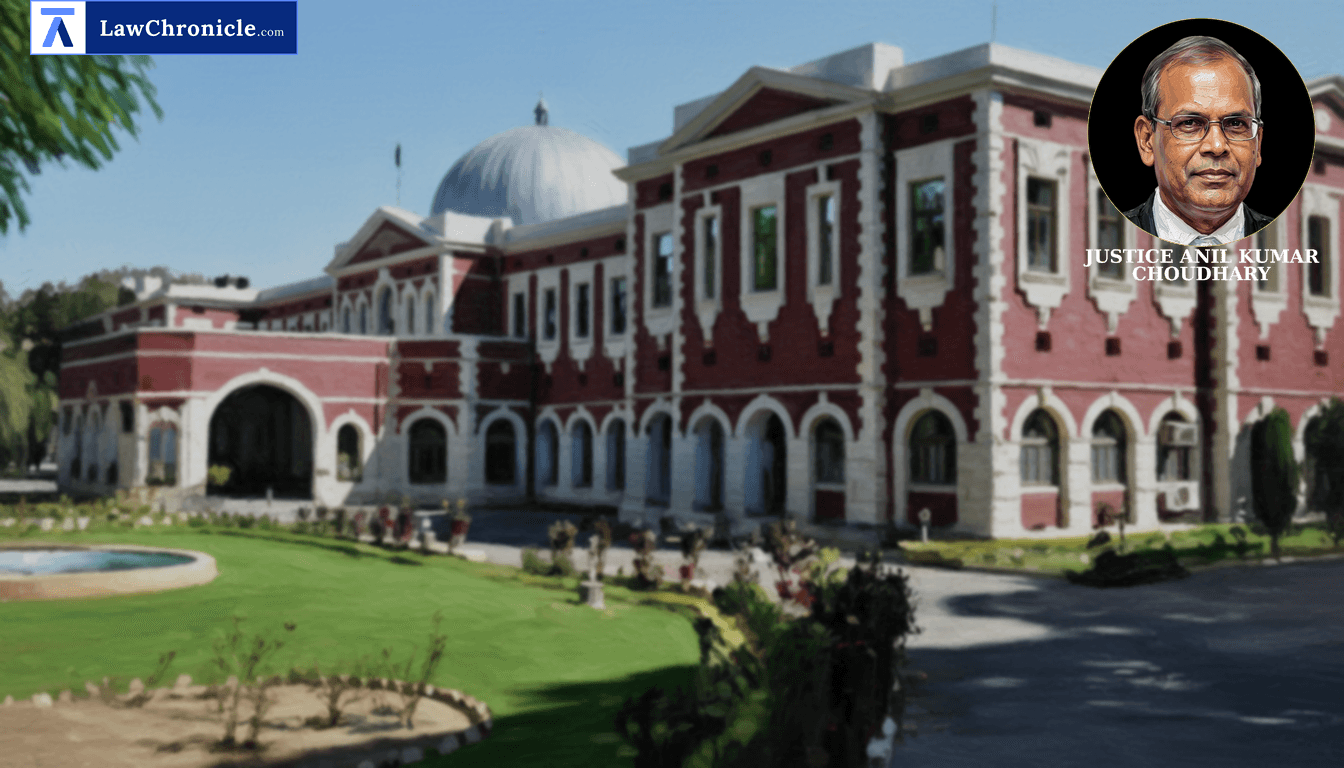
The Jharkhand High Court has reinforced the principle that criminal proceedings arising from matrimonial disputes can be quashed where parties reach a private settlement, ruling that the continuation of such cases after an amicable resolution amounts to an abuse of judicial process. By quashing dowry-related charges, the court emphasized that the inherent power to secure the ends of justice outweighs the procedural necessity of a trial when the possibility of conviction becomes remote.
Justice Anil Kumar Choudhary presided over the matter, hearing a petition filed under Section 482 of Code of Criminal Procedure. The petitioners sought the quashing of criminal proceedings and a summoning order involving allegations under Sections 498A/34 of the Indian Penal Code and Section 4 of the Dowry Prohibition Act. The bench evaluated whether the inherent powers of the High Court should be exercised to terminate a criminal case that had transitioned into a private resolution between the spouses.
Key Takeaways
Matrimonial Harmony over Litigation
The court prioritized the amicable settlement of family disputes, recognizing that quashing proceedings in such cases helps in the finality of private resolutions.
Prevention of Judicial Abuse
It established that continuing a criminal trial where the victim no longer supports the prosecution due to a settlement constitutes an unnecessary oppression of the accused.
Distinction in Quashable Offences
The judgment reaffirms the legal boundary between 'heinous crimes' and 'private disputes,' categorizing matrimonial dowry cases as having a predominately civil flavour suitable for compounding via judicial discretion.
Judicial Discretion under Section 482
The Court observed that the dispute between the parties was essentially matrimonial in nature and did not involve any overbearing public policy concerns. Given that the parties had entered into a memorandum of settlement, the Court found that the likelihood of a conviction was bleak.
The Court has the following directions:
"the entire criminal proceeding arising out of C.P. Case No. 1955 of 2021 as well as the order dated 14.03.2022 passed by the learned Judicial Magistrate 1st Class, Dhanbad is quashed and set aside qua the petitioners."
The Court, in its reasoning, observed: "the criminal cases having overwhelmingly and predominatingly civil flavour stand on a different footing for the purposes of quashing, particularly the offences arising from commercial, financial, mercantile, civil, partnership or such like transactions or the offences arising out of matrimony relating to dowry, etc. or the family disputes where the wrong is basically private or personal in nature and the parties have resolved their entire dispute."
Ratio
The High Court, exercising its inherent powers under Section 482 of the Code of Criminal Procedure, may quash criminal proceedings in non-heinous matrimonial disputes if the parties have settled the matter amicably. In such instances, the continuation of the trial is deemed an abuse of the process of law because the settlement renders the chance of conviction remote and bleak, and quashing is necessary to secure the ends of justice.
Background
The case originated from a complaint filed by the wife (Opposite Party No. 2) against the petitioners, leading the Judicial Magistrate 1st Class, Dhanbad, to find sufficient material to proceed under Section 498A of the Indian Penal Code and Section 4 of the Dowry Prohibition Act. During the pendency of the criminal miscellaneous petition, the parties filed an interlocutory application supported by affidavits, stating that the dispute had been settled through the intervention of well-wishers.
The Court relied on the guiding principles laid down by the Supreme Court in Parbatbhai Aahir @ Parbatbhai Bhimsinhbhai Karmur and Others vs. State of Gujarat and Another ( "(2017) 9 SCC 641": 2017 CaseBase(SC) 177), which distinguish the High Court's inherent power to quash from the statutory power of compounding under Section 320. The High Court noted that since the offences were not heinous like murder or rape and were instead private in nature, the settlement justified the termination of the proceedings. Consequently, the petition was allowed, and the criminal proceedings were quashed.
Case Details:
Case No.: Cr.M.P. No. 2458 of 2023
Neutral Citation: 2026:JHHC:28761
Case Title: Ranjit Kumar Pandit & Others vs. The State of Jharkhand & Another
Appearances:
For the Petitioner(s): Mr. Shailesh Kr. Singh, Advocate; Mr. Abhijeet Kr. Singh, Advocate
For the State: Mr. Arup Kr. Dey, Addl. P.P.
For O.P. No.2: Mr. Prakhar Kr. Vishain, Advocate; Ms. Arpita Sinha, Advocate
Source: 2026 CaseBase(JHKD) 3161
Similar Articles


 Breaking News


