


Mere Abduction Insufficient For Section 366 IPC Conviction: Jharkhand HC
 Copy Link
 Share
 Save
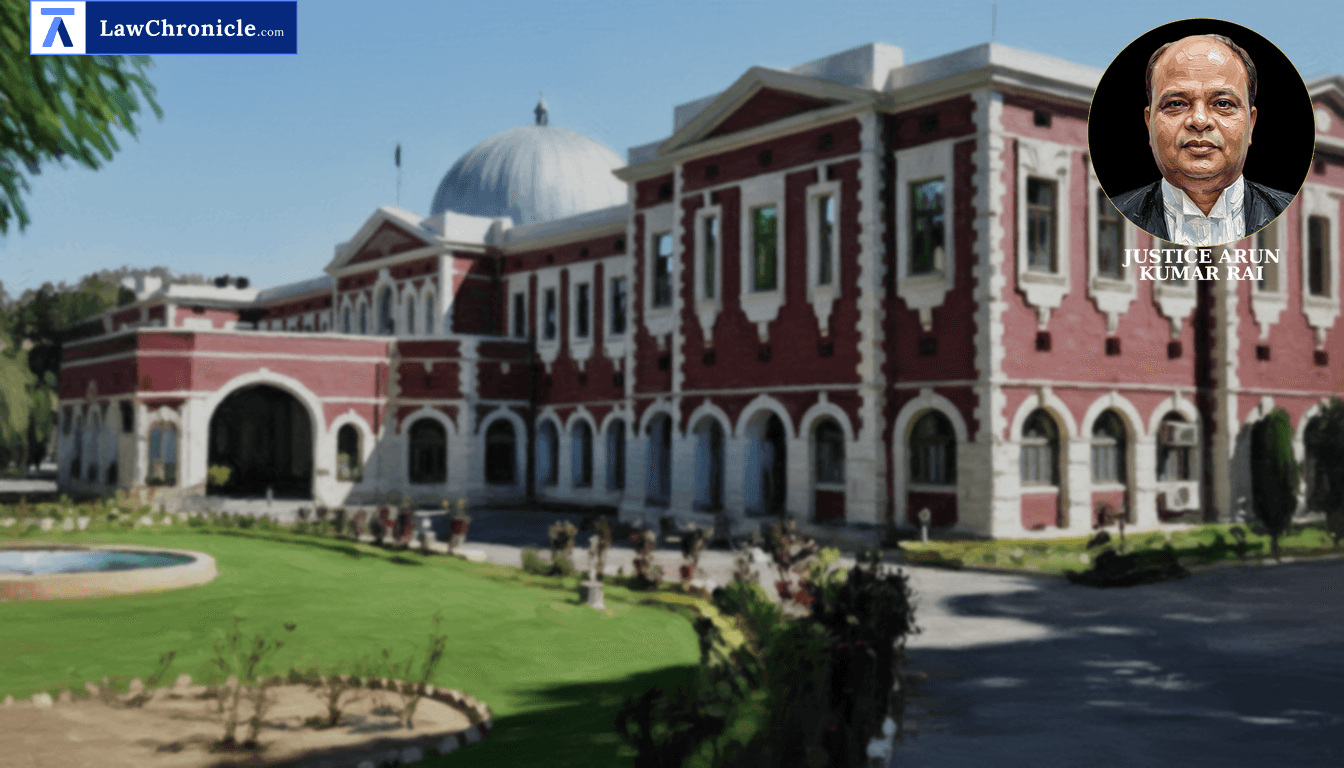
The Jharkhand High Court has quashed a conviction for kidnapping, ruling that the prosecution must prove specific intent to compel marriage or illicit intercourse to sustain a charge under Section 366 of the Indian Penal Code. In a significant intervention for criminal jurisprudence, the Court emphasized that a victim's voluntary conduct and material inconsistencies in the prosecution's narrative create an insurmountable reasonable doubt that entitles the accused to an acquittal.
Justice Arun Kumar Rai presided over the appeal challenging the judgment of the Additional Sessions Judge-II, F.T.C, Bokaro, which had previously sentenced the appellant to seven years of rigorous imprisonment for allegedly enticing away his sister-in-law to Patna for the purposes of prostitution.
Key Takeaways
Intent Over Incident
The Court reaffirmed that mere abduction is not a crime under Section 366 of the Indian Penal Code; the prosecution must strictly establish the specific intent to force marriage or illicit intercourse.
Radiological Age Supremacy
In the absence of educational certificates, the Court prioritized medical radiological reports over oral testimonies of parents regarding the victim's age, establishing her as an adult.
Conduct Negates Coercion
The victim’s failure to raise an alarm despite staying in a populated residential area for months, and her eventual communication with family using a host's phone, served as evidence of voluntary residence.
Fatal Procedural Lapses
The failure of the Investigation Officer to visit the alleged crime scenes in Patna or Bokaro, combined with an unexplained month-long delay in filing the F.I.R., was held to be fatal to the prosecution's case.
Court Scrutinizes Specific Intent Under Section 366
The Court analyzed the ingredients of Section 366 of the Indian Penal Code, noting that the gravamen of the offense lies in the intention of the accused. The Court, in its reasoning, observed: "Once the necessary intent of the accused is established, the offence is complete, whether or not the accused succeeded in effecting his purpose, and whether or not the woman consented to the marriage or the illicit intercourse." However, the Court relied on the precedent set in Kavita Chandrakant Lakhani v. State of Maharashtra ( "(2018) 6 SCC 664": 2018 CaseBase(SC) 1385), which mandates that unless the abduction is proven for the specific purposes mentioned in the section, a conviction cannot stand.
Observations on Victim's Conduct and Prosecution Delay
The Bench noted that the victim, an adult as per radiological examination, stayed at a house in Patna for two and a half months where the accused was mostly absent. The Court found it improbable that she was forced into prostitution without attempting to flee or seek help from the family residing in the same house. Furthermore, the Court highlighted the significant delay in lodging the F.I.R., which was filed on January 3, 2014, despite the alleged incident occurring on December 4, 2013.
The Court issued the following directions:
"Accordingly, for the reasons stated hereinabove, the judgment of conviction dated 03.04.2017 and order of sentence dated 04.04.2017 passed by learned Additional Sessions Judge-II, F.T.C, Bokaro in S.T. No. 09 of 2015 are, hereby, set aside. The present criminal appeal being Cr. Appeal (SJ) No. 1050 of 2017 is, hereby, allowed. Since, the appellant is already on bail, he is discharged from the liability of his bail bonds. Let trial court record be sent back to the court concerned forthwith."
Ratio
To constitute an offence under Section 366 of the Indian Penal Code, the prosecution must prove beyond reasonable doubt that the abduction was committed with the specific intent that the woman may be compelled to marry against her will or forced into illicit intercourse. Mere proof of movement from one place to another, without establishing deceitful means or the specific prohibited intent, is insufficient to attract the penal provisions of this section.
Background
The case arose from a complaint by the victim's father alleging that the appellant, his son-in-law, enticed the victim away on a motorcycle under the pretext of dropping her at tuition. It was alleged she was kept in Bokaro and later Patna, where she was purportedly pressured into prostitution. The appellant argued that the victim accompanied him voluntarily and that there was no evidence of coercion. The Trial Court had convicted the appellant, primarily relying on the victim's testimony. However, the High Court found the prosecution's version doubtful due to contradictions between the witnesses, the lack of police involvement in the victim's recovery, and the medical evidence suggesting the victim was a major who exhibited no signs of recent sexual intercourse or struggle. Consequently, the High Court set aside the conviction and allowed the appeal.
Case Details:
Case No.: Cr. Appeal (S.J.) No. 1050 of 2017
Neutral Citation: 2026:JHHC:28477
Case Title: Ajay Kumar Paswan @ Sajan Paswan @ Chhotu Paswan @ Ajay Paswan vs. The State of Jharkhand
Appearances:
For the Petitioner(s): Mr. Kumar Nishant, Advocate
For the Respondent(s): Mrs. Priya Shrestha, Spl. P.P.
Source: 2026 CaseBase(JHKD) 3156
Similar Articles




 Breaking News


