


Moratorium Under IBC Does Not Bar Counter Claims By Corporate Debtors: Bombay High Court
 Copy Link
 Share
 Save
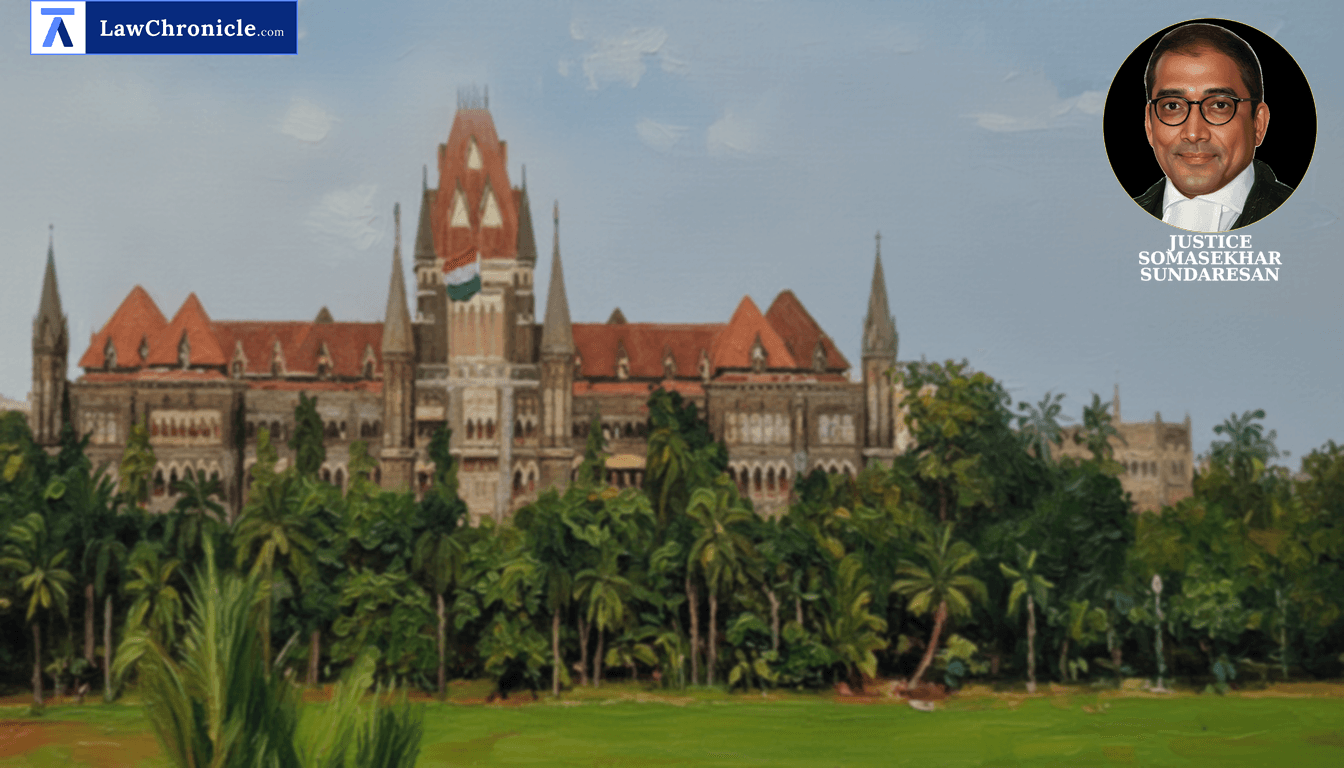
The Bombay High Court has fortified the autonomy of arbitral tribunals during insolvency proceedings, ruling that a moratorium under Section 14 of the Insolvency and Bankruptcy Code, 2016 does not interdict counter claims or proceedings initiated by a corporate debtor. In a significant clarification of insolvency law, the Bench held that while the statute 'shields' the debtor from pecuniary attacks, it does not prevent the resolution professional from pursuing claims that could potentially enhance the corporate estate.
A single-judge bench of Justice Somasekhar Sundaresan was hearing a Section 37 appeal involving a developer company undergoing a Corporate Insolvency Resolution Process (CIRP). The primary dispute centered on whether an arbitral tribunal could modify an existing status quo order to allow a housing society to appoint a new developer while the original developer was under a moratorium.
Key Takeaways
Counter Claims Permitted
Proceedings initiated by the corporate debtor, including counter-claims in arbitration, are not barred by the Section 14 moratorium as they do not deplete the debtor's assets.
Terminated Contracts Not Assets
A development agreement terminated prior to the commencement of insolvency proceedings does not constitute an 'asset' of the corporate debtor protected under Section 14(1)(d).
Limited NCLT Jurisdiction
The Adjudicating Authority’s residuary jurisdiction under Section 60(5)(c) is not attracted for contractual disputes that arose on grounds unrelated to the insolvency of the debtor.
Finality of Section 29A Orders
Orders extending an arbitral mandate based on the distinguishability of counter-claims, if unchallenged, attain finality and bind the parties regarding the tribunal's jurisdiction.
Tribunal Holds Jurisdiction Despite Moratorium
The Bombay High Court analyzed the scope of Section 14(1)(a) of the Insolvency and Bankruptcy Code, 2016, which prohibits the continuation of suits or proceedings 'against' the corporate debtor. Justice Sundaresan observed that this provision must be read literally and cannot be judicially expanded to include proceedings initiated 'by' the debtor. The Court noted that P. Mohanraj & Ors. v. Shah Brothers Ispat (P) Ltd. and New Delhi Municipal Council v. Minosha India Ltd. ( "(2022) 8 SCC 384": 2022 CaseBase(SC) 185) indicate that only proceedings against the corporate debtor are tabooed.
The Bench, in its reasoning, observed that “Section 14(1)(a) of the IBC interdicts the institution and continuation of proceedings against the corporate debtor. It does not bar proceedings initiated by the corporate debtor, including a Counter Claim... The words 'by or' used in Section 60(6) of the IBC cannot be imported by Courts into Section 14(1)(a) of the IBC.”
Impact of Pre-CIRP Termination
Regarding the property rights, the Bombay High Court relied on the Supreme Court's decision in A.A. Estates (P) Ltd. v. Kher Nagar Sukhsadan Co-operative Housing Society Ltd., which involved the same petitioner. In that case, the Apex Court held that mere contingent or uncrystallized contractual rights from a terminated agreement do not constitute 'assets' under the Insolvency and Bankruptcy Code, 2016. Since the Development Agreement (DA) in the present case was terminated before the CIRP triggered, the society was at liberty to seek a new developer.
Furthermore, the Court rejected the argument that the dispute must be heard by the National Company Law Tribunal (NCLT). Referring to Tata Consultancy Services Ltd. v. Vishal Ghisulal Jain, Resolution Professional, SK Wheels (P) Ltd. ( "(2022) 2 SCC 583": 2021 CaseBase(SC) 1430) and Gujarat Urja Vikas Nigam Ltd. v. Amit Gupta ( "[(2021) 7 SCC 209]": 2021 CaseBase(SC) 778), the Bench held that the NCLT's residuary jurisdiction under Section 60(5)(c) of the Insolvency and Bankruptcy Code, 2016 is not all-consuming and only applies to disputes arising solely from the insolvency process. Since the defaults and termination notice preceded the CIRP, the arbitral tribunal remained the correct forum.
Ratio
The moratorium under Section 14(1)(a) of the Insolvency and Bankruptcy Code, 2016, is strictly limited to proceedings initiated 'against' a corporate debtor; it does not extend to proceedings or counter-claims initiated 'by' the corporate debtor. Additionally, a development agreement validly terminated prior to the insolvency commencement date does not constitute an asset of the corporate debtor, and disputes arising from such termination based on pre-existing defaults fall outside the residuary jurisdiction of the NCLT.
Background
The dispute arose from a 2010 Development Agreement between A A Estates Pvt. Ltd. and Govind Niwas Co-operative Housing Society. Due to alleged non-performance and failure to pay transit rent, the Society terminated the agreement in 2017. Arbitration was invoked, and a status quo order was passed in 2018. Subsequently, the developer was admitted into CIRP twice.
The Society filed an application under Section 17 of the Arbitration and Conciliation Act, 1996 to vacate the status quo order to appoint a new developer. The Arbitral Tribunal allowed the application, leading the developer's Resolution Professional to challenge the order before the High Court on jurisdictional grounds, citing the IBC moratorium. The Bombay High Court ultimately upheld the Tribunal's jurisdiction and dismissed the petition.
Case Details:
Case No.: COMMERCIAL ARBITRATION PETITION (L) NO. 12886 OF 2025
Neutral Citation: 2026:BHC-OS:23161
Case Title: A A Estates Pvt. Ltd., through its Resolution Professional Mr. Harshad Deshpande Versus Govind Niwas Co-operative Housing Society Ltd.
Appearances:
For the Petitioner(s): Mr. Shadab Jan, a/w Mr. Kartik Irabatti i/b Chinmay Bhojane
For the Respondent(s): Mr. Naushad Engineer, a/w Mr. Rashmin Khandekar, Mr. Y. Limathwalla, Mr. Amit T., Ms. Fleur D’souza i/b Asahi Legal
Source: 2026 CaseBase(BOM) 7129
Similar Articles

 Breaking News


