


National Book Trust Is 'State' Under Article 12 Of Constitution: Supreme Court
 Copy Link
 Share
 Save
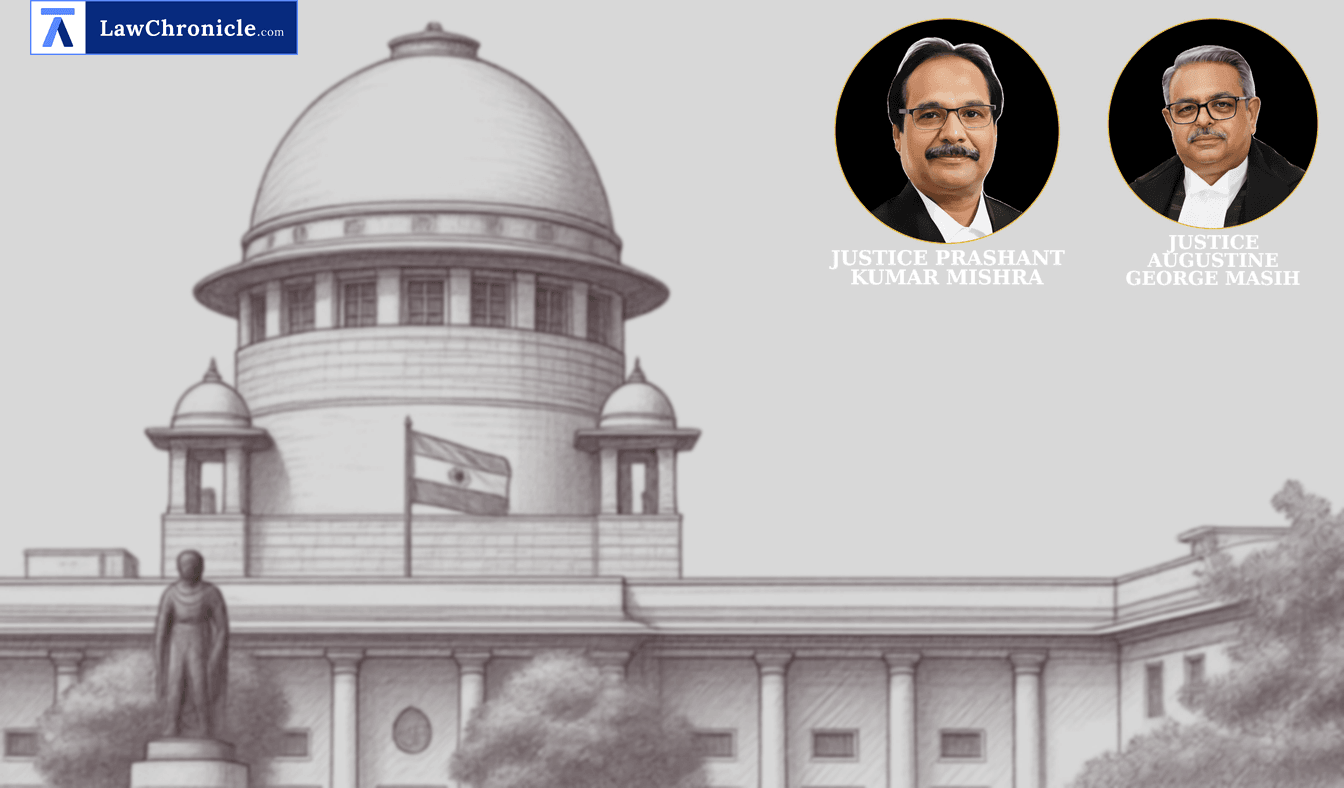
Subjecting autonomous governmental bodies to constitutional discipline, the Supreme Court has ruled that autonomous societies under deep and pervasive executive dominance qualify as 'State' under Article 12. Clarifying that registration as a society does not shield an entity from fundamental rights enforcement, the Apex Court affirmed that pervasive administrative, financial, and functional control brings such organizations within judicial review.
A Bench comprising Justice Prashant Kumar Mishra and Justice Augustine George Masih affirmed a Delhi High Court Full Bench judgment, holding that the National Book Trust satisfies the test of deep and pervasive control exercised by the Central Government.
Key Takeaways
Pervasive State Control Determines Status: Pervasive administrative, financial, and functional governmental control renders a society an instrumentality of the State under Article 12 of the Constitution of India, 1950.
Form Of Incorporation Is Secondary: Registration under the Societies Registration Act, 1860 or the Companies Act, 2013 does not automatically exempt an entity from Part III constitutional discipline.
Constitutional Status Does Not Confer Civil Servant Rights: Classification as 'State' under Article 12 does not convert an organization into a government department or its employees into civil servants under Part XIV of the Constitution of India, 1950.
Evaluating the administrative setup and governing framework, the Supreme Court noted that executive nominations, financial oversight, and rule-approval powers demonstrate deep governmental control. The Bench thereby upheld the Delhi High Court's conclusion that National Book Trust is an ‘other authority’ within the meaning of Article 12 of the Constitution and is consequently a ‘State’ for that purpose. The Apex Court reasoned that "In our considered view, the Trust accordingly satisfies the test of being financially, functionally and administratively dominated by or under the control of the Government, with that control being particular to the Trust and pervasive in character. Its registration as a society, or the fact that it generates part of its income independently cannot displace the cumulative constitutional character of the institution."
Ratio
An entity is an 'authority' and 'State' within Article 12 of the Constitution of India, 1950 if, on a cumulative assessment of facts, it is financially, functionally, and administratively dominated by or under the pervasive control of the Government, irrespective of its legal form of incorporation.
Background
The appeal arose from a Full Bench decision of the Delhi High Court which examined whether the National Book Trust constituted 'State' under Article 12 of the Constitution of India, 1950. The High Court had analyzed the guiding tests established in Ramana Dayaram Shetty vs. International Airport Authority of India and Others ( "(1979) 3 SCC 489": 1979 CaseBase(SC) 73), Ajay Hasia and Others vs. Khalid Mujib Sehravardi and Others ( "(1981) 1 SC 722": 1980 CaseBase(SC) 356), and Pradeep Kumar Biswas vs. Indian Institute of Chemical Biology and Others ( "(2002) 5 SCC 111": 2002 CaseBase(SC) 195), alongside precedents like Rajasthan State Electricity Board, Jaipur vs. Mohan Lal and Others ( "1967 SCC OnLine SC 18": 1967 CaseBase(SC) 220) and Sukhdev Singh and Others vs. Bhagatram Sardar Singh Raghuvanshi and Another ( "(1975) 1 SCC 421": 1975 CaseBase(SC) 68). Observing that the Chairman was appointed by the Government, key ministry representatives dominated the governing body, and financial administration required strict executive and Comptroller and Auditor-General oversight, the High Court held the body to be an instrumentality of the State.
Challenging this before the Supreme Court, it was argued that independent revenue generation and registration as a society excluded it from Article 12. Distinguishing public function principles discussed in Zee Telefilms Ltd. and Another vs. Union of India and Others, the Supreme Court reiterated that cumulative administrative control, rather than isolated commercial earnings, determines constitutional status. Dismissing the appeal, the apex court confirmed the Full Bench ruling.
Case Details:
Case No.: Civil Appeal No. 14369 of 2015
Neutral Citation: 2026 INSC 1202
Case Title: The Chairman, National Book Trust, India and Another v. A.R. Abdul Gaffar and Others
Source: 2026 CaseBase(SC) 9614
Similar Articles

 Breaking News


