


LIC Housing Finance Not 'State' Under Article 12: Calcutta High Court
 Copy Link
 Share
 Save
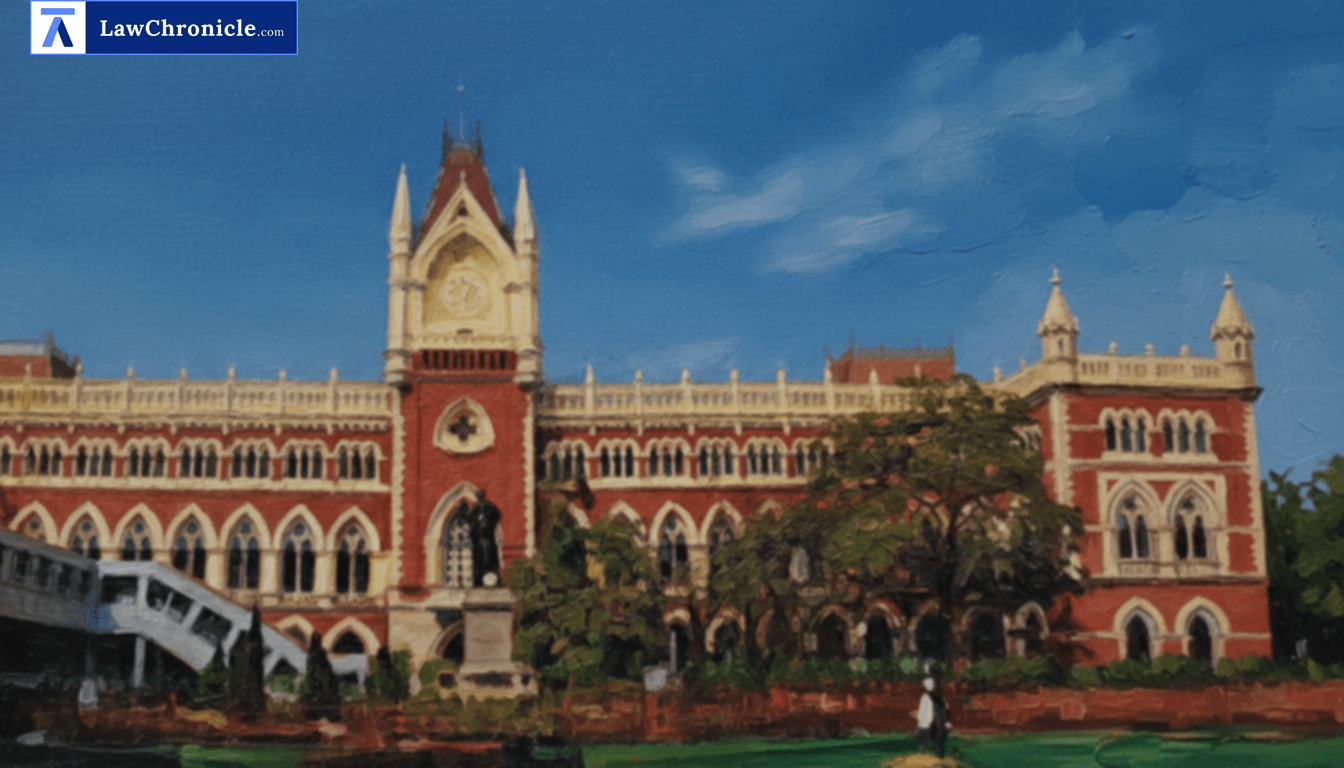
In a major clarification on the constitutional reach over quasi-governmental financial institutions, the Calcutta High Court ruled that LIC Housing Finance Limited (LIC HFL) is an autonomous commercial entity and does not constitute 'State' or its instrumentality under Article 12 of the Constitution of India.
Justice Reetobroto Kumar Mitra dismissed a writ petition challenging an employee's transfer, holding that LIC HFL is merely an associate company of the Life Insurance Corporation of India (LIC) rather than a state instrumentality subject to writ jurisdiction.
Key Takeaways
- Commercial Autonomy Preserved: A company does not become a State instrumentality merely because a government-backed body holds substantial equity shares.
- No Functional State Control: LIC HFL operates purely as a private commercial housing finance provider governed by RBI guidelines, lacking public duties.
- Strict Judicial Tests Applied: Writ petitions under Article 226 of the Constitution of India remain non-maintainable against private bodies operating without deep and pervasive state administrative domination.
Court Observations and Directions
The Bench thoroughly examined the corporate relationship between LIC and LIC HFL under the Companies Act, 2013, distinguishing an associate company from a subsidiary. The Court noted that LIC holds a 45.24 percent stake and nominates only 3 out of 13 directors on the board of LIC HFL, which falls far short of administrative or functional control.
Evaluating the functional parameters established in precedents such as Sukhdev Singh Vs. Bhagatram Sardar Singh Raghuvanshi ( "(1975) 1 SCC 421": 1975 CaseBase(SC) 68), Ramana Dayaram Shetty Vs. International Airport Authority of India ( "(1979) 3 SCC 489": 1979 CaseBase(SC) 73), Ajay Hasia Vs. Khalid Mujib Sehravardi ( "(1981) 1 SCC 722": 1980 CaseBase(SC) 356), Pradeep Kumar Biswas Vs. Indian Institute of Chemical Biology ( "(2002) 5 SCC 111": 2002 CaseBase(SC) 195), Balmer Lawrie and Company Limited v. Partha Sarathi Sen Roy and Others ( "(2013) 8 SCC 345": 2013 CaseBase(SC) 591), and S. Shobha v. Muthoot Finance Ltd. ( "2025 SCC OnLine SC 177": 2025 CaseBase(SC) 272), the High Court emphasized that regulatory oversight by financial regulators does not equate to state control. The Court also discussed the principles laid down in Ram Chandra Choudhary v. Roop Nagar Dugdh Utpadak Sahakari Samiti Ltd. ( "2026 SCC OnLine SC 583": 2026 CaseBase(SC) 307), Federal Bank Ltd. v. Sagar Thomas & Ors. ( "(2003) 10 SCC 733": 2003 CaseBase(SC) 963), Som Prakash Rekhi v. Union of India ( "(1981) 1 SCC 449": 1980 CaseBase(SC) 312), and Balmer Lawrie & Co. Ltd. Vs. Partha Sarathi Sen Roy & Ors. ( "(2013) 8 SCC 345": 2013 CaseBase(SC) 591).
The Court, in its reasoning, observed: "LIC(HFL) is a private body engaged in carrying on its business as per its memorandum and articles of association without in any manner being engaged in a business which can be termed as a public function. The activities of LIC(HFL) are completely commercial in nature and do not fall within the benchmark parameter of a monopoly business as a limb of the government."
The Court has following directions:
"Having held as aforestated, the question of entertaining the writ petition or considering the prayers made by the petitioner does not arise. In the circumstances, the writ petition fails and is accordingly dismissed."
Ratio
Ordinary shareholder control or statutory classification under company law does not automatically translate into deep and pervasive state control under Article 12 of the Constitution of India. An entity is not amenable to writ jurisdiction under Article 226 of the Constitution of India unless it satisfies the cumulative constitutional test of complete state administrative, financial, and functional domination, or performs an essential public function.
Background
The petitioner, an employee of LIC HFL, filed a writ petition under Article 226 of the Constitution of India challenging his transfer order from West Bengal to the Tezpur area office in Assam, contending that the transfer violated the prevalent policy and was discriminatory. The petitioner argued that LIC HFL was subject to writ jurisdiction because LIC a State entity exercised deep and pervasive control over it.
Conversely, LIC HFL argued that it was an autonomous listed entity engaged in commercial home loan activities without state financial support or administrative control. Accepting the respondent's contentions and relying on settled Supreme Court jurisprudence, the High Court held the writ petition non-maintainable and dismissed it.
Case Details:
Case No.: WPA 16269 OF 2026
Neutral Citation: 2026:CHC-AS:1297
Case Title: Pankaj Kumar Giri v. Union of India and Ors.
Appearances:
For the Petitioner(s): Mr. Sudip Ghosh, Ld. Advocate, Mr. Bidish Ghosh, Ld. Advocate, Mr. Uttam Kumar Kamila, Ld. Advocate, Mr. Maitryee Maiti, Ld. Advocate.
For the Respondent(s): Mr. Sakya Sen, Sr. Advocate, Mr. Priyankar Saha, Ld. Advocate, Mr. Hemant Tiwari, Ld. Advocate, Mr. Avishek Guha, Ld. Advocate, Mr. Subjajit Das, Ld. Advocate.
Source: 2026 CaseBase(CAL) 1648
Similar Articles

 Breaking News


